Celebrating My Father at 80

My dad, Hector Jourdain, turned 80 on March 29, 2013. A milestone birthday we weren’t always sure he would reach. A year ago he was barely able to move, couldn’t navigate the stairs in his house and was sleeping on a chair in his family room because of that.  He was in the hospital for a month, fighting an infection, a back so bad he couldn’t stand and the after effects of radiation therapy for prostate cancer – one of the many times he’d been in hospital for extended stays for different reasons over the last few years.

When he was wheeled into a doctor’s appointment because his legs were too weak to support him, his family doctor was sure he was headed for long term care.  The doctor didn’t reckon on my dad’s will to live.  And not just to live, but to live a life that still feels like it has quality to it.

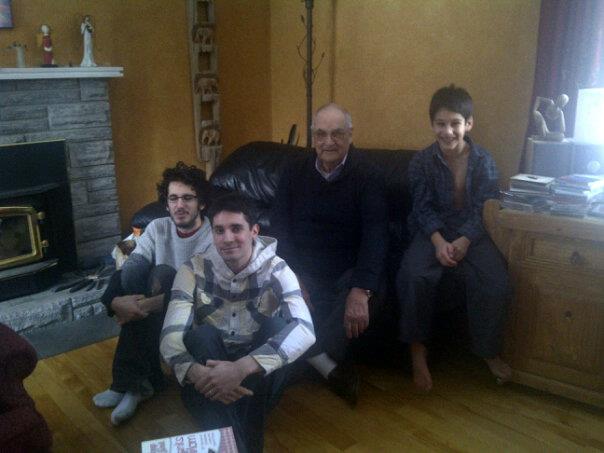
dad and the boys - Christmas 2012

His desire to live a life beyond mere existence prompted him to inquire about an advertised back belt, which prompted me to seek out more information, finding him a better belt.  He took himself to physiotherapy – despite his own scepticism and the scepticism of his doctor and he began a road to recovery that astonished his doctor.  It didn’t astonish me.  I knew once he made the decision to live life that anything was possible.  It is one of the things he teaches me – anything is possible.

There are many things I might not have imagined.  Chief among them was that my mother would experience dementia and that my dad would reverse the traditional husband/wife roles and become her dedicated care giver for so many years before he exhausted himself and her condition became so bad we had to place her in long term care.

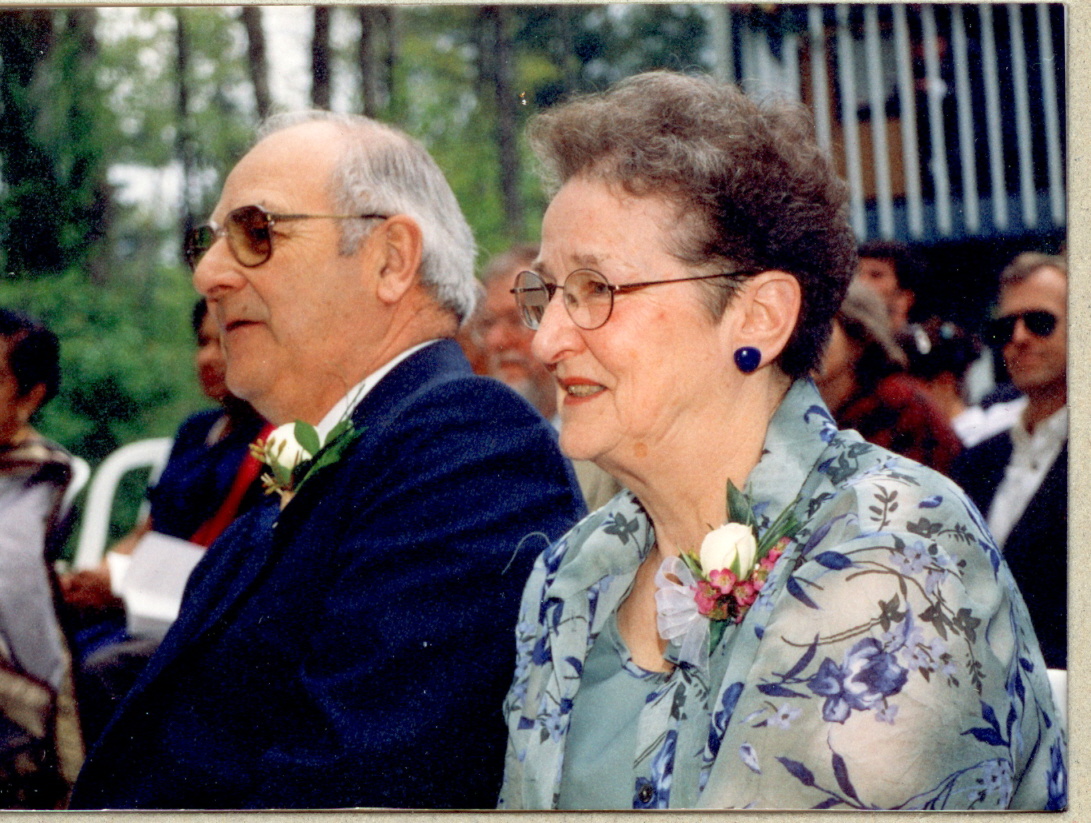
My mom and dad in 2000

My mom and dad in 2000

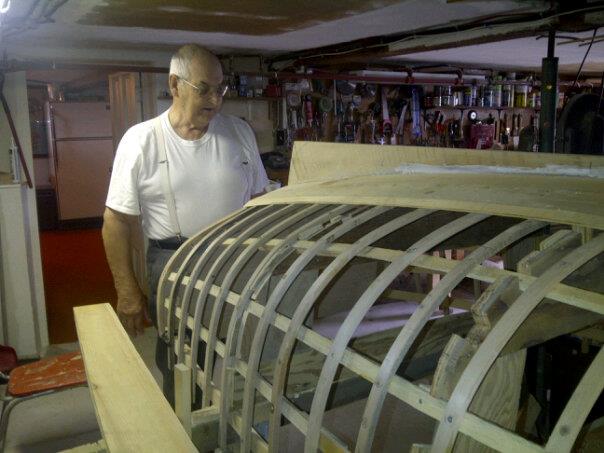
Easter Saturday we celebrated this milestone birthday with friends and family at my dad’s home where he lives alone with his two cats and loads of projects that keep him occupied.  He is building a punt (row boat) in his basement – the second punt he’s built after refurbishing a canoe that had been in his family for years and had been used by his father decades before that to rescue two people off of ice flows in the St. Lawrence Seaway over a Christmas holiday.

dad and his handiwork

His garage is a workshop where he still putters away at rebuilding engines or creating parts when he feels in the mood to do so.  He has been called a “magician” when it comes to fixing engines and engine parts.  He is renowned for his skill and expertise.  The “hobbies” he has now give him choice. When he feels like it, he has things to keep him occupied, including housework, yard work and fixing meals for himself, continuing to experiment with new recipes. When he doesn’t feel like taking on one of his numerous projects, he can take it as easy as he wishes.

My dad and I have journeyed great distances together – not so much geographically, but spiritually and emotionally for sure.  I always knew we shared a strong connection.  We’ve had our issues over the years.  I know I’ve disappointed him a few times.  Despite those moments, he has always loved me unconditionally.  My friends have always been welcome in my father’s home or on his boat, when I was a child growing up and as an adult.

Dad's pride and joy - Bluefin

In typical family dynamics, there were times as an adult he could make me feel like a chastised child or cause me to doubt or judge myself – not because he intended to but because of the activation of old patterns sparked by a word or tone.  In my own journey to myself, my journey to open heartedness and embracing the stranger in me, without working specifically on any issues I might have had with my dad, I resolved them to the point that there is no longer anything he says or does where I feel chastised or judged or even guilted.  Our relationship is mature, some give and take, a lot of love and support.  We don’t need to fill the space around us with words all the time.

My father was 45 when he underwent his first open heart surgery.  He has had more health issues than I can remember since that time, mostly in the last half dozen years or so.  And he is in pretty good health, all things considered – not the health of a young man but the reasonably good health of an 80 year old man who has experienced a lot in life.

In some ways, his turning 80 is a bit of a miracle – one I cherish.  He changed the course of my life without me knowing it until just a few years ago.  He and my mom were in the right place at the right time to find me.  It was my father’s friendship with my birth grandfather that created the opportunity for us to become a part of each other’s lives.  Without my father, my life path would have been very different.  Hard to know how different, or where I would be today – maybe somewhere close to where I am, maybe not.  Given that I’m happy with the path I’m on now that continues to unfold in the most delightful of ways, I’m grateful that our paths crossed when I was baby  and grateful to have him in my life now.

Seeing and Being Seen, Having Voice

St. Cloud is a small city in Minnesota known euphemistically as “White Cloud” because of its reputation as a racist town.  Some residents of this community have decided this is a reputation that needs to shift.  They are taking action in the form of Conversations that Matter.

Mayuli Bales became aware of the Art of Hosting a couple of years ago through one of the early trainings in Minnesota.  She began to dream of what might be possible in her home town and the seeds of the multi-cultural community gathering for conversation began to take shape, seeds just harvested mid-November 2012.

It was the first gathering in St. Cloud about race and culture convened by people of colour.  Mayuli pulled together a local calling team despite not being able to explain clearly what the Art of Hosting is and they got to work, supported by InCommons and the Meadowlark Institute.

Some of the most passionate discussions in the hosting team were about seeing and being seen, having voice that is acknowledged and recognized. The experience of so many people of color is that they are invisible, not seen, not heard. Heartbreaking. For them. For those of us on the hosting team too.  For me.

The dream was to Color the Cloud. The purpose for our gathering co-evolved by the hosting team the day before was:

Discovering together our community, to build the future by:

  • Seeing each other
  • Contributing all of our voices
  • Getting skillful at being in conversations that matter to us
  • Co-creating the evolving story

So much anticipation.  So much hope.  So much anxiety. Could it really happen? The three day design that emerged used the themes in the purpose as themes for each day.  Day 1 was Discovering Community: Seeing and Being Seen.  Day 2 was Building Community: Getting skillful together. Day 3 was Practicing Community: Co-creating the evolving story.  The design included the usual interweave of patterns, practices and teaches.

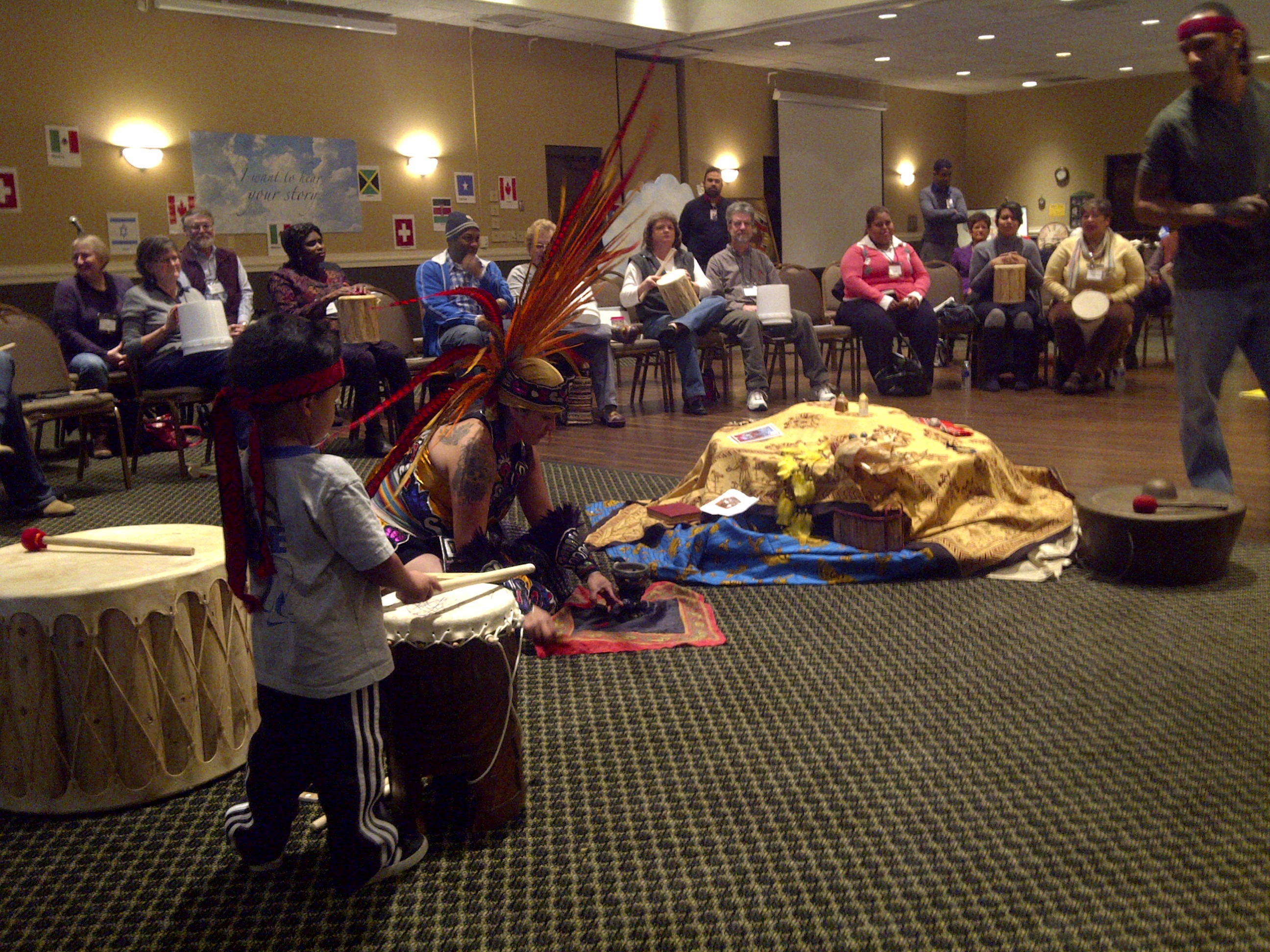
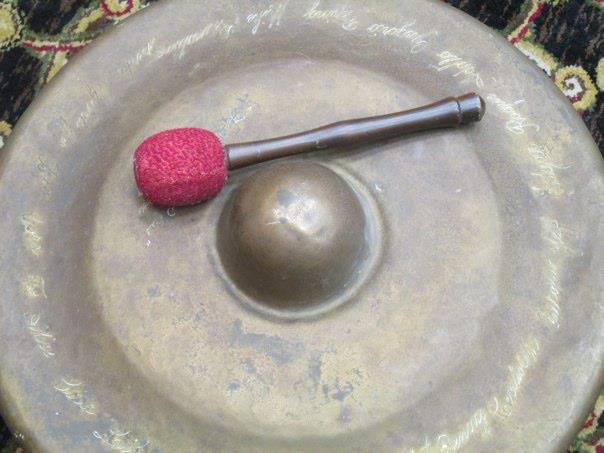
Drummers who opened the community conversations in St. Cloud

We were welcomed into our space by drummers – three members of a family with Aztec heritage, a father, mother and their three year old son who took up his place as a drummer.  The father shared with us, “You’ve been told in school and in your museums that Aztec’s are extinct.  But here we are, my wife, my son and me.  We are not extinct.  Neither is our culture.”  Culture must adapt to survive while cherishing those elements which make the culture distinctive.

He shared with us the story of the drum – as a grandfather, as a heartbeat, as part of community voice with its own message for each of us.  We were all invited to drum.  All of us.  Latinos, Somali’s, Oromo, African Americans, White Americans (and Canadians too) – broad categories of culture which do not do justice to the full multiplicity of culture in the room.  One world where many worlds fit.  Could fit.  Could be invited to fit.

The container was set, to be strengthened over the next few days. The invitation to see.  To see who else is in the room.  Who else cares enough about coloring the cloud to show up – for a morning, an afternoon, a meal, for three days. To be seen.  To contribute voice.  All voices.  Welcoming the languages present to be spoken aloud for all to hear.  Slowly at first but building so that by our check out circle, people were freely speaking their language, interpreted for the English speaking among us to comprehend, to see, to witness.

We became aware, as a hosting team, that these people, showing up day after day, did not need to hear our voices introducing teaches into the room.  They needed to hear each other’s voices, each other’s stories.  In ways and on a scale that had not yet happened in this community.  They needed and wanted to become skillful in practicing conversation with each other.  And to use conversation to support each other in initiatives and projects called out during the proaction café.  So we let the teaches of frameworks go and we focused on processes, ways and means of continually inviting them into conversation with each other.

The story of the new began to emerge during Open Space, Collective Storytelling, World Café, Proaction Café and smaller deep check in circles.  Surveying the small groups at any given time or in any given process, it was easy to see the diversity in each circle.  It was heartwarming.

Two of many stories to share here.

The first is of a member of our hosting team, a beautiful Somali woman dressed in the full traditional garb of her culture and often in the most brilliant of colours.  At the end of Day 1 she is part of the check out team.  Sensing the energy is low, she has a plan.  She looks down at her dress, begins to pull up the top layer of it, tying it in a knot, exposing the next layer of dress which still goes down to the floor.  Just this is so unexpected she has our full attention.  Then, she invites all of us to imagine with her that we are cats, to get down on the floor moving around on all fours, meowing.  Amidst gales of laughter, all who were able in the room, get down on all fours and move through the room with varying degrees of gracefulness and hilarity.  Be prepared to be surprised!  How many stereotypes did she smash through with this simple gesture of fun and delight?

The second story is of a self-proclaimed native son of St. Cloud, an older and retired white man.  He was asked to share his story in the collective story harvest and, to be honest, I wasn’t sure how it would unfold.  He offered his story, not only as his story, but as the story of his mother and his grandparents too.  Among the people in his group were three young Somali women.  Later in the collective harvest, one of these young women stood up and said, “We are always asked about my culture and what it’s like to live here. I have realized that we don’t stop to ask the people who have always lived here about their culture and what it’s like for them to live here.”

Later, when we reconvened in our full circle, someone pointed out to me that this man was now sitting in the middle of these Somali women.  Still later, when I thanked him for bringing his story to the group, he thanked me for the opportunity.  He told me he had arranged for these women to meet his mother and hear her story directly.  Delight all around.

These are just two small examples of how we the purpose of our gathering gained life and vibrancy.  People were beginning to see each other and to feel seen by each other, to give voice and be heard.  It is a beginning for a town that is coloring the cloud, shifting the shape of its reputation and sending out the message that the future is being co-created by people who care about where they live and about each other.

The Field Beyond Difference

Out beyond ideas of wrong-doing and right-doing,

there is a field.
I will meet you there.

Rumi

Rumi’s words, with a slight variation, encapsulate the experience of an amazingly culturally and age diverse group of participants, apprentices and hosts who gathered September 11-14, 2012 in the middle of the Phillips Community of South Minneapolis where all of us discovered there is a field beyond difference and we are willing to meet each other there.

Image

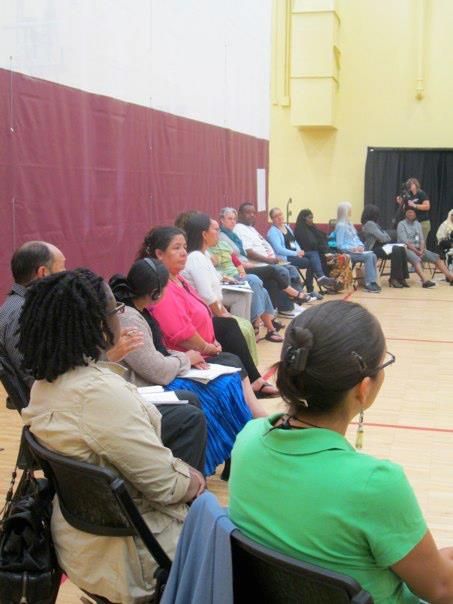
There was a tremble in our fourteen member hosting team as we prepared to welcome over seventy Somalis, Native Americans, African Americans, Anglo Americans, Latinos, people from Liberia, Ethiopia, Malaysia, Mexico, Costa Rica, Columbia and more, together with two translators: one for Somali and one for Spanish.  We were not sure how many would come, how many would stay or how many would come back the next day.

This Art of Hosting training, supported by the Bush Foundation’s InCommons in partnership with the Meadowlark Institute, was called by Amina Saleh a co-founder of the Native American Somali Friendship Committee, in the hopes that bridges could be formed across the  multiplicity of cultures that have come to reside in the Phillips residential area of South Minneapolis.  The original residents of this community were primarily African Americans, Native Americans and Anglo Americans.  In the 1990s immigrants and refugees began moving into the area in search of affordable housing.  Over the years, the cultures clashed, tensions rose and violence across the cultures, particularly between the Native Americans and Somali communities, occurred.

Amina found herself at an Art of Hosting training in March 2012 and became curious about what might be possible if a training was hosted right in the middle of her community, in the community centre, where the children congregate after school.  Well, we found out!

We started with a beautiful Lakota sage ceremony offered by Lemoine Lapointe from our hosting team, to open the space, to cleanse ourselves, open our minds and, even more so, our hearts.  An offering from one of the cultures present in the room, inviting others to also offer in a right moment or opportunity.

Lemoine Lapointe

Each one of us was then invited to bring our voices into the circle by responding to: my name is…, I live…, I’m from…, my ancestors are from… and I speak …. languages. As we listened, we became aware, beyond the diversity of skin colour already visible in the room, of the richness and multiplicity of cultures and languages represented in the space, the richness that showed up sometimes in a single individual as well as in our field.  It took our breath away and opened our curiosity.

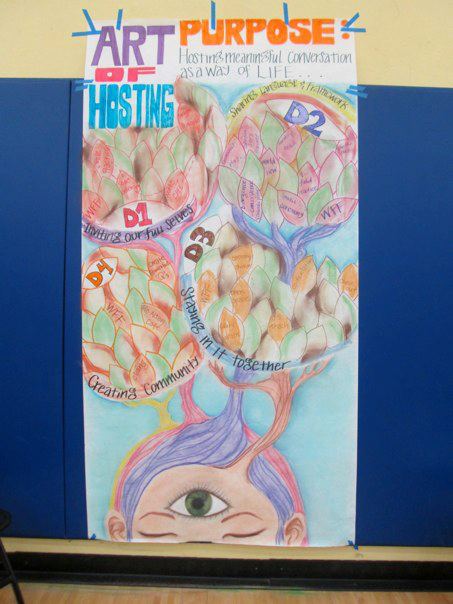
The purpose that emerged for the four day training was: Hosting meaningful conversations as a way of giving life, (1) inviting in our full selves and each other, (2) sharing language and frameworks, (3) staying in it – together and (4) building “whole” community. The phrases in the purpose statement framed each of our four days; scheduled to begin around 9:00 with a hard stop at 3:00, because this is when the children arrived in the community centre we were in and when some of the single moms in attendance also needed to be home to greet their children.

Beautiful visual depiction of our 4 day flow by Nou Ka Yang

Our first afternoon was a caféWhat is in your heart that brought you here today? What is in your heart for your community? What would you like to give life to here for your neighbourhood?  Powerful, surprising questions, giving pause like unexpected questions do.  Silence at the first café round while people let the question sink in, then decided how fully they wanted to bring themselves into the room, into the conversation, into the others also at their table. Cautiously, at first. What is in your heart? Not, why are you here? Not, what’s in you mind?  What is in your heart? Are you willing to go there yourself, let alone speak it into the centre of the table?

By the third round there was a beautiful buzz in the room as people began to relax into the invitation to bring their full selves.   In the harvest, one man offered, “Unlike Vegas where what happens in Vegas stays in Vegas, what happens in this room should not stay in this room. We all need to take it back out into our communities.”  This became a mantra for participants for our full time together.

People were ready and willing to offer their rituals, ceremonies and stories into our collective space.  In addition to the opening sage ceremony, we experienced a Somali coffee ceremony, an Aztek ceremony and a Hmong ritual and an African American dramatic story telling: Sojourner Truth, in addition to Native American ceremony, song and round dance from the Dakota and Lakota cultures. We gifted each other with prayers and blessings.

Sometimes it was a bit uncomfortable with the varying perspectives and cultural norms around touch, song, dance and partaking in another culture’s ceremony; but only just in that moment before understanding blossomed and more ease entered with the witnessing of things precious.  Graciousness, curiosity and respect filled the space and the conversations. Deepening our individual and collective listening skills invited us all to show up even more fully.

The realization that issues, concerns and passions arc across cultures invited people into bridge building. Education, children, community housing, racism, racial profiling, relationship with police, healing, well being.  Learning to navigate the dominant culture and stand up, both for what is right and for rights of an individual no matter each person’s roots or ancestral history.  Awareness of commonality in the diversity. People care about many of the same things even if their way of approaching them or their cultural norms may be different.

Invitation to Open Space

As we gathered in our check out team: Amina Saleh, Kadra Ahdi, Lemoine Lapointe, Molly Matheson Gruen, Susan Phillips, Bob-e Epps, Anne Gomez, Lori Lindgren Voit, Nou Ka Yang, Marcela Sotela, Jerry Nagel, Tuesday Ryan-Hart, Ginny Belden Charles and me, there were tears.  Tears of hopes realized, connections made, community strengthened, deep sense of belonging.

Our work began in the hosting team itself on our prep day.  It was the first time many of us had met in person as is common in these trainings.  There was a great variety of experience and understanding of the Art of Hosting in the team, from lots to little to almost none, with people eager to deepen their skill, grow their capacity.  The team quickly became strong and cohesive with each person stepping in, contributing, supporting as one fluid movement, offering what we each could, asking for what we needed. We formed community.

We became a field to welcome the larger field of community activists and organizers from across cultures who showed up.  And came back. Day after day.  For four days. They sensed something different. Became engaged in possibility in new ways. They made plans for next steps on very specific projects. Co-creating a new hope for the future. Giving life to community from a different place.  Stepping into courage, transcending fear, reaching out, seeing the human face of diversity and knowing that shifting the shape of the communities they live in and touch is possible to ever greater degrees.  Humbled, touched, delighted to be in this work that matters so deeply.

Shadow Days

“Kathy,” she said to me, “You think your emotions make you weak.”

“Yeah,” that seemed self evident.

“You’re wrong,” she said.  “Learning to live into your emotional experience, be in it and learn from it will make you stronger and more powerful.”

I was highly skeptical.  She, by the way, was/is Sarita Chawla, a beautiful, elegant, graceful, powerful woman I met at ALIA in 2008 who offered to coach me.  I was skeptical but prepared to be proven wrong.  She nudged me, coaxed me and provoked me.  She made me angry and frustrated. She helped me discover the voice of my internal judge and find strategies to disempower its impact. She guided my journey from one of walking through my experience to one of living into it, learning to enquire into my emotional response to see, sense and understand what is there for me to learn.

She was right.  I am stronger, more compassionate and more powerful.  It’s been quite the journey, of course.  I am usually more serene, centered, present and calm.  Joy, delight and love are usually the emotions that dominant my day-to-day experience.

But not everyday is like that. I also have shadow days.  I can’t help but think that everyone does. That we all have days – or parts of days – where we go to deep, dark places.  The days when we are overwhelmed, when the internal judge is speaking nonsense to us about who we are or aren’t and we tending to believe it, when we are off our center, discombobulated, sad, feeling pulled in many directions or just want to let the tears flow – or perhaps we can’t stop them from flowing.

In 2009, a friend and I spent a day on the land at Gold Lake, Colorado.  Our dear friends Christina Baldwin and Ann Linnea helped in the preparation for that day.  One of the things they suggested was that the sites we chose be far enough away from each other that we couldn’t see or hear each other – in the event that we wanted to cry out or wail.  At the time, there were so many other experiences that were alive for me, wailing was not one of them.

Recently, I went for a run in my neighbourhood in Bedford which took me down to the park on the water.  I needed the physicality of the run and the touch into nature, taking the time to sit on the grass, meditate and reflect while looking out over the water.  The sadness that was in me, triggered interestingly enough by the offer of a gift that I do not yet know if I will accept, was so intense that tears did flow and I had the feeling that I wanted to wail.  The intensity of emotion alive in me.  The vibrancy of experience.  Convention kept the wail in.  I wasn’t sure how other park users would respond if I gave way to such a depth of sadness and grief in a place one wouldn’t expect to encounter it. Not the tears though, I let them flow.

I’ve witnessed a lot of people cry.  One-on-one. In small and large groups.  Through processes where people are able to access their own emotional experience.   There aren’t many who can let the tears flow without apologizing for them.  One of my dreams is that we can live in a world where we no longer feel the need to apologize for our tears – such a beautiful expression of release.  I no longer apologize for mine – even when they show up in a large group experience.  I no longer try to diminish my experience but want to honour it and my passage through it.

Of course, I don’t want to be stuck in my experience either.  I want to understand the story that is alive in me that leads to the tears or the anger or the frustration or whatever else it is that is showing up.  When I understand the story I can release it, shift it or rewrite it – and I often do.  It is part of hosting myself to deeper places in my life and growing my capacity to host deeper space for others. It is part of my journey to open heartedness.

More and more, I am understanding my experience in relation to me, to own it in relation to my journey, to not project it onto others  – or blame others – who may have triggered something in me.  The people around me are a beautiful reflection of where I am in the journey – the ones who trigger things and the ones who simply mirror back the beauty of the journey and the beauty of me as I show up – usually, often, in the depth of who I have been able to access since I began the journey of understanding that my emotions are my ally and that by acknowledging them, living into them and learning from them I grow my capacity to host deep space, to host another human being, to host myself.  I am deeply grateful for the wide array of friends who reflect back to me the depth of my journey.

I am not afraid anymore.  I know vulnerability is not weakness and that strength grows when we are willing to know what is rising up in us, willing to meet ourselves in the many ways we show up, allowing ourselves to be in our power, strength and beauty, also without apology but always with compassion, humility, delight and joy.

And it is okay for some days to be shadow days.  It is part of the journey.  We all have them.  They do not make us weak.  They show us the path to strength and beauty.  I no longer feel the need to wail in this moment, but who knows what the next will show up.  I am exactly where I need to be.

Not every day is full of light.  Not every day is a shadow day either.  But facing the shadow brings light to even the darkness of those days and by becoming aware of the story that is alive in me, I can shift the shape of the story, of the day and of my life – which I have been doing story by story, day by day.

Navigating the Groan Zone is an Art

For a such a simple little concept, the divergence-emergence-convergence model we use in the Art of Hosting sure packs a punch.  It is a simple teach that can be done in 10 minutes – or longer – if time, space and the opportunity to engage others in the conversation allows.  It sheds light on design process, the groan zone and people’s experience.  Navigating the groan zone is an art form that often arises out of our ability to host ourselves well.  Stories from a recent Art of Hosting training a bit later in this post.  First a bit about the model.
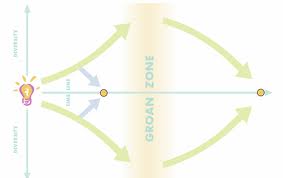
Divergence-Emergence-Convergence – a simple model with an interesting challenge

The divergent phase of this model is akin to brainstorming.  We want as many ideas as possible to emerge so we can later select the best ones to develop further.  It has much broader application than brainstorming though.  It is about expansion.  It is where ideas are generated, information is collected,  issues or challenges are sensed into to gain more insight or shift perspective or simply where we holding open the space for possibilities to enter in.  It is not a time for evaluation.  We don’t need to know what we will do with the information.  We don’t even need to know whether the information is ultimately useful while we are in the divergent phase of the learning, the work, the project.

As we begin to feel overloaded, overwhelmed or uncomfortable, or we begin to question “the process”, or the leaders or hosts of the process, or we are just tired and grumbly, we are desiring understanding and often looking for convergence.  What does it all mean?  What should we do now?  When can we be done?  All questions that indicate we are near or in the groan zone.

In an effort to avoid discomfort, end discussion, or just get to the end now, we are often tempted to circumnavigate the groan zone by picking an idea, or a solution prematurely – any reasonably good one will do – and developing it into “the answer”.

Some things happen when we do this.  One is that we may miss the truly important things.  By prematurely closing a conversation, the essence or pattern of it often comes back.  We think we made a decision but the decision is questioned and we end up in a new round of conversation about things we thought were settled, growing frustration and dissatisfaction later on.  Staying with the discomfort just a bit longer might emerge a different idea or opportunity or a new understanding of where are at and why. What if we became curious about where we are instead of wanting to shut it down?  What might then emerge?  What if we ask the question, what else is going on here?  What is underneath the conversation, the unrest?

Navigating the groan zone is an art of discernment in many ways.  It is also a skill we can develop.  I recently had someone send me a note, asking me how a training was going.  The note arrived exactly in the groan zone at the end of day 2.  I thought about replying and knew it was just impossible to explain succinctly where we were in our process – unsettled, a bit disconnected as a group, unclear about what all was bubbling.  Sure enough, the next day things flowed together, the group became more cohesive and new possibilities emerged.  I had a new story to share about the groan zone and the importance of staying in it in our processes, not prematurely attempting to assess the success or failure of a conversation, a training or a process. We don’t just need to stay tuned to the groan zone, we need to be alert for convergence and good timing of it.

A couple of stories about the groan zone from recent hosting experiences.  These two stories come from the first AoH training for Rio de Janeiro in Brazil at the end of April 2012.  Two of my co-hosts (on a team of nine) were Jerry Nagel from the US and Maria Barretto from Brazil.

The first story is from the hosting/calling team.  We met, as is normal practice, the day before for our check-in and design process for the training that was in front of us.  In the couple of weeks just before the training, it filled so rapidly most of us had no idea we had reached our capacity of about 50 people in the lovely retreat centre we were at near Petropolis.  Even in this last night before we were to begin, people were sending emails saying they wanted to attend.  In the normal flux of what happens leading up to a training, some people were appearing, some were saying they couldn’t come and we were left trying to figure out what to do.  We had five people  on a waiting list.  There were two possibilities: begin the list for the next Rio AoH or refer them to an AoH that was to happen in Sao Paulo a few weeks later.  We circled around a decision several times, even as we tried to move on, but never landed.  We were clearly in the groan zone.  Maria was the first one to suggest this conversation was not about numbers, there was something deeper that maybe we needed to become curious about and pay attention to.

After two hours we agreed as a team that we would just say yes.  Full invitational energy.  You want to come?  If you can still come we will figure out how to make room.  Calls went out to the five people, three of whom showed up the next morning, two of whom had a 7 hour drive to make it happen.  What was our conversation about?  Letting go.  Inviting.  Trusting.  When we entered full invitation, we passed through the groan zone as a hosting team.  Something shifted for us. Beyond the decision itself. Into the collective space of being a team.

The second story – this time from the full group.  Day 3 of a 4 day training.  The morning is all about hosting self – embodiment, art, silence.  Not everyone is comfortable with meeting self.  We decide not do a collective harvest of the experience but to leave it with individuals.  The afternoon is Pro-Action Cafe – one of the best I’ve ever seen as my Brazilian friends take it to new levels, engaging the participants while the conversation/project hosts are reflecting on what they have learned so far.  “What does it feel like to host other people’s dreams?” is the question they ask, a question that touches me heart.

After the proaction cafe, we enter a debriefing space.  It’s been a long day.  First comments are quite positive and excited.  Then there is a shift. The comments and questions that are now coming into the space do not, in my perspective and through translation, seem to reflect the proaction cafe experience.  So, I become curious.  As I pay attention, I begin to wonder, what is the level of discomfort from the morning experience that seems to be bubbling up now?

The day before, Maria taught the divergence-convergence model, speaking about the groan zone.  In this moment, as I listen I know we are in the groan zone.  I listen for an intervention point and take the talking stick – a paint brush from the centre that many who speak are holding as if it is a microphone.  I step into the centre of the circle and begin to walk it.  I say, “Friends, yesterday Maria talked about the groan zone.  Today, now, we are in it.”

Someone says, “So we should be celebrating.”

I chuckle.  “Yes,” I respond, “We should be celebrating.” I pause, “We need to be careful that we do not assume that our individual experience is the experience of the group.  The things that really resonate with me might be the things you are most challenged by and vice versa.  This is an invitation for us to each own our own experience and to become curious.”

From here, I am not really sure where we want or need to go next.  I invite the hosting team into a transparent conversation about how we want to proceed.  There is one more thing we had been planning but we are now into the time for that process.  Things take on a life of their own and we enter into a fishbowl experience.  I’m still not sure how that happens, but we flow with what is emerging in the space.  As a host team we have a little conversation about what will serve best now.  Participants enter the fishbowl and offer their experience and their questions.  One person asks, “Why don’t you, as experts, just tell us what to do now?”  Good question.  We invite it to sit in the room with us til a bit later.

After hearing from more people one clarity emerges for me.  I  want to be sure we honour the stepping in of volunteers to host processes they had never hosted before and I feared itt was being lost in the ripples showing up in this groan zone.  The response to the question of why we didn’t just provide the answers for people?  “Looking for someone to provide the answers is a typical reaction when we are in the groan zone.  Learning to co-sense and co-learn into what is needed next is the learning edge we are all on.  An answer too soon might not be what we need at all.”  People are nodding.

As we have heard the feedback and sensed the room, I suggest maybe we need to wrap up.  One of the desires in the room is to end for the day and dance – beautiful Brazilian circle dance.  Jerry states, with a beautiful level of intensity, “I didn’t come all this way to just stop and dance now.  There is more learning to be offered.”  People around the room nod.  This is another thread very present in our space.  Maria finally suggests we wrap up for dinner and, for those who want to, we will reconvene after dinner to hear stories of where the methodologies have been used and the impact of them.  This is ultimately the path we choose.  Pretty much everyone shows up for the evening of storytelling.  There is a hunger in the room.  It is a good call.

In the middle of the groan zone we modeled how we can hold the intensity of it, offer up various points of view, and maintain integrity and depth of relationship in our field.  We feel the relief in the room and we know the tension we have been holding in this moment.  Many people later thanked us for modeling what we speak about, that it was a powerful moment for them.

The next morning, we know we need to converge well.  We invite triad conversations as a check in.  People are asked to reflect on their greatest learning and how they are going to take their learnings home.  It is a powerful convergence moment as people reflect on their experience and how to apply it.

Convergence is not necessarily something that happens half way through the process as is depicted in the diagram.  More likely it will happen 2/3 or 3/4 of the way through.  And, when we have navigated the groan zone well, it happens swiftly.

In a lot of our planning processes, I will often say they are front end loaded. If we take the time to sense into what is needed, and the time to be in conversations that take time, with the curiosity about why, we create the conditions for “magic” to happen. I’m not sure I’ve ever been in a process where “magic” happens when we haven’t had to navigate the groan zone with attunement, patience and awareness.  There are ingredients that lend themselves to magic and navigating the groan zone with presence, patience and attunement are some of them.  It is sometimes the most challenging space we hold, but the rewards are bountiful when we do it well.  And whether we do it well or not, the learning is rich.

Hosting Lessons from the Field – Presence and the Four Fold Practice

It is the last morning of our 3 day Art of Hosting training in St. Paul Minnesota in mid April 2012.  We have 40 participants plus our 6 person hosting team which includes 3 apprentices. The hosting team is starting our day by checking in. Day 2 was a good example of a groan zone kind of day.  The field felt a bit disconnected from itself.  There were little rumblings here and there that had been showing up since our opening circle on Day 1 that had our attention a bit and certainly our curiosity.  At the end of Day 2 during our check out as a hosting team, we noticed some of the dynamics that seemed to be in play, felt we didn’t have enough information to make informed determinations of what may or may not be in the field and let it go as we left for the day. On this last morning, the person hosting our check-in asks, “What are you anticipating in this day?”  The question gives me pause, although I’m not sure why — until I begin to answer it.  I start with, “Well, I’m anticipating a few good conversations with individuals – some of whom have already been identified.”  I hesitate.  What else am I anticipating in this day?  What do I want to anticipate?  Ah.  That is a good question.  My clarity begins to emerge. I continue, “I don’t think I want to anticipate anything else.  We know there are some dynamics in this field.  It is not fully clear what they are so I think I don’t want to anticipate anything.  What I do want to do, is be fully present and attentive, ready to tune into whatever emerges that needs tending, but without anticipating now what that might be.” This sentiment seems to resonate for all of us on the hosting team.  An invitation into being fully present, to not speculating, to not imagining how carefully we need to tend the field for certain things.  The first of the four fold practices – being present. The Four Fold Practice is a core pattern and practice in Art of Hosting and it has been receiving renewed attention lately in our teaches and our conversations. Self hosting. Not just being nice to self by going to the spa or eating dark chocolate.  Depth. Practice.  Discipline. The discipline of practice. Meeting oneself, sometimes in places one would prefer not to meet oneself. Being present is fundamental to good hosting.  This I knew.  What happens next for us as a hosting team is what has me reflecting still on the power of presence and what it means to hosting and, more than that, for me anyway, what it means in my life. As a team we decided not to try to figure out what may or may not be going on in the room, or who was holding the threads of what dynamics, but to let it go to sense into what was alive in the moment allowing us to more powerfully engage the next two folds in the practice – participating fully in those one-to-one conversations and contributing to the larger hosting process. Following our check in, I was coaching the proaction café team.  It was a large team, a bit chaotic to start, but everyone managed to find a role that worked for them with several teams of two hosting different sections.  I went off to find the members of the team to check in with them about their role and what, if anything, they needed from me. In entering the room, I began to encounter some of the people who seemed to be holding some of the threads of discontent and disconnect that had been popping up over the previous two days.  Spontaneously.  I didn’t seek them out.  I’m not even sure they sought me out.  We just bumped into each other. In this spontaneous connection in even just five to ten minutes, a depth of human to human connection happens on the level of story, being able to see and witness some extraordinary part of an individual’s journey.  What is even more surprising is that this spontaneous connection happens for many of our host team members. What we notice alive in our field now is that the threads of discontent and disconnect seem to dissipate and disappear.  They don’t go underground as often happens when not addressed, but they seem to disparate in the depth of human connection.  People feel seen, heard and acknowledged in their journeys in unanticipated and beautiful ways. Then, the proaction café weaves people, their stories and their gifts together in a beautiful way.  Nine projects/ideas expand in delightful ways.  The conversation hosts feel gifted.  The participants also feel gifted and honoured with holding and exploring other people’s dreams, realizing the power of contribution even when not directly connected to someone else’s project. One of the roles taken on in the proaction café is the deliberate and intentional holding of space – or the energetics in the room.  Two women stand on either side of the room, visibly and silently witnessing the room and hosting space.  When we debrief, they are asked to share what they have been doing and what their experience has been.  They describe the honour of it, of seeing the weave in the room, of deliberately fueling it with positive intention and love.  Participants describe their experience of it, what they feel corresponded to what they heard from the hosts of the energetic space.  It was one of the most deliberate explorations of what are we hosting really that I have been part of. When we do our closing, as often happens, we become aware of how powerful the three days have been for many who are there.  We are reminded of the power of the groan zone and how our assessment of where we are in our process influences our interpretation of whether we are successful or not.  On a day that ends in a groan zone it doesn’t always feel on track or successful.  Seeing the convergence in the next day reinforces the beauty and possibility of the groan zone. I’ve been through enough groan zones that I should know this but it is always a renewed awareness. As we close our hosting team circle at the end of the day, we bring curiousity about what has happened and a fresh wondering about the Four Fold Practice and the power of presence to shift the shape of the field and the possibility it can shake out some dynamics without needing to dive into them.  Is that what happened?  I don’t know with absolute certainty.  That’s my continued reflection.  Will full presence always be enough to dissipate shadow on its own?  Happy to experiment more to discover – rather than anticipate the answer to that. This experience has me reflecting on hosting self, specifically myself, my life and my relationships.  How often have I said about a situation, relationship or person, “I’m optimistic that…” or “I’m not optimistic that…” What is the anticipation that gets built into those kinds of statements?  What if I just met that situation, relationship, person, myself, in the moment of the experience and not as a precursor to what might or might not be but attentive to what, if anything, needs to be tended to in this moment?  How would this ongoing presence shift the shape of my experience now, shifting the shape of my relationships and my situation? I am deeply appreciative for the question, “What am I anticipating?”  It has made me aware of how much I do anticipate and how a lot of that does not serve.  The only journey I really need to pay attention to is mine.  Another person’s journey is not really my business and is certainly not my journey. My journey intersects with others, but they don’t define mine unless I let them.  I don’t define theirs unless they let that happen. Letting go of analysis and simply tuning in at the moment supports what wants to happen rather than fuels my own anticipation of what might or might not happen, possibly feeding something that didn’t need to be fed, creating something where it might not have existed except that my/our anticipation brings it into being.  Still ruminating on this one. Powerful lessons from the field on being present.

Ode to My Dad – Raoul Hector Jourdain – on his 79th Birthday

March 29 is my dad’s birthday.  This year he will be 79.  I’m sure when he came into this world, and as the beginning days of his life unfolded, had he looked ahead, he would not have imagined where his journey would take him – the good and the bad.  I would not have imagined the shifting shape of it either.

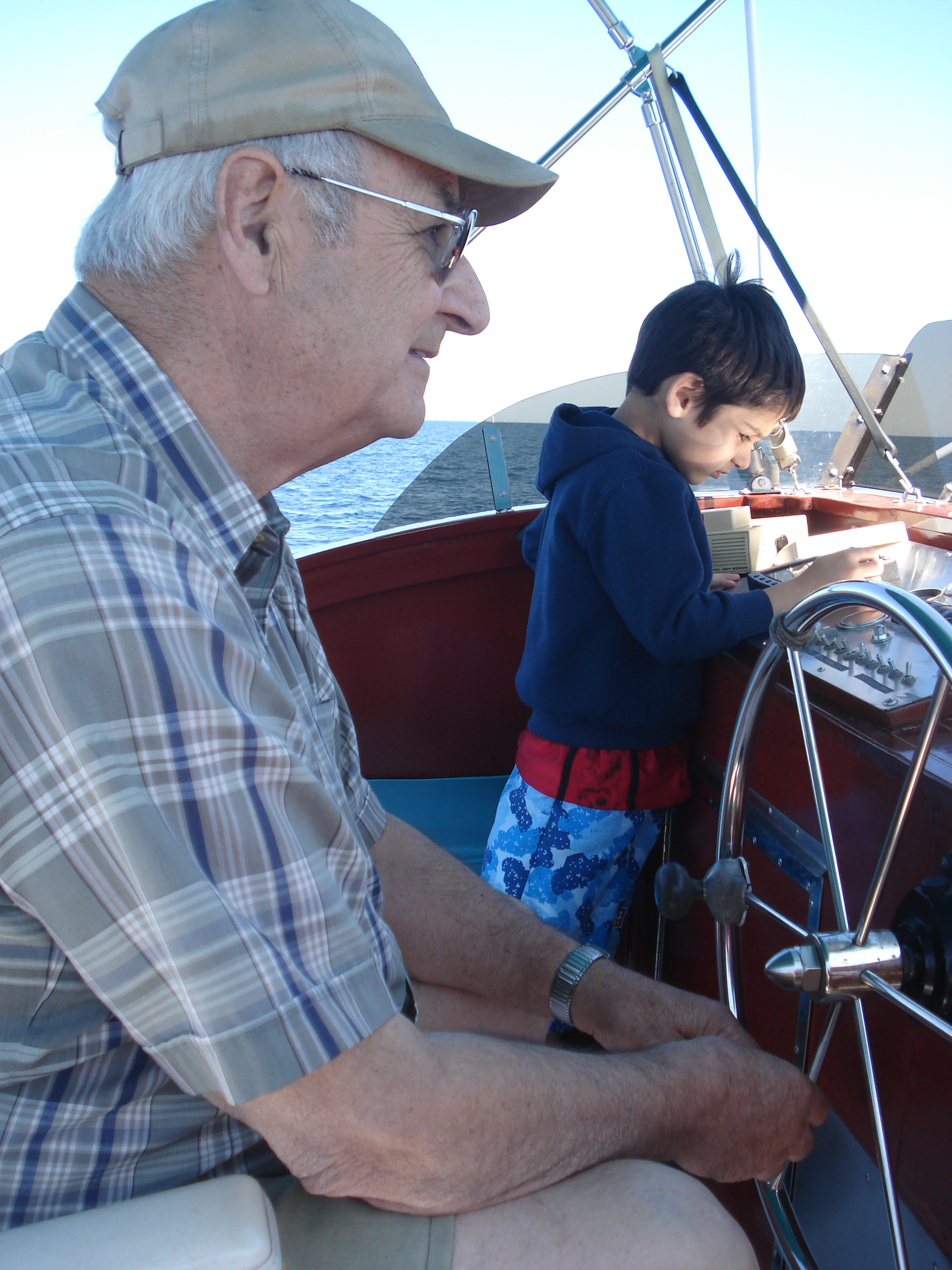
Hector Jourdain and his youngest grandson on bridge of the Bluefin

I didn’t meet my dad when I was born.  It was some weeks or months later when he came into my life – or I came into his.  And then, for him, it was love at first sight.  Maybe for me too but I don’t remember.  What I became aware of later is the connection I’ve always had with my dad.

He was not always an easy man to live with.  There was a lot of tension in my house growing up and even after I left.  He and mom had their share of battles and I had some of my own with him, though few.

Having said that, people were always welcome in our home – from the earliest days of my memory.  No one was ever turned away – visitors, from near or far.  My friends from school came to play and often stayed for supper. Always room for more.  It fostered a sense of hospitality in me that only grew over the years.  That, and friends could be like family – experienced over and over again during Christmas holidays in particular for quite a few years as a large group of friends gathered for a traditional Gaspe meal after midnight on Christmas Eve.

The sea has always been in my dad’s blood.  He has owned a few boats over the years but his pride and joy was a beautiful wooden boat, the Bluefin, which he owned for thirty years.  With care and craftsmanship, he rebuilt that boat from stem to stern over the time he owned it.  If that boat could talk, many a story would it have to tell.

I already lived in Halifax when the Bluefin came to dad.  He and my mom always enjoyed having guests aboard – and that remained true to the final summers we went out on it.  In the early years, it was much more of a party boat.  I and my friends were always welcome.  Most of the time, anyway.

Dad's pride and joy - Bluefin

There was one time, during Chester race week in August, that a fairly large group of my university friends arrived for the weekend.  We boarded the boat, loading up with supplies we brought – food and beer… and a bit more beer.  My father watched as we brought two-four, after two-four, after two-four on the boat until he finally said to me, “How much is enough?”

Then there was one spring when we offered to help him paint the inside of the boat to get it ready for summer launch.  It all started off well enough… until the beer came out.  And then… well, let’s just say dad found yellow paint in places it wasn’t supposed to be for years afterwards.  I still can’t figure out why he never really responded to future offers of assistance!

When his first grandchild came along, he beamed.  It was probably the only time he stopped by the house unexpectedly on his way to and from the airport.  It was an unexpected delight – maybe for him too.

When my first marriage was ending, I knew I needed to tell my parents.  I took that journey alone.  Fear was in my belly and my mouth was all gummed up.  I was disappointed about disappointing, along with all my own disappointment about my marriage ending.  I thought when I shared the news – saying to my dad, “We are living under the same roof but it was like we are living very different lives,” that he would fall off his chair.  Instead, I almost fell off of mine when he said, “I kind of noticed that.”

No questions asked, he and my mom helped me move.  No judgement – not to me anyway.  A lot of love and caring.  I saw that love and caring demonstrated over and over again in obvious and less obvious ways.  In particular, I saw the love and caring my dad demonstrated towards my mother in the final decade or more of their marriage – more and more consistently than I had seen it at any other time.

If someone would have asked me years ago (and maybe they did), I would have imagined that my father would have died comparatively early in life (he did have his first triple bi-pass surgery when he was 45 – thankfully his health status leading up to that also triggered his decision to stop smoking) and my mother would still be living in the full vibrancy of who she was well into her 90s.

Instead, it was a different path that unfolded.  My mother was diagnosed with breast cancer in 20o1, again in 2005.  Somewhere in that period of time was the onset of dementia that ultimately took her into long term care in 2008 until her death a few weeks ago.

My father became my mother’s care giver.  At first it was in little ways.  Noticing the little things that were not quite right.  There were a few conversations about my mother forgetting this or that… like forgetting to turn off the oven, or turn on the washer.  Then it became more obvious, like mom put the banana bread in the oven, went to take it out five minutes later and couldn’t understand why it wasn’t cooked.

This eventually evolved into my father watching out for my mother 24 hours a day.  He watched over her day in and day out, night in and night out – including taking care of her hygiene – at home and sometimes in public places.

When my mother died, my parents had been married for 54 years.  On their 50th wedding anniversary in January of 2008, my brother and I had planned a celebration for them.  We had hoped for a big celebration. It ended up being a small celebration in their home.  I spoke a few words.  I had already planned to speak about the two things I felt I integrated into my life from my experience with my parents – that sense of hospitality or everyone being welcome and unconditional love and support.

This took on whole new layers of meaning in the week before the 50th anniversary when I learned that I had been adopted and had never known or suspected it at all.  The feelings of unconditional love and acceptance were magnified as that story unfolded and I had a conversation with my father about aspects of my life I had known nothing about.

As the story emerged, I was asked if I was angry.  I pondered the question and then responded, “If I looked at this from the perspective of people have been lying to me all my life, maybe I would be angry.  But I look at it from the perspective that people made the best choices they knew how to make.  They wanted to do the right thing and choices were made out of love.

My father is a man who wants to do the right thing.  This was most evident in the latter years of his marriage to my mother.  He loved my mother.  He wanted to do well by her.  He exhausted himself as he watched over her, tended her and took care of her until the very last minute when we admitted her into long term care.  Then, every day, he went to visit her for over a year.  It was hard for him seeing mom in her diminishing world while he still lived in the house that had been their home for over 3o years.

There are many stories in this man’s life.  I only know some of them.  They are not all pretty but they are all representative of a man who has lived a complexity he might never have imagined, who has given a lot, cares about craftsmanship and doing things well.  He has traveled many roads and still has a few to go.

Dad is in hospital, yet again, as I write this.  This too has been a pattern of our relationship over the last decade.  He has an amazing will to live and is incredibly resilient despite health problems that have been challenging him over the years.  We live into and learn together – through thick and thin.

There are things I know about him and things I don’t.  We have a pretty dynamic relationship and a few patterns that have been showing up.  One thing I do know about him is that he loves me.  On the rare occasions when I tell him I love him he always says to me, “I love you more.”

I wish him a happy 79th birthday knowing he would be much happier if he was home for it.  I also wish there will be many more for him with a quality of life that allows him to pursue, in ever more gentle ways, the things he loves to do and do well.

Recognizing and Releasing the Potency of Your Internal Judge

The potency of the internal critic/voice of judgment is insidious.  It is a master chameleon showing up in many different cloaks, rending itself almost unrecognizable.  It creeps up on you when you least expect it, plays havoc with your centre and your ground and runs wild until disempowered. It can be persistently in your experience and it can reappear after a long time away.

As soon as you try to debate it, convince it or argue with it, you engage it and increase its potency.  It loves a good argument.  It’s wily and it rapidly changes its stance to retain the upper hand.  You could be arguing a point and as soon as you get close to “winning”, it will change its direction.  Sometimes so much so that it now argues in the opposite direction and, if you are caught in the argument, you often miss the inanity of it.

My internal judge was running rampant yesterday but I didn’t recognize it until this morning – partly because it’s been awhile since it has been so present in me.

Yesterday I felt out of sorts, de-energized and unable to achieve any substantial progress toward my livelihood. Little things irritate me and make me impatient. I recently had a few days away on a little min-vacation.  My dad had a medical appointment yesterday that I attended with him and then went for lunch – a beautiful little pattern we have. My son is now beginning March break and I am dedicating time to being with him in some small adventures along  the way.

The internal critic is standing back with its arms crossed, shaking its head.  “Yup.  And just when are you going to get your work done?  Your emails sent? Meetings arranged?”  A little feeling of panic seeps in.  When am I going to do that? There is no time!  The panic rises up in me and now there are butterflies in my stomach and a promise of a headache in the offing.

“And, just what were you thinking, going off on a holiday when you have so much to do?”  it asks.

“Because we all know that a break away is important to maintaining energy and reinvigorating mind, body and soul so work and life flows easier.” I respond.

“True,” says the internal critic.  “But you know you couldn’t really afford it either.”

“I used points to fly.  I didn’t shop.  I shared accommodation.  I had some money tucked away for this break.” I argue, beginning to spin.  “And, in all that travel time, I did a full edit of my book.” I say, trying to find the positive, be appreciative, tune into what’s working.

The internal critic nods grimly, “Yes.  And what’s happened to your since then?  It’s been sitting beside your computer the last few days and nothing more has been done.”  (This would be a total of two days, by the way.) “Just how long do you think it’s really going to take to finish that puppy and get it published?  As if anyone is really going to read it.  Well, of course a few people will, but not the numbers you are hoping for.”

Wham. Wham. Wham.  Deeper and deeper in.  Fighting with myself to find my appreciative state.  To find my centre, my ground. Knowing in my mind I am my own worst enemy in this moment but not able to pull myself out of the spiral. Knowing I am out of my centre and it should be a simple matter to slip back in.  It’s not what I do – my actions that are important now, it’s finding the right internal vibration in me.  And my vibration is all out of whack which deepens my fear.  Tears of despondency show up as I believe into judgment, after judgment, after judgment.

Exhausted I fell into bed and dreamed.  I dreamed about flow.  I woke up this morning feeling better, feeling lighter.  Then the storylines began to filter in again.  Then the bolt of realization.  So self critical.  So self judging.  So the voice of my internal judge!  Big sigh.  Of course.  How had I not recognized this insidious internal berating voice taking me backwards and forwards in my imaginings, giving me no peace in the present moment.

A lesson I learned before: whenever my emotions run amok, it is a good clear sign that my internal voice of judgment is lurking in the shadows of my mind, making me a crazy woman!

In simply recognizing it and naming it, its potency is released.  Whoosh! I felt myself shift completely into the present moment, smiling at how this internal judge had found its way into my experience and rocked my core enough to have me questioning myself, my self worth and my path, once again.   No longer fighting and resisting it, simply naming and noticing.  Not arguing.  Acknowledging the power of an adversary that has so much to teach me when I pay attention; even the not paying attention is teaching me.  All it took to shift me back to my centre and my usual sense of joy, delight and calm was to pay attention, notice, name. Now I prepare to bake with my child and dance into this day in a whole new and renewed way thankful for the moments when I see the choices clearly.

Human Tragedy Story Often Obscures Soul Journey Perspective

For a long time, I have believed we are soul journeyers having a human experience. The beauty and challenge of life is that our assumptions and beliefs get tested along the way.  Most recently for me, one way has been through my mother’s journey.

When the symptoms of my mother’s dementia were becoming more obvious in the years before she went into long term care, I knew it as a soul journey and experienced it as a human tragedy story.  This became more pronounced when she went into long term care.  Instead of being the only person in a household living out a bizarre new set of behaviours,  losing her capacity to communicate and do simple things like change the channel on the TV, she became one of many old and dying people no longer able to care for themselves, most living in their own little diminishing physical worlds.

The human tragedy story is amplified in these circumstances and places.  It is hard to see past the story of tragedy when it stares you in the face as you walk down hallways that evoke very visceral reactions in what you see, smell, hear or otherwise encounter – even in a place as loving and caring as the place my mother experienced as home in the last four years of her life.

How many people came up to me, my brother or my father after mom’s funeral to share amazing stories about her that captured the essence of who she was and then proceeded to talk about how they just couldn’t visit her at Harbourview Haven.  How hard it was if she didn’t seem to recognize them.  How hard it is to be in that building when as a culture we have become disconnected from the death chapter of the life cycle.  We no longer experience it as part of the natural flow of life but as something to be feared.  Walking in a place where death is imminent generates fear and discomfort for many of us.  It did for me when I first began visiting my mother, but through my mother the shape of my experience shifted.

For the few who were able to manage a visit or two, they expressed how amazing it was when there was a flicker of recognition in something she said.  I learned how many people besides me she called “little one” (really mom?!) and that was a point of reference for them.

There are others who saw enough through the human tragedy story to visit often.  My mother had a few of those regular visitors although we often didn’t even know it since she couldn’t remember who visited or when they did.  Deeply grateful for those dear friends.

The length of mom’s journey with dementia and her stay in long term care, invited me more deeply into this paradox of understanding  the human tragedy dressing of soul journey.   The phrase “oh, that poor soul” makes me chuckle now.  We use that phrase to describe the human tragedy perspective.  It is the physical experience that appears poor, not the soul journey perspective if you believe, like I do, that we make some choices before we manifest into physical form about what it is we want to experience for our soul journey this time around.

As my mother become more disembodied, I embodied the soul journey perspective from a deeper, more encompassing place of understanding.  Towards the end, her human tragedy story didn’t register for me anymore, only the soul journey perspective.  This gave me a high degree of peace during her long transition process, allowing me to live my life fully even while being present to my mother’s journey and our family care around it.

For the gifted people who work at Harbour View Haven, it seems to me they also see past the human tragedy perspective, treating each individual with full dignity and respect.  Treating them as if they are fully functioning, fully present human beings.  It was a gift to observe this most keenly in my mother’s final hours. It made me wonder what would happen if we all treated others all the time with this kind of dignity and respect – whether we thought they deserved it, whether we thought they were fully human or not.

Living simultaneously with my mother’s journey, my journey and the rest of life, I’ve been thinking about how to express this all so it does not fuel the human tragedy story. I now speak about “the many streams of life”.  We are all in many streams of life all at the same time. Stuff happens.  Stuff comes up.  There is a life giving invitation to be well in all of it, although a more typical response is to be stressed by all the things that come our way that we have to take care.

I’m leaning into this invitation to flow with the many streams of life as though that is what they are, rather than challenges.  Greater spaciousness beautifully shows up.

And then there are the lessons of embodiment that have been present for me in a big way already in 2012.  As I embody my experiences and my learning I understand more deeply my life’s events, my relationships and my soul’s calling.

I’m not saying the human tragedy story isn’t real.  But the soul journey perspective is also just as real although harder for many to see, obscured by the human tragedy story.  The soul journey perspective allows me to live into joy and delight and allows me to fall in love over and over again in a way living into the human tragedy story does not.

For my mother, I continue to experience a dance of joy, delight and lightness as her spirit soars free from the human tragedy unfolding of her physical body.  She continues to be my teacher and my friend and very, very real in my human experience.

Death and Dying – Lessons I Learned From My Mother

Never having been present at a death before, I didn’t know what to expect; and, it wasn’t what I expected.  My brother, father and I held vigil, practically holding our collective breath, as my mother, Mary Patricia Ann Ritcey Jourdain, drew her last, peaceful breaths on Wednesday, February 8, 2012, falling quiet at 12:30 pm.

Then there was silence.  Her silence.  No more rattling breaths drawn with some effort through her lungs into her ravaged body; ravaged from dementia for many years and the refusal to eat for many months.

Our silence.  In reverence for my mother, her journey and the honour of witnessing the final stages of her transition from physical form into spirit.  I already believed much of her consciousness was active in the subtle realms even as her physical presence diminished.  With her last breaths I imagined her spirit gently tugging until the last wisps of it were finally released into a delightful little dance of joy and freedom.

My mother’s journey with dementia was a long one.  My journey through hers was an inspired one.  Her greatest teachings for me may have been in these last few years when she could no longer string coherent sentences together, during the contrast of those times when she seemed to have no awareness of my presence to when I knew she was aware I was there.

I had one of those moments of her awareness the night before she died.  We had moved her to a special room where I could stay with her overnight.  One of her medication times was missed.  I was aware of that but she didn’t seem to be in distress.  So, I sat on the arm of the couch, eye level with my mom.  I looked into her blue eyes and she held my gaze.

When I say she held my gaze, I really mean she held my gaze.  She was just as present as I was.  In fact, I was mesmerized.  I couldn’t take my gaze away.

So, I talked to her.  I told her about some things in my life.  I told her how beautiful she is – not was, is.  I told her how gifted she is and how loved.  I thanked her for being in my life, for being my mom.  Mostly, I held her gaze with love.  Until she began to exhibit signs of distress and I went for the nurse.  And then she was gone again until the moment of her final breath.

Four of us still in the room but now the shape of our lives fundamentally shifted.  As long as we stayed sitting in the room, it was like she was still there in her emaciated form.  But, of course, now she was free of form.  Eventually we had to move and leave her next steps in the capable hands of the Harbourview Haven staff who would transfer her into the equally capable hands of the Dana L. Sweeny Funeral Home.

The staff at Harbourview Haven taught me about human dignity and respect through how they related to my mother.  Even up to the last moment, they treated my mother as if she was fully present and aware.  They called her by her name.  In the middle of the night they would come into our room.  “Mary,” they’d say, “We’re going to turn you over now.”  “Mary, we are going to give you your meds now.  It might sting a little.”

On the morning of her death, a care worker came in to wash her face and freshen her up, providing a depth of love and care, dignity and respect to a woman in her last moments on this physical plane.  I can’t say enough for Harbourview Haven and the care they provided, not just in those last few hours but in the three years and eight months (plus a few days) that my mother lived there.  And not just care for her.  Care for my dad too.  For our family.  They understand about death and dying.  That it is a process and a transition.

My nine year old understands about death and dying.  Enough to ask to visit his grandmother with me when I told him I was going to see her.  He hadn’t been there much lately.  I told him what his grandmother looked like and how she was.  He still wanted to come, even when the call came to say it might be her last day.  And his older brother and his girlfriend came too.  We all sat vigil the day before she died, for hours.  Watching my mother with sidelong looks every time her breathing stopped – for the eternity that shows up in a moment.

I am now aware that dying and death requires the same kind of loving care and attention as birth does.  It is birth.  Birth back to spirit.

When my older boys were young children their grandfather on their father’s side died.  Their dad and I had already separated.  They went to the funeral and afterwards I asked them how it was.  We began to talk about death.  They said to me, “We think it’s kind of like this.  You know when you dream and when you are in the middle of a dream it seems real?  But then you wake up and you know it was just a dream.  We think life is like that.  It’s really just a dream but it seems real.  Then you die, but really it’s like waking up and realizing it was just a dream.”  Such wisdom out of the mouths of babes.  Closer to source.

I wonder how my mother might be reflecting on the 79 year dream that was her life as Mary Patricia Ann Ritcey Jourdain this time around?