The Field Beyond Difference

Out beyond ideas of wrong-doing and right-doing,

there is a field.
I will meet you there.

Rumi

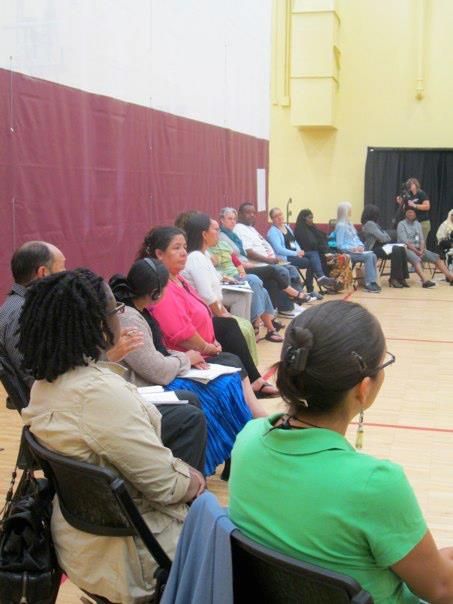
Rumi’s words, with a slight variation, encapsulate the experience of an amazingly culturally and age diverse group of participants, apprentices and hosts who gathered September 11-14, 2012 in the middle of the Phillips Community of South Minneapolis where all of us discovered there is a field beyond difference and we are willing to meet each other there.
Image

There was a tremble in our fourteen member hosting team as we prepared to welcome over seventy Somalis, Native Americans, African Americans, Anglo Americans, Latinos, people from Liberia, Ethiopia, Malaysia, Mexico, Costa Rica, Columbia and more, together with two translators: one for Somali and one for Spanish.  We were not sure how many would come, how many would stay or how many would come back the next day.

This Art of Hosting training, supported by the Bush Foundation’s InCommons in partnership with the Meadowlark Institute, was called by Amina Saleh a co-founder of the Native American Somali Friendship Committee, in the hopes that bridges could be formed across the  multiplicity of cultures that have come to reside in the Phillips residential area of South Minneapolis.  The original residents of this community were primarily African Americans, Native Americans and Anglo Americans.  In the 1990s immigrants and refugees began moving into the area in search of affordable housing.  Over the years, the cultures clashed, tensions rose and violence across the cultures, particularly between the Native Americans and Somali communities, occurred.

Amina found herself at an Art of Hosting training in March 2012 and became curious about what might be possible if a training was hosted right in the middle of her community, in the community centre, where the children congregate after school.  Well, we found out!

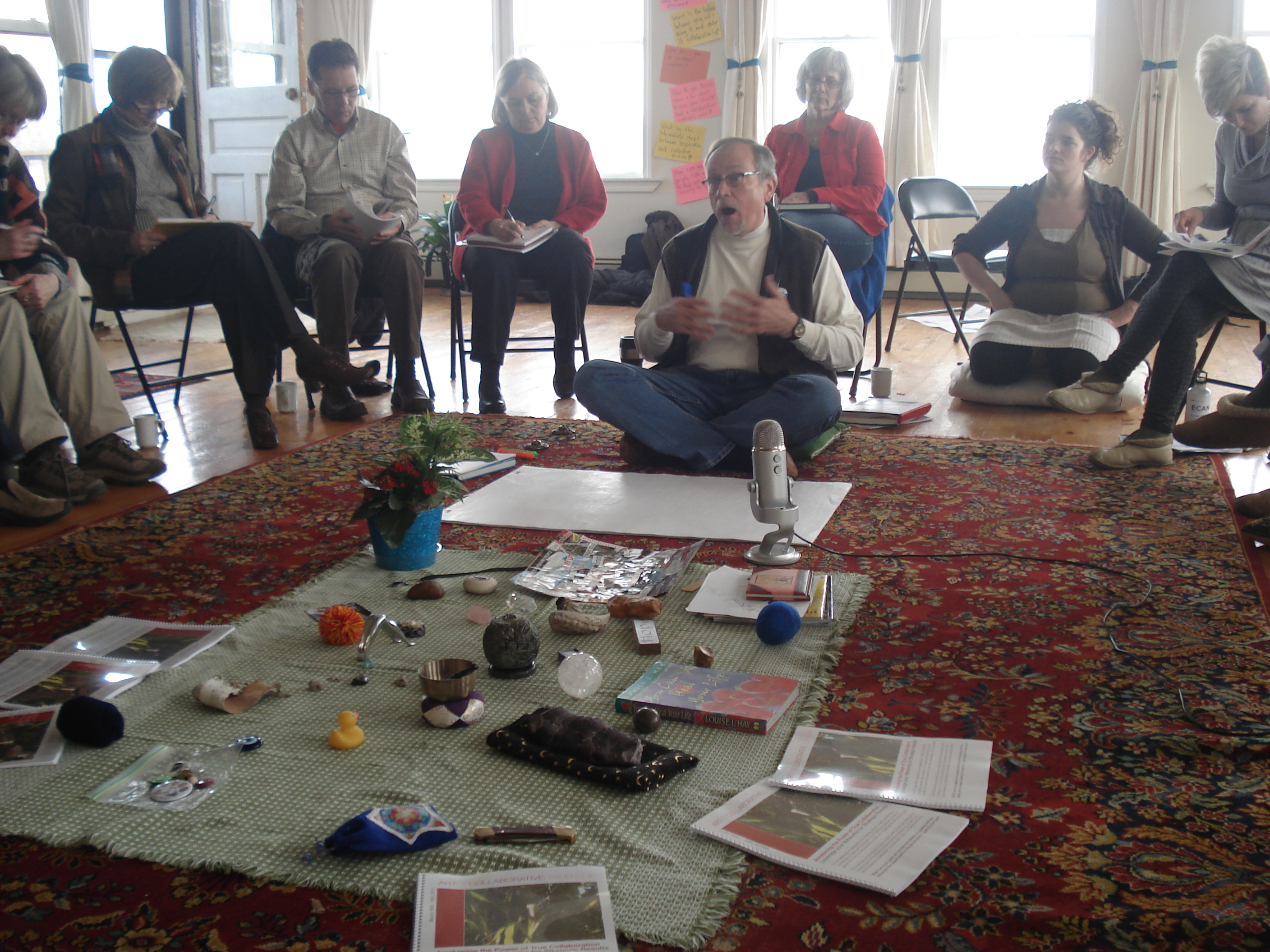
We started with a beautiful Lakota sage ceremony offered by Lemoine Lapointe from our hosting team, to open the space, to cleanse ourselves, open our minds and, even more so, our hearts.  An offering from one of the cultures present in the room, inviting others to also offer in a right moment or opportunity.
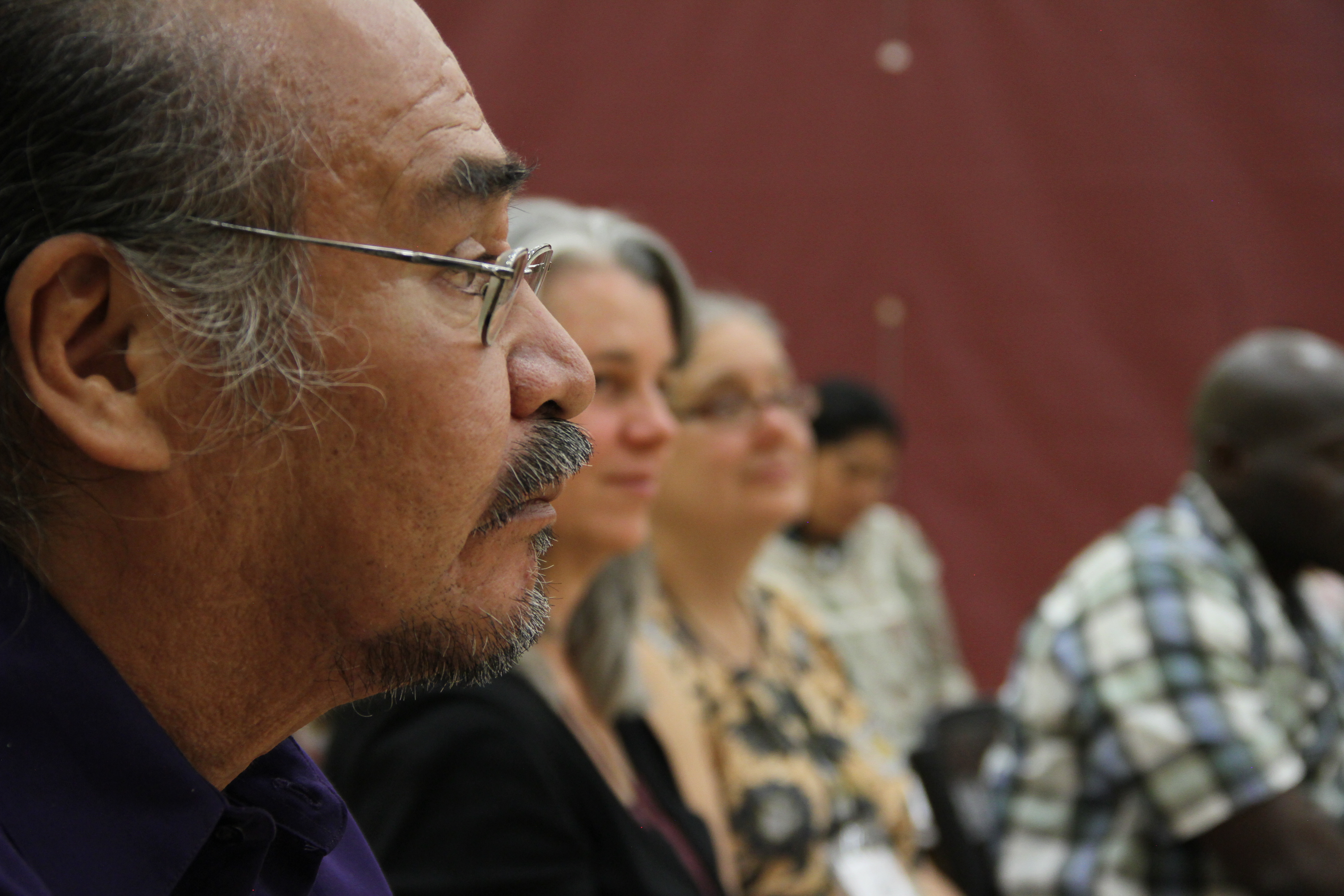
Lemoine Lapointe

Each one of us was then invited to bring our voices into the circle by responding to: my name is…, I live…, I’m from…, my ancestors are from… and I speak …. languages. As we listened, we became aware, beyond the diversity of skin colour already visible in the room, of the richness and multiplicity of cultures and languages represented in the space, the richness that showed up sometimes in a single individual as well as in our field.  It took our breath away and opened our curiosity.

The purpose that emerged for the four day training was: Hosting meaningful conversations as a way of giving life, (1) inviting in our full selves and each other, (2) sharing language and frameworks, (3) staying in it – together and (4) building “whole” community. The phrases in the purpose statement framed each of our four days; scheduled to begin around 9:00 with a hard stop at 3:00, because this is when the children arrived in the community centre we were in and when some of the single moms in attendance also needed to be home to greet their children.
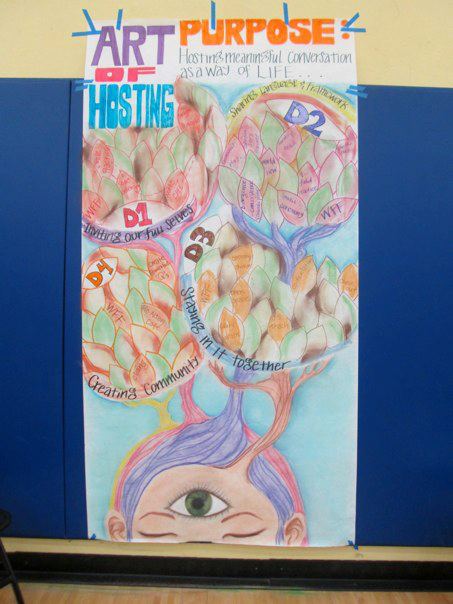
Beautiful visual depiction of our 4 day flow by Nou Ka Yang

Our first afternoon was a caféWhat is in your heart that brought you here today? What is in your heart for your community? What would you like to give life to here for your neighbourhood?  Powerful, surprising questions, giving pause like unexpected questions do.  Silence at the first café round while people let the question sink in, then decided how fully they wanted to bring themselves into the room, into the conversation, into the others also at their table. Cautiously, at first. What is in your heart? Not, why are you here? Not, what’s in you mind?  What is in your heart? Are you willing to go there yourself, let alone speak it into the centre of the table?

By the third round there was a beautiful buzz in the room as people began to relax into the invitation to bring their full selves.   In the harvest, one man offered, “Unlike Vegas where what happens in Vegas stays in Vegas, what happens in this room should not stay in this room. We all need to take it back out into our communities.”  This became a mantra for participants for our full time together.

People were ready and willing to offer their rituals, ceremonies and stories into our collective space.  In addition to the opening sage ceremony, we experienced a Somali coffee ceremony, an Aztek ceremony and a Hmong ritual and an African American dramatic story telling: Sojourner Truth, in addition to Native American ceremony, song and round dance from the Dakota and Lakota cultures. We gifted each other with prayers and blessings.

Sometimes it was a bit uncomfortable with the varying perspectives and cultural norms around touch, song, dance and partaking in another culture’s ceremony; but only just in that moment before understanding blossomed and more ease entered with the witnessing of things precious.  Graciousness, curiosity and respect filled the space and the conversations. Deepening our individual and collective listening skills invited us all to show up even more fully.

The realization that issues, concerns and passions arc across cultures invited people into bridge building. Education, children, community housing, racism, racial profiling, relationship with police, healing, well being.  Learning to navigate the dominant culture and stand up, both for what is right and for rights of an individual no matter each person’s roots or ancestral history.  Awareness of commonality in the diversity. People care about many of the same things even if their way of approaching them or their cultural norms may be different.
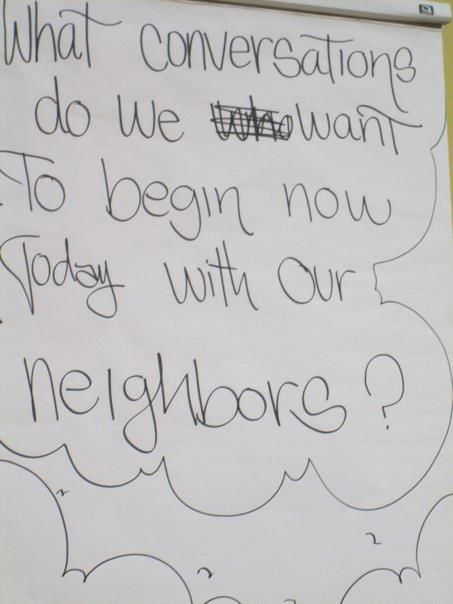
Invitation to Open Space

As we gathered in our check out team: Amina Saleh, Kadra Ahdi, Lemoine Lapointe, Molly Matheson Gruen, Susan Phillips, Bob-e Epps, Anne Gomez, Lori Lindgren Voit, Nou Ka Yang, Marcela Sotela, Jerry Nagel, Tuesday Ryan-Hart, Ginny Belden Charles and me, there were tears.  Tears of hopes realized, connections made, community strengthened, deep sense of belonging.

Our work began in the hosting team itself on our prep day.  It was the first time many of us had met in person as is common in these trainings.  There was a great variety of experience and understanding of the Art of Hosting in the team, from lots to little to almost none, with people eager to deepen their skill, grow their capacity.  The team quickly became strong and cohesive with each person stepping in, contributing, supporting as one fluid movement, offering what we each could, asking for what we needed. We formed community.

We became a field to welcome the larger field of community activists and organizers from across cultures who showed up.  And came back. Day after day.  For four days. They sensed something different. Became engaged in possibility in new ways. They made plans for next steps on very specific projects. Co-creating a new hope for the future. Giving life to community from a different place.  Stepping into courage, transcending fear, reaching out, seeing the human face of diversity and knowing that shifting the shape of the communities they live in and touch is possible to ever greater degrees.  Humbled, touched, delighted to be in this work that matters so deeply.

There’s a Reason Why It’s Called The “Art of …”

What is art without technique and is technique alone really art?  “Art” could mean art as it evokes the image of artwork but, really, it is much broader than that –  dance, fitness, sport, yoga, meditation, music, hosting, the work we are in.

I’ve been in a beautiful reflection after a delicious conversation recently with good friend and hosting colleague Jerry Nagel. We were discussing upcoming work in California, Brazil and Minnesota and just after he’d been listening to an interview with Rosanne Cash. She spoke about working with her muse – the muse being the source of inspiration for creative work.  She said she works with her muse all the time.  All the time.  Not just sometimes.  All the time.  A discipline.  A practice.   In little whispers along the way and in more structured forms.

She also noted how performing in front of an audience is not a one-way street although she used to think that early on in her performing career.  Now she knows through experience there is an energetic exchange between the performer and the audience.  Tuning into the energetics.  Fuelling and being fuelled.

My conversation with Jerry started with a curiosity about how working with the muse relates to our work in Brazil at the end of October: Hosting From a Deeper Place with two Brazilian friends, and the purpose of that gathering.  Perhaps it is about how we each individually work with and cultivate our muse, our source of inspiration.  How we move technique to art or if we are already in art, how we grow our artistry in our work and life? Because it is a practice.  It is a discipline.  It is not just present some of the time.  It is present most or all of the time.

We then moved into an exploration of what we do in Art of Hosting trainings, in our work with clients and what’s happening in the field in Minnesota where hundreds of people have been to an Art of Hosting training in the last year or two and some are stepping into a deeper journey to be a trainer but wondering really, what is the path to artistry and what does it take to get to the field beyond good technical skill?

People will often say they come to an Art of Hosting training for a technique – like World Cafe or Open Space Technology.  Or, as some like to say, “to expand their tool kit”.  And technique, particularly good technique, is fundamentally important to what we do and what we offer.  We need to know and practice the foundation or the fundamentals to get good.  An artist practices technique – whether with paint, music chords, performance basics, fitness basics.  I wonder if artists talk about expanding their took kit or if they talk about growing their craft?

Most of us don’t just sit down at a piano and have beautiful music come out unless we are some sort of musical prodigy.  Nor would we expect that.  We would expect, if we were inspired enough, to learn the foundations and know that after we learn the foundation then we have the opportunity to become more and more intricate with the music, the style, the mix of technique.

Some never move into artistry from being a technician and, for sure, not everyone must. However, there is a quality we can observe, hear or sense, that lets us know when we are listening to music from a good technician and when we are listening to music from an artist.  It comes from the heart, from the soul.

It seems to come when we can relax in the technique and live in the art – just as true in hosting work as any other kind of artistry.  Art  bolstered by working with the muse all the time.  Even, maybe especially, when we are not working with groups, we are working with the muse.  Developing a discipline of practice. The practice is the work.  The practic is holistic – involving fitness, health, spiritual and personal practice that allows us to know ourselves – the first fold in the four fold practice – hosting self, being present.  The more we know ourselves, really know ourselves, in addition to the solid foundation of knowing the technique, the more we dip into artistry.

The difference between being a technician and an artist is subtle and dramatic at the same time.  It is something we sense but can’t always name.  It is tuning into this energetic exchange between host and hosted.  Sensing what is there rather than looking for it.  In the looking for it we sometimes miss what’s really there.  In tuning in, we sense the subtleties in the room, in the energy that is present that requires hosting in quiet and/or more obvious ways.  We become like a well tuned instrument.  And it can take years of intentional practice for this to happen.

I am aware in my summer of presencing, where I have not been hosting groups, I have continued to be in the work, practice, discipline of hosting myself – with new levels of awareness and new patterns of joy emerging.  When I begin co-hosting groups again in a couple of weeks, I know in the depths of being, it will come with a whole new level of presence.

With practice, the discipline begins to call on the host.  Time to exercise.  Time to meditate.  Time to invite a conversation – to host and be hosted.  Time to be curious.

Hosting from a deeper place is what happens as we move beyond being good technicians into artistry.  There’s a reason why, when we name a training, workshop or intensive, we often call it the “art of…” The first or surface invitation is into technique and process.  The deeper invitation is into practice and discipline that tips us over into artistry, the understanding of the deeper patterns, the energetic architectures and sensing into the subtleties that show intervention points that are much harder to grow awareness or understanding of when we are in the technical learning of our craft.  It is why one art of hosting training does not a practitioner make.

Technical competence and expertise?  Yes we need it.  It builds a strong foundation.  Artistry?  Where and how does your soul call you into your hosting artistry and what are the subtleties you notice – in others, in yourself – as you tip over?  What muse inspires you to deeper places in your being and invites you to bring more of who you are to what you do?  What journey do you need to embark on to host for a deeper place?

Navigating the Groan Zone is an Art

For a such a simple little concept, the divergence-emergence-convergence model we use in the Art of Hosting sure packs a punch.  It is a simple teach that can be done in 10 minutes – or longer – if time, space and the opportunity to engage others in the conversation allows.  It sheds light on design process, the groan zone and people’s experience.  Navigating the groan zone is an art form that often arises out of our ability to host ourselves well.  Stories from a recent Art of Hosting training a bit later in this post.  First a bit about the model.

Divergence-Emergence-Convergence – a simple model with an interesting challenge

The divergent phase of this model is akin to brainstorming.  We want as many ideas as possible to emerge so we can later select the best ones to develop further.  It has much broader application than brainstorming though.  It is about expansion.  It is where ideas are generated, information is collected,  issues or challenges are sensed into to gain more insight or shift perspective or simply where we holding open the space for possibilities to enter in.  It is not a time for evaluation.  We don’t need to know what we will do with the information.  We don’t even need to know whether the information is ultimately useful while we are in the divergent phase of the learning, the work, the project.

As we begin to feel overloaded, overwhelmed or uncomfortable, or we begin to question “the process”, or the leaders or hosts of the process, or we are just tired and grumbly, we are desiring understanding and often looking for convergence.  What does it all mean?  What should we do now?  When can we be done?  All questions that indicate we are near or in the groan zone.

In an effort to avoid discomfort, end discussion, or just get to the end now, we are often tempted to circumnavigate the groan zone by picking an idea, or a solution prematurely – any reasonably good one will do – and developing it into “the answer”.

Some things happen when we do this.  One is that we may miss the truly important things.  By prematurely closing a conversation, the essence or pattern of it often comes back.  We think we made a decision but the decision is questioned and we end up in a new round of conversation about things we thought were settled, growing frustration and dissatisfaction later on.  Staying with the discomfort just a bit longer might emerge a different idea or opportunity or a new understanding of where are at and why. What if we became curious about where we are instead of wanting to shut it down?  What might then emerge?  What if we ask the question, what else is going on here?  What is underneath the conversation, the unrest?

Navigating the groan zone is an art of discernment in many ways.  It is also a skill we can develop.  I recently had someone send me a note, asking me how a training was going.  The note arrived exactly in the groan zone at the end of day 2.  I thought about replying and knew it was just impossible to explain succinctly where we were in our process – unsettled, a bit disconnected as a group, unclear about what all was bubbling.  Sure enough, the next day things flowed together, the group became more cohesive and new possibilities emerged.  I had a new story to share about the groan zone and the importance of staying in it in our processes, not prematurely attempting to assess the success or failure of a conversation, a training or a process. We don’t just need to stay tuned to the groan zone, we need to be alert for convergence and good timing of it.

A couple of stories about the groan zone from recent hosting experiences.  These two stories come from the first AoH training for Rio de Janeiro in Brazil at the end of April 2012.  Two of my co-hosts (on a team of nine) were Jerry Nagel from the US and Maria Barretto from Brazil.

The first story is from the hosting/calling team.  We met, as is normal practice, the day before for our check-in and design process for the training that was in front of us.  In the couple of weeks just before the training, it filled so rapidly most of us had no idea we had reached our capacity of about 50 people in the lovely retreat centre we were at near Petropolis.  Even in this last night before we were to begin, people were sending emails saying they wanted to attend.  In the normal flux of what happens leading up to a training, some people were appearing, some were saying they couldn’t come and we were left trying to figure out what to do.  We had five people  on a waiting list.  There were two possibilities: begin the list for the next Rio AoH or refer them to an AoH that was to happen in Sao Paulo a few weeks later.  We circled around a decision several times, even as we tried to move on, but never landed.  We were clearly in the groan zone.  Maria was the first one to suggest this conversation was not about numbers, there was something deeper that maybe we needed to become curious about and pay attention to.

After two hours we agreed as a team that we would just say yes.  Full invitational energy.  You want to come?  If you can still come we will figure out how to make room.  Calls went out to the five people, three of whom showed up the next morning, two of whom had a 7 hour drive to make it happen.  What was our conversation about?  Letting go.  Inviting.  Trusting.  When we entered full invitation, we passed through the groan zone as a hosting team.  Something shifted for us. Beyond the decision itself. Into the collective space of being a team.

The second story – this time from the full group.  Day 3 of a 4 day training.  The morning is all about hosting self – embodiment, art, silence.  Not everyone is comfortable with meeting self.  We decide not do a collective harvest of the experience but to leave it with individuals.  The afternoon is Pro-Action Cafe – one of the best I’ve ever seen as my Brazilian friends take it to new levels, engaging the participants while the conversation/project hosts are reflecting on what they have learned so far.  “What does it feel like to host other people’s dreams?” is the question they ask, a question that touches me heart.

After the proaction cafe, we enter a debriefing space.  It’s been a long day.  First comments are quite positive and excited.  Then there is a shift. The comments and questions that are now coming into the space do not, in my perspective and through translation, seem to reflect the proaction cafe experience.  So, I become curious.  As I pay attention, I begin to wonder, what is the level of discomfort from the morning experience that seems to be bubbling up now?

The day before, Maria taught the divergence-convergence model, speaking about the groan zone.  In this moment, as I listen I know we are in the groan zone.  I listen for an intervention point and take the talking stick – a paint brush from the centre that many who speak are holding as if it is a microphone.  I step into the centre of the circle and begin to walk it.  I say, “Friends, yesterday Maria talked about the groan zone.  Today, now, we are in it.”

Someone says, “So we should be celebrating.”

I chuckle.  “Yes,” I respond, “We should be celebrating.” I pause, “We need to be careful that we do not assume that our individual experience is the experience of the group.  The things that really resonate with me might be the things you are most challenged by and vice versa.  This is an invitation for us to each own our own experience and to become curious.”

From here, I am not really sure where we want or need to go next.  I invite the hosting team into a transparent conversation about how we want to proceed.  There is one more thing we had been planning but we are now into the time for that process.  Things take on a life of their own and we enter into a fishbowl experience.  I’m still not sure how that happens, but we flow with what is emerging in the space.  As a host team we have a little conversation about what will serve best now.  Participants enter the fishbowl and offer their experience and their questions.  One person asks, “Why don’t you, as experts, just tell us what to do now?”  Good question.  We invite it to sit in the room with us til a bit later.

After hearing from more people one clarity emerges for me.  I  want to be sure we honour the stepping in of volunteers to host processes they had never hosted before and I feared itt was being lost in the ripples showing up in this groan zone.  The response to the question of why we didn’t just provide the answers for people?  “Looking for someone to provide the answers is a typical reaction when we are in the groan zone.  Learning to co-sense and co-learn into what is needed next is the learning edge we are all on.  An answer too soon might not be what we need at all.”  People are nodding.

As we have heard the feedback and sensed the room, I suggest maybe we need to wrap up.  One of the desires in the room is to end for the day and dance – beautiful Brazilian circle dance.  Jerry states, with a beautiful level of intensity, “I didn’t come all this way to just stop and dance now.  There is more learning to be offered.”  People around the room nod.  This is another thread very present in our space.  Maria finally suggests we wrap up for dinner and, for those who want to, we will reconvene after dinner to hear stories of where the methodologies have been used and the impact of them.  This is ultimately the path we choose.  Pretty much everyone shows up for the evening of storytelling.  There is a hunger in the room.  It is a good call.

In the middle of the groan zone we modeled how we can hold the intensity of it, offer up various points of view, and maintain integrity and depth of relationship in our field.  We feel the relief in the room and we know the tension we have been holding in this moment.  Many people later thanked us for modeling what we speak about, that it was a powerful moment for them.

The next morning, we know we need to converge well.  We invite triad conversations as a check in.  People are asked to reflect on their greatest learning and how they are going to take their learnings home.  It is a powerful convergence moment as people reflect on their experience and how to apply it.

Convergence is not necessarily something that happens half way through the process as is depicted in the diagram.  More likely it will happen 2/3 or 3/4 of the way through.  And, when we have navigated the groan zone well, it happens swiftly.

In a lot of our planning processes, I will often say they are front end loaded. If we take the time to sense into what is needed, and the time to be in conversations that take time, with the curiosity about why, we create the conditions for “magic” to happen. I’m not sure I’ve ever been in a process where “magic” happens when we haven’t had to navigate the groan zone with attunement, patience and awareness.  There are ingredients that lend themselves to magic and navigating the groan zone with presence, patience and attunement are some of them.  It is sometimes the most challenging space we hold, but the rewards are bountiful when we do it well.  And whether we do it well or not, the learning is rich.

Community of Practice – What’s it All About?

One of the biggest questions arising out of Art of Hosting trainings and related work I’ve been part of these days is, what’s next?  How do we actually practice and sustain what we have just learned?  How do we grow our skill, courage and capacity as practitioners?  How do we create fertile conditions in our organizations or our communities to shift the shape of our future, the way we work and even the work we do?

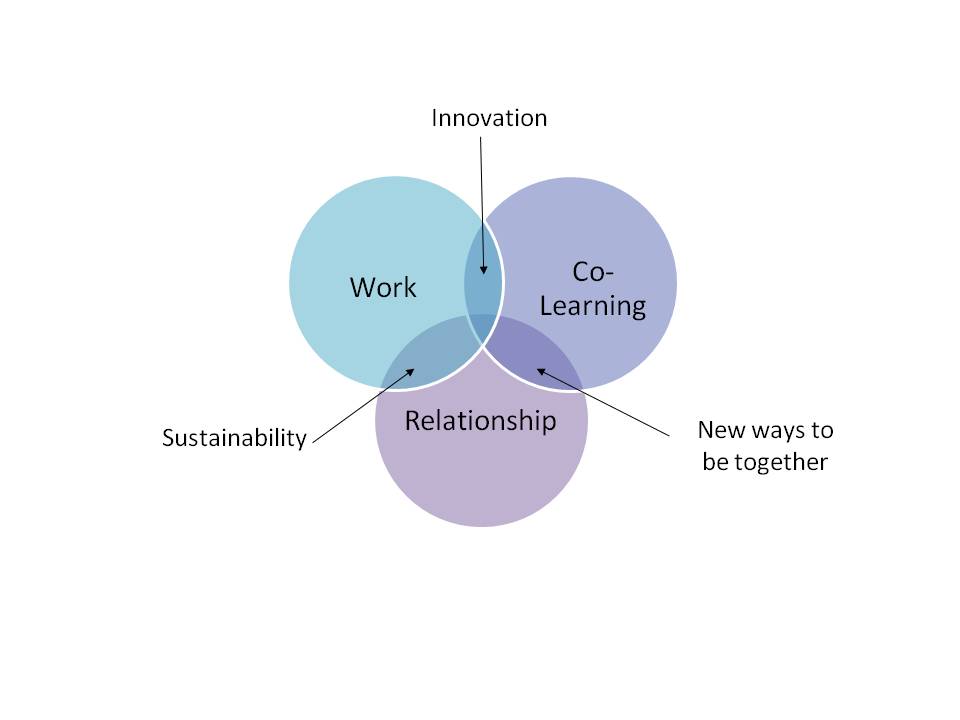
In March 2011, I co-hosted the Art of Collaborative Leadership in Nova Scotia with good friend and colleague, Jerry Nagel from the Meadowlark Institute in Minnesota.  He shared a model he and Chris Corrigan have been using in Minnesota as a means of thinking about and being in a Community of Practice (CoP).  I refer to it often now as it reminds me and the groups I work with of key elements that contribute to learning, growth and shifting the way we work and are with each other.

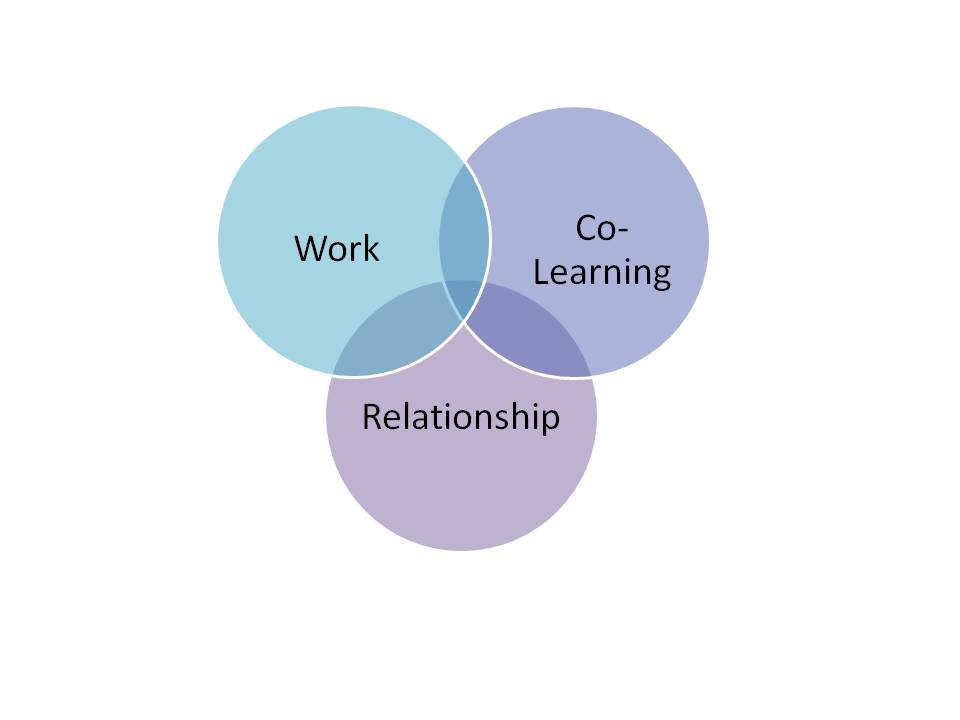
Work alone can be drudgery.  Learning alone can be a great intellectual pursuit and might lead to some shift within you as an individual but does little to generate collective learning.  Building good relationships is a good skill to have but in and of itself, you might as well be in a social club.  It is where and how work, learning and relationship intersect that creates the potential for a rich and relevant community of practice.


The intersection of work and co-learning is where innovation happens as people think about the context of their collective or co-learning in relation to work.  Ideas are generated and possibilities emerge.  Without relationship though, there is often no traction or sustainability to the innovative ideas that emerge – they simply dissipate into thin air because there is no impetus to work with them on an ongoing basis.

It is at the intersection of work and relationship that sustainability happens.  And not just any relationship will do.  The relationship needs to be of good quality, filled with respect, trust and deep caring for each other – the quality of field that enables divergent points of view to be expressed, where passion for the conversation, the work, the future and friends is welcomed.  Friendships we will fight for and support.  We don’t necessarily start there but how beautiful when we tend to the relational field with such care and intentionality that so much more can spark without risk of offending anyone, without having to tiptoe around the conversations that are most necessary in our learning, relationship and work.  These are friends with whom we will venture into unexpected places, uncertainty, emergent fields and creative explorations as well as nurture and cultivate the innovations that most spark our  passion and curioisty.  When these people call us because they need something, we respond.   Sometimes we drop everything else and respond.

Powerful friendship, kinship or mates is fostered in the place between relationship and co-learning because part of what we are learning is how to be together in new ways that break old patterns that have defined relationships, at work, home or in other places where we make contributions and commitments – patterns like hierarchy and culture,  old ways of moving work along,old ways of meeting and of thinking about meeting agendas, conferences or programming.

One of the key reasons we want to shift our relationships, aside from the experience of feeling better, working more effectively and enjoying showing up at work and projects is to focus them on achieving something meaningful and relevant in the world – maybe systemic change, maybe some smaller initiative. Otherwise, nothing happens.   We are at such a pivotal time in our human evolution on this planet, a Community of Practice will be most meaningful when we bring our relationships and collective learning  to bear on the shift we are wanting to create rather than putting up with the shift that just shows up.

Having now been in several conversations about community of practice, most recently with emerging leaders in Halifax – none of whom are following conventional career paths,  this model becomes extremely helpful in focusing on the purpose of a community of practice, especially as conversations tend to veer to one component or the other.  The power in the model is that it reminds us that each of these elements is fundamentally important to shifting patterns of work, organizations and communities, as well as individual patterns of relationship.

Communities of Practice could and will be many things – defined by the people who gather in them.  There is some core that attracts people into them – it could be creating an active practice ground in a community or organization for new skills, a safe haven in an environment that seems resistant to new work and new ways of working, an opportunity to grow individual and collective capacity.

The ones I’ve been part of seem to have an energy and magnetic attraction of their own that keep people showing up, an ease of flow and relationship, shared leadership and shared responsibility.  Nobody has to make them happen, they almost seem to make themselves happen.  They are fun.  People who show up really want to see each other, be with each other and dive into deep places within themselves and with each other.  There is some intentionality applied and the CoP is able to follow the path of emergence that points to what needs and wants to happen next to be most meaningful to work, relationships and learning.  Many of these CoPs don’t just know that something different is possible, they are beginning to demand it and showing up together, cultivating deep relationships and imagining what is possible that none of us individually might have imagined on our own while growing skills to support what we are envisioning is one way of creating movement, maybe even creating a movement.

Reflections on the Art of Collaborative Leadership

A week after the Art of Collaborative Leadership it is still hard to find the words to articulate the fullness of my experience in a succinct and coherent fashion, there were so many facets at play.  This post will focus on three: crossing an intergenerational divide, hosting the energetic component of dynamic space  and strategic results.

Intergenerational Composition

When we looked around the room at the 22 of us gathered at Pottery Lane, a beautiful day retreat centre right on the Northwest Arm of Halifax, we noticed that there was a pretty even representation of younger and older people (older being mostly around my age, give or take a few years).  In my own experience, this spontaneous even mix of generations has not happened before.  The gatherings I’ve been part of have generally leaned in one direction or the other.

This made the hosting team of myself, Jerry Nagel, Sophia Horwitz, Rachel Derrah, Ryan Deschamps and Marcello Lacroix (supported on the rim by Nancy Eagan and Martin Siesta) curious.  We became aware that the composition of our group was directly related to the composition of the hosting and calling teams and I realized this was likely true of all the hosting teams I’d been on.  As an example, in Brazil last October, the local callers and hosts were all young and the majority of people who showed up were young.  In the future, I know I will be paying even more attention to the composition of the hosting and calling teams in relation to the purpose and intention we are calling in and the richness of the intergenerational exchange.

Hosting the Energetic Component

The hosting team noticed early on in our three days that the energy in the group (showing up through individuals of course)  seemed at times fiery, at times disenchanted, at times hopeful, at times curious – and most often all of those things at the same time.  The energy seemed to be jumping all over the place – like soap bubbles floating in the air and popping.

It caught our attention and we began to wonder just exactly what was in the air and how to hold the space with lightness, intentionality and discernment.  In writing about it now it all sounds very professional, easy and sage.  In the moment, it requires intense presence to tune into what is in the space without overreacting or pouncing on individuals who bring very diverse perspectives but allowing all of it to show up in the room, while at the same time deliberately inviting in the opportunities and space for people to practice new skills they are learning in the moment.  A good reminder (if I needed it) about why it is important, even imperative, that we never host alone and that we create beautiful and strong relationships with our co-hosts so we feel fully supported and are able to observe the space from many different points of view and experiences.

In our design of the three days, we had already decided to invite participants to go on a silent hour long walk after lunch on day 2.  As we debriefed at the end of day 1 and talked about the energy in the room we needed to decide how far to delve into the energetic dynamics that were showing up so we could clear the air, wanting to balance it with our clearly stated purpose of learning more about collaborative leadership and the conditions that support it and carving out time for people to take projects and ideas they had walked in with to the next level of thinking and clarity.

We decided we would take half of the hour long walk and invite a dyads conversation, asking people to share with each other where they were experiencing tension and where they were hopeful.  We began to wonder if there was intergenerational tension in the room, so we further determined we would ask people to pair up with someone not in their age group.

The invitation into this walk became a defining moment of our collective experience.  As people were invited to pair up with someone not in their age group you could see the uncertainty as they looked around the room, wondering who on earth they were going to pair up with and who would do the inviting.  It was a momentary collective holding of the breath, obvious to all and quickly surpassed.

People walked and talked.  And when we all arrived back into the room, something had clearly shifted.  The energy had settled down and the room was even more ready for the learning that was to come.  Intergenerational tension was not the only factor in the tension in the room but the dyad conversations became a leverage point for releasing various aspects of the tension.

Strategic Results

We moved into a proaction cafe in the afternoon and five ideas flowed into the space looking for a next level of clarity and wise action steps.  Some people came with ideas just beginning to form and others came with critical issues they would be facing as they went back to work following this training.  Some left with a beautiful level of precision on their work.

At the end of this second day, when we were debriefing as a hosting team, we reflected on the waves and weave of the day.  We knew we’d hit the summit of the experience and our last day was about arriving home well.  We recognized that we still had a day we needed to enter with deliberateness and intentionality.  The day was a mix of personal leadership and more tools, models and methodologies to help people frame their work and experience well.

We brought in a compassionate listening exercise from Jerry’s work in Minnesota, taught the new model that Jerry, Chris Corrigan and others had evolved for resourceful communities and the two loops of systems change, and did a little methods cafe.  We allowed time for people to wrap up any unfinished business with people in the room and moved to a beautiful closing circle.  There was a greater hopefulness in the room than when we began, an excitement about results and, of course, a sadness in leaving.

The hosting team has committed to calling this group back together on April 11 in Halifax.  We want to continue to learn and grow from each other.  People who live elsewhere are invited to participate from their locations.

I am deeply curious about what more will emerge from this amazing little and powerful gathering. I am grateful to the hosting team for stepping so fully into this journey with me and have experienced new levels of depth in each of those relationships, individually and collectively.  My world is forever transformed and expanded because of this gathering.

My dear friend Marcello, who had committed to coming before we were even sure we were doing this, has had a lot of opportunity to reflect on this experience and a previous Art of Hosting experience as he prepares for the Art of Hosting training he is calling in Porto Alegre where he lives in Brazil in September – the subtle nuances, the dance with energy, the focus on results and the amazing power that can show up in well cared for and well tended spaces – because all of us cared for and tended the space.

I would be remiss if I did not mention Roberto and Anke from Conscious Catering who were as much a part of our experience as the place we were in – preparing food lovingly for us.

This is just a portion of my reflection from the Art of Collaborative Leadership.  There is so much more, including the shifting shape of my own leadership learning experience from start to finish and beyond.  Many more reflections to be sure from such a rich and enduring hosting experience.