Ode to My Mother on Her 79th Birthday and Mother’s Day

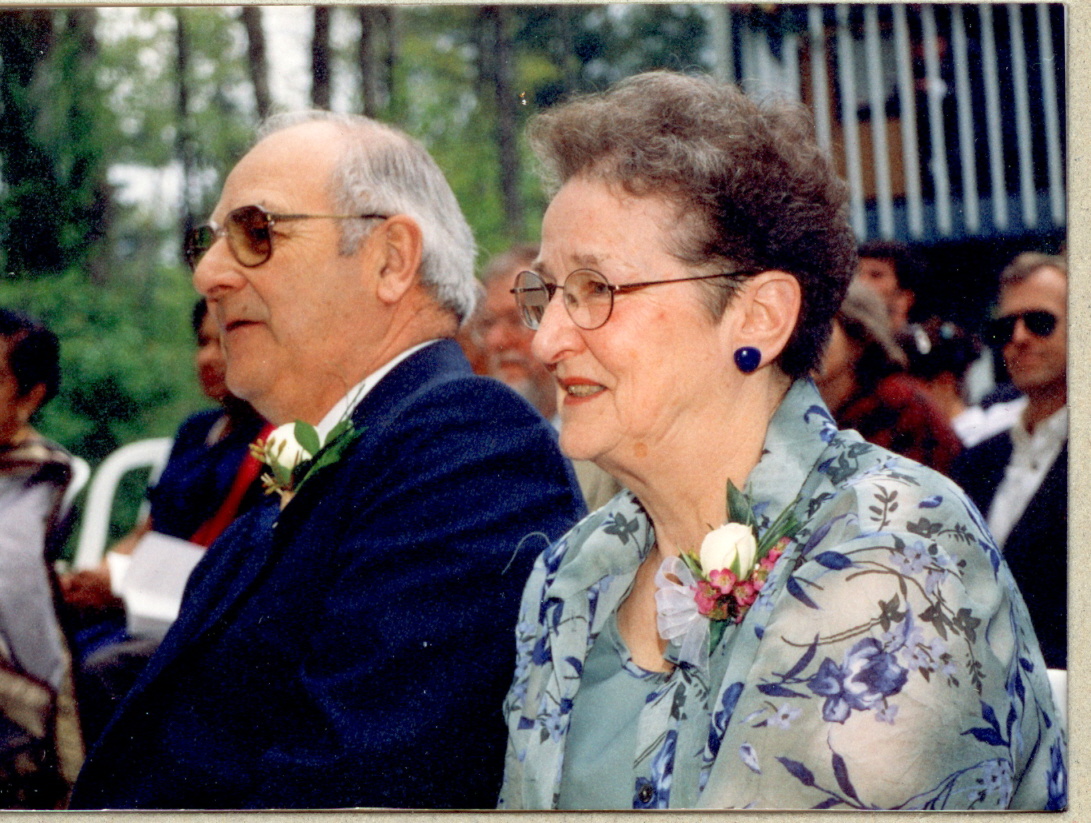
My mom and dad in 2000

As another Mother’s Day and my mother’s 79th birthday rolls around I am inspired to write a little dedication to my mother: Mary Patricia Ann Ritcey Jourdain.  This beautiful woman now lives in long term care because of dementia.  I write in appreciation and gratitude for all she means to me because of what she has made possible in the shifting shape of my life.

When I was a baby, my mother took me in.  I didn’t know this until recent years and not until after dementia had already significantly  impacted her, but she loved me like her own – because to her I was her own, even if she wasn’t the one who actually gave birth to me.

She loves me so fiercely she was afraid to tell me this little bit about my life story.  And I certainly felt like I belonged, even in those teenage years when I wished I was adopted so I could escape the craziness of our family dynamics to some idealized dream family – which I didn’t actually think existed but now that I know they do, I know it’s also not an idealized dream family but real people with their own crazy family dynamics and stories.  It’s good my mother wrapped me in her warm embrace and shepherded me into life.

My mother had the gift of gab.  She could talk to anyone about anything, no matter who they were.  And in the summers when we brought guests aboard the Bluefin, my dad’s pride and joy, my mother had a storehouse of knowledge about just about every home you could see from the water and every island we cruised by.  She didn’t like being on the water so much, but she loved being the social director.

When I was younger, I didn’t really appreciate her gift of gab.  I may, I hesitate to say, have even been a bit embarrassed by it.  But as I grew older and found myself in situations where the ability to make small talk would have come in handy, I grew to appreciate what I now understand as a gift and wished I had the same capacity.

My mother only learned to cook when she married my father.  I definitely heard the stories about not even being able to boil water.  She became a pretty decent cook, except for when she wasn’t paying attention – Harlequin Romances were usually the culprit and sometimes it was Another World.  There was more than one burned dinner in our household when I was growing up.  Somehow that motivated me to learn how to cook and my mother gave me free reign to cook and bake as much as I wanted.  To this day, I love cooking and baking.  I find it relaxing to cook for a large crew of people.

She was, thankfully, an adamant voice when I considered whether I should actually go to University because I didn’t really know what I wanted to do.  I went and I never looked back.

Over the years, as I got married and had children, my mother showed up more than once when I called.  When I was nine months pregnant with my second child and my husband and I both came down with flu and couldn’t take care of our toddler, she came, tended us, made chicken soup and watched our son.

When I was traveling and needed a hand with the kids, she showed up.  When I moved – both with and without my husband, she was there.  Never any questions or judgment when I got married or when I divorced.  Just always there.

She had a way of unobtrusively lending a hand.  She never got in the way, she just started helping out.  This is a gift I really appreciated as I saw other people clumsily get in the way even when trying not to while my mother just began to do what needed doing, gracefully and easily.

She was amazingly resourceful, resilient and always cheerful.  She loved the few years she worked as a waitress or host in several different places during the summer months.  She could regale friends and strangers with her stories as if they happened yesterday.

She doesn’t tell her stories anymore.  Even before she went into long term care on July 2, 2008 she was losing her capacity to string thoughts and sentences together.

The hardest thing we ever did as a family was sign the admittance papers that turned Harbourview Haven into her home, what will be her last place of residence.  At first, we could take her out for little trips.  We even brought her to my home for Christmas Dinner that first year.  But it wasn’t long before taking her out was just too difficult for her.

She went from walking to sitting in a wheelchair, using the wheelchair to motor around the dementia ward to moving less and less.

My mother, who never let me sleep in, now refuses to get out of bed a lot of mornings – making up for lost time maybe.  She never complains – and almost never did – although she’s been known to suggest that maybe some people should be thrown out the window!  Sometimes I think dementia removed a filter,  allowing her inside voice to become an outside voice, maybe giving her freedom to say things she would have been horrified to say pre-dementia.

I have written before about my mother’s situation and only being able to understand it through the perspective of soul journey.  I feel that even more so now.  What I know is that even though she doesn’t talk much and her thoughts seem all jumbled and incoherent, she brightens up when she sees people she has known and loves.  It takes a bit longer these days but it still happens.  She still knows what she wants and is adamant about it.  She’s on a bit of a hunger strike at the moment – not likely a conscious one – but she is refusing to eat.  I have no doubt she wants to be acknowledged for her choices.  She does accept the milkshakes they give her full of the nutrients she needs to sustain her physical body.

For her birthday and Mother’s Day, I can’t really offer her the kinds of gifts that would have excited and delighted her in the past.  Opening presents, which use to be a much anticipated delight, has no meaning for her now.  When I see things that I know my mother would have liked, I also recognize that as a memory and an honouring of my mother more than as a gift to buy.

My mother’s world has shrunk dramatically and she has too.  She has lost much of her vibrancy and joy in life and her ability to comfort others.  But she’s still a human being.  She’s in her journey, in her way, in her soul’s calling and I would only be fooling myself if I didn’t recognize that she is in a transition from he vitality of a full life to what’s behind the veil.  The rest of her will catch up when the timing is right.

She is still a person.  She is still loved.  She is still my mother even though our relationship has shifted yet again into a next phase – as has been happening over the whole course of my lifetime.  Even when the rest of her passes beyond the veil, she’ll still be my mother and she’ll still be loved – remembered for this most amazing journey she stepped into 79 years ago.  Who knew where it would lead but thank goodness she was here for me because who knows where I would be if it weren’t for her.
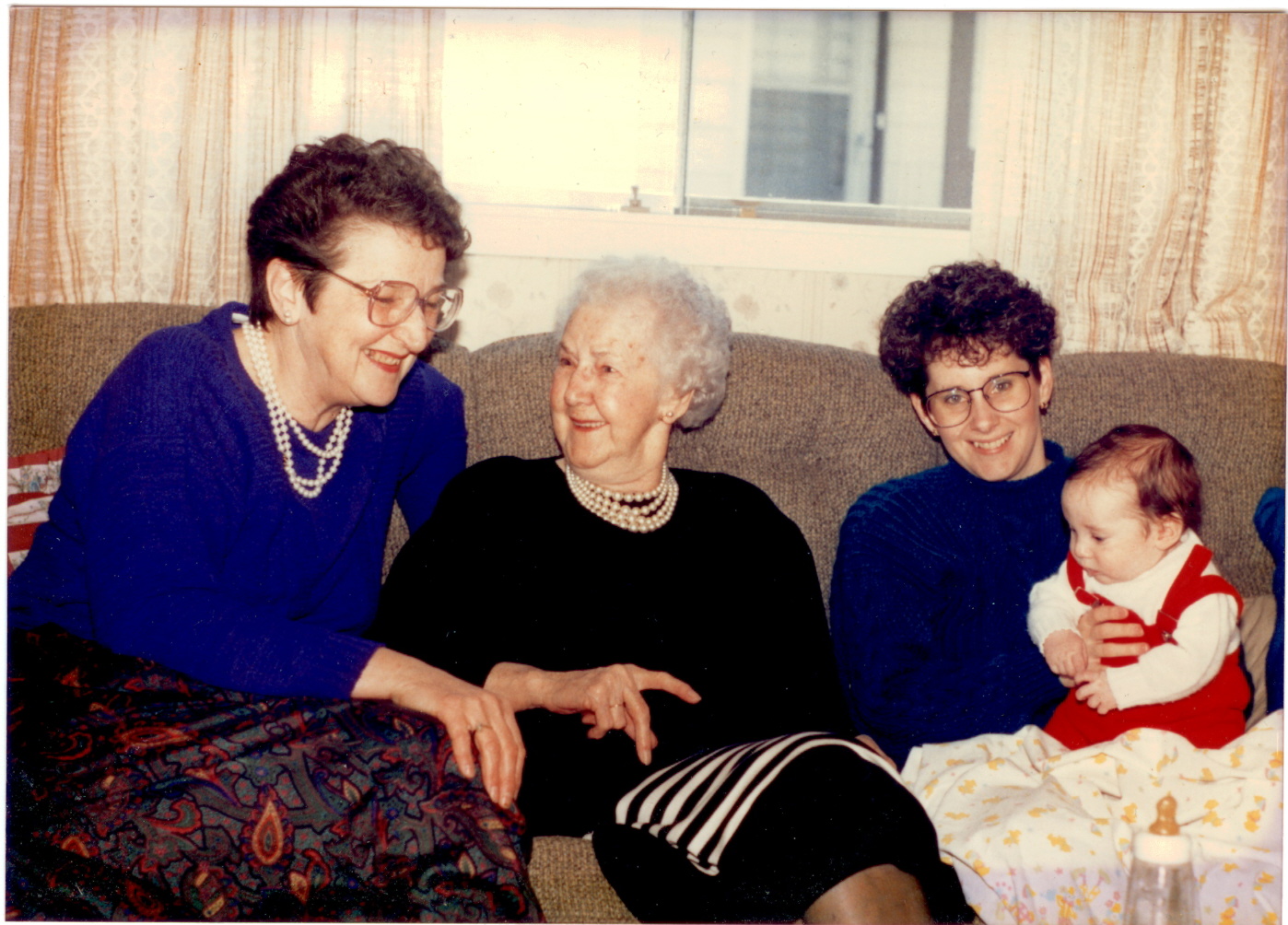
My Mother and Grandmother - 1991
Youth Philanthropy

The moment my eight year old son, Shasta Tangri, heard about the earthquake and Tsunami in Japan, unprompted, he said, “We’ll have to make more buttons!”

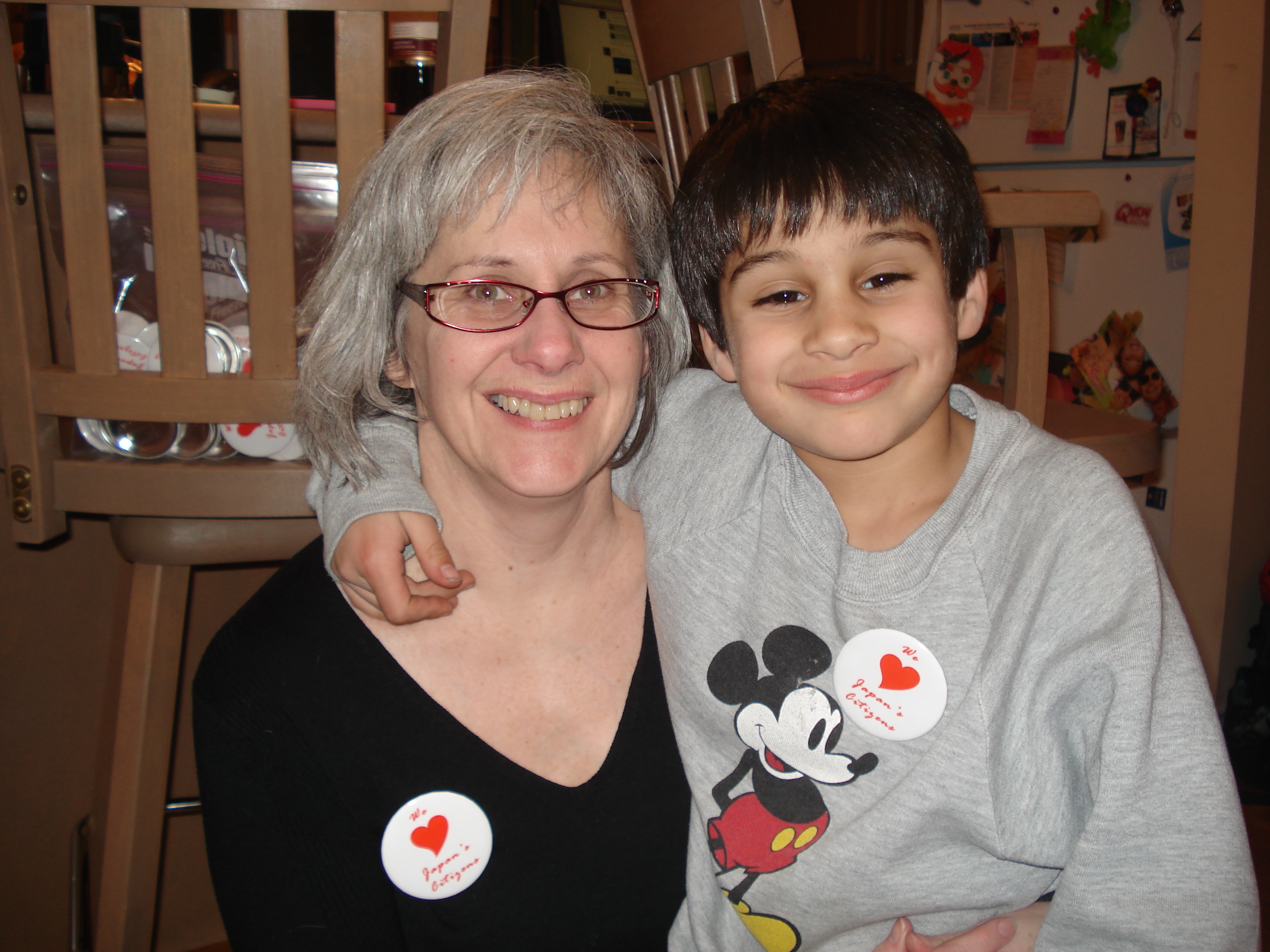
Kathy and Shasta

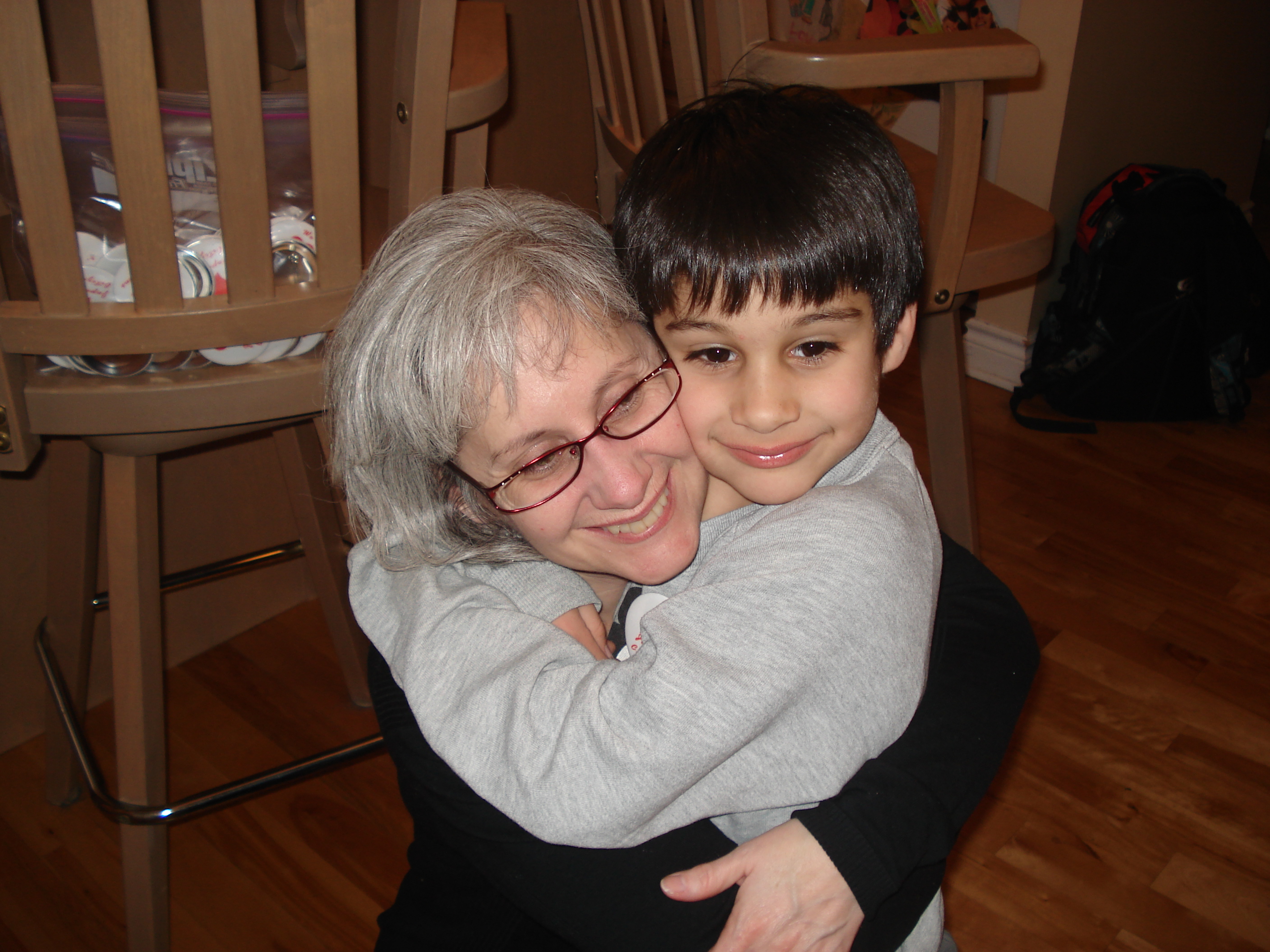
Shasta and me displaying the pins he created in support of Japan

In 2010 when the earthquake devastated Haiti, he decided to follow in the footsteps of his older brothers, Spencer and Jacob Dwyer.  Following 9-11 they decided to sell buttons to raise money to help the people of New York following the devastation created by the planes flown into the twin towers.  Their campaign was picked up by by friends, family, work colleagues and random strangers they met as they promoted their cause.   They raised about $1,500.00, were written about in the paper and were on television news.  Shasta knew about it because he had seen the newsclip often.  It inspired him and, of his own accord, he wanted to do the same thing for Haiti.  He sent the money he raised through to the Red Cross, his contribution was doubled by the government and he raised over $2200.

Now, he has a goal of $1,000 for Japan (he will also contribute through the Red Cross) and while it is early days I suspect he will surpass his goal pretty quickly.  He’s almost half way there after only a few days.  He is enthusiastic, unabashedly advocating for his project.  This well spoken youngster has no problem specifying his request of a minimum contribution of $2.00 and, of course, many give more including at least three people who have each given him $100.00  (I was one).

It is wondrous to see how many people respond warmly to the request made so beautifully and simply from a young man working from his heart having been touched by a tragedy affecting people half way around the world who he has never met.  It warms my heart.  Of course, I will do anything to support him in the unfolding of this path, as long it as it is one he chooses willingly and of his own accord.

A good friend of his has offered to help.  The Dartmouth Players Theatre, where he is in a theatre class through Upstage Studios,  has offered to let him have a table at their event this Monday so he can sell buttons.  His school is allowing him to sell buttons to children and teachers.  Tomorrow we will be knocking on neighbours’ doors.

As this has been unfolding in my home, I have had the opportunity this week to meet Stefanie Shute and Blair Ryan, founders of the Empathy Factory, a cool new initiative providing the opportunity for children to act on their innate generosity, developing ideas they feel passionate about so they can act on their desire to make the world a better place.

This work and these actions in my home and my community and further afield in the world continue to inspire my own deep sense of hope and optimism that we can consciously shift the shape of the world in beautiful and profound ways.  Shasta is already doing that for himself and for so many others at the same time.  What will you do to shift the shape of your world?

Shasta and me

Prototyping Collaborative Leadership at Capital Health – Citizen Engagement and Accountability

Citizen Engagement and Accountability Portfolio

In May 2009, the creation of a portfolio within Capital Health with the title of “Citizen Engagement & Accountability” presented a rare opportunity to create something that had no precedent.  The portfolio was launched in response to the strategic stream of Citizen Engagement that came out of the Strategic Quest work in 2007.

Lea Bryden was tasked with bringing together three functional areas under this new portfolio: Marketing and Communications, Community Health Boards and Patient Representatives.  In looking across the country, they found themselves virtually alone as there were no models to inform the portfolio development.

In January 2010, Kathy Jourdain and Tony Case, through Shape Shift Strategies Inc., were contracted to assist in shifting the shape of this portfolio.  The intent was to truly create a new portfolio with collective purpose, principles and streams of work and not just perpetuate the three existing functional areas under a new name.  Some of the functional work would be the same and new work would emerge through the process but all of it would be informed by the collective purpose.

This work was given context and framing by the following pre-existing pieces of work:

  • Our Promise
  • Declaration of Health
  • My Leadership: Being, Caring, Doing
  • Citizen Engagement Strategic Stream
  • 2013 Milestones

In addition to wanting to honour CEO Chris Power’s intention in asking the question: “What kind of future could we create if the vision of Our Promise and belief in our Declaration of Health showed up at each of our touch points in the course of our day?”, Lea also wanted to uncover the unique gifts and contribution of each member of the portfolio and understand how they came together as a collective.  And, it was  very much a mechanism to create a cultural shift to even greater transparency and accountability.

This process invited a design team to co-design the process.  There was initially a very specific invitation to a member of each of the three functional areas. As the process unfolded participation in the design process was completely open and transparent and those with the greatest interest and passion continued to participate in the process.  Some people showed up in the beginning because they thought they should and then kept showing up because they saw how their contribution directly influenced the design of each session.

This work took place over a period of four or five months to establish collective purpose, principles, priorities, and strategies.   It took into account other work that was underway in the organization, incorporating things like the budget planning process or the response to Capital Health’s community engagement recommendations right into the process so the portfolio could learn how and when to respond as a portfolio to other moving parts of the organization.

We knew we were making headway when we hit the groan zone.  The collective purpose and principles were articulated and we began to hear, “Oh good.  We have what we need.  Can we be done?  Can we get back to our regular work now?”  This was a signal to push back.  Lea did this by asking a simple question, “Where are we seeing evidence of our collective intention at work?”  The responses were amazing, informative and represented a turning point.

A philosophy of our work as consultants was to transfer collaborative leadership skills into the portfolio so it could flourish once our involvement came to an end.  The portfolio created a transition team to continue to guide the work and this team is also working collaboratively.

A key contributor to the success of this initiative was Lea’s willingness to foster collaborative leadership and her openness to growing her own awareness and skills in the process.

Like all significant culture shift initiatives, there are certainly bumps along the way.  But there is lasting change in the way this portfolio views itself, understands its work and engages with the public.

Prototyping Collaborative Leadership at Capital Health – Infusion

In March 2007 Capital District Health Authority (CDHA) in Halifax, Nova Scotia took on a planning process called Strategic Quest.  A significant component of Strategic Quest included public participation in an unprecedented way, shifting the shape of awareness and thinking at Capital Health.  The results were revealing and the impact continues to reverberate throughout the organization today, strongly influencing ongoing public participation in a number of areas and inviting collaborative leadership as a strategy to accomplish many of its goals.

One initiative I was involved with where Collaborative Leadership was an essential part of the process was Infusion: a gathering in November 2008 of 70 leaders from across North America, in our local community and within Capital Health, convened to inform what bold and unique leadership development within Capital Health could look like.

The planning process for Infusion, championed by Lea Bryden and led by Shape Shift Strategies, invited and modeled collaboration, shared leadership and shared responsibility.  A diverse group of people from across Capital Health were invited into the planning process.  Many identified the planning process itself as a leadership development opportunity as they experienced collaborative leadership in new ways, stretching beyond their original assumptions about how and what they could each contribute to this unusual event.

Achieving clarity of purpose was the first task.  It required a significant investment of time – several meetings.  It was a difficult task because there were multiple overlapping components all alive and unfolding as we were in this planning process.  We stayed in the conversation until sharp clarity was achieved and then rest of the planning process unfolded rapidly because it was guided by this clarity of purpose.  We also actively worked with Theory U in the planning process and for the event itself.

The planning process always had a forward momentum, even when people missed meetings.  As they came back in, they found their place in the process and continued to contribute constructively.  They could step into and out of the flow of the process without having to back track and rehash decisions made when they were not present.

The two day Infusion event drew on the talents of everyone on the planning team.  Invited guests: leaders from a vast array of backgrounds, many of whom were leadership consultants, were asked to bring their knowledge and expertise in a participatory way.  It was at times a challenging field to hold.  The team was able to hold its ground as we went through the fire of chaos, adjusting design in the moment and holding space for some anger and frustration that unexpectedly arose within the group because of the collaborative leadership we had been growing throughout the planning process.

Infusion did not end in a nice tidy wrapped up bundle and Lea Bryden, myself and the team were good to leave it that way while taking away the gems that guided the development of My Leadership – a truly unique leadership development initiative inside of Capital Health with a bold vision and goals that has since had 500 leaders complete and won a number of regional and national awards.


A 1500 Day Collaborative Journey

In November 2006, the Council of the College of Registered Nurses of Nova Scotia (CRNNS) embarked on a 1500 day collaborative journey, the likes of which they could hardly imagine was possible at the time.  What was clear was that the College had a vision and a mandate to grow inter-professional collaborative practice (IPCP) from pockets here and there across the province to a more widespread practice as one of the responses to a health care system in need of shifting the way services were delivered.

They knew this was not a mandate that could be achieved alone and they weren’t quite sure how to invite other professions into the conversation.  They contacted an Art of Hosting colleague of mine who invited me into the process and we worked with a team from the College to begin to clarify the work.

Early on we identified that this would likely be a long term process that would use Theory U to define the journey and Art of Hosting as the operating system. Before the journey could even begin, others needed to be invited into the conversation so that other people and organizations could identify what contribution and what level of support or commitment they were willing and able to offer.

The College hosted its first assembly in November 2006 to announce its mandate, speak what they were hearing in the system and being called to do, invite a broad array of health care professionals into conversations using processes like Appreciative Inquiry, World Café and circle which many participants experienced for the first time ever that day.

Out of this assembly a core team of about twenty-five people and financial support from a broad range of health organizations self identified to commit to a multi-year process that included two Art of Hosting retreats (one a sensing retreat and one a presencing retreat) to train the core team, deepen their understanding of the purpose and principles of the work and identify a strategy to move this mandate forward.  We called on Art of Hosting colleagues doing similar work in Ohio and in England to come and also support this initiative, bringing with them a wealth of experience and weaving in the stories from other places that increased the anticipation of successfully shifting the shape of collaborative health care in Nova Scotia.

The collaborators included: Annapolis Valley Health, Capital Health, College of Licensed Practical Nurses of Nova Scotia, College of Physicians and Surgeons of Nova Scotia, Dalhousie University, IWK Health Centre, Nova Scotia Association of Health Organizations (now Health Association of Nova Scotia), Nova Scotia Department of Health, Pharmacy Association of Nova Scotia, Registered Nurses Professional Development Centre and the Pictou County Health Authority.  The team included people from many of these organizations and was itself inter-disciplinary.

In between the two retreats, the core team embarked on a series of sensing strategies to broaden their own understanding of the health care system in Nova Scotia, identifying challenges and opportunities without assuming they already knew all the answers.  One purpose in this was to also engage a more stakeholders and learn from them what would capture their support, interest and imagination.  Seven group interviews and thirty five individual interviews were conducted, designed to elicit their private voice more than their public voice.  It is in the private voice that deep despair and incredible hope both reside.

The information that came back from these interviews was powerful.  So powerful it was used to invite back a large assembly of stakeholders in May of 2008 to hear the results and, most importantly, to hear the voices of the system spoken back into the room.  In response, somebody said, “What we are seeing is a crisis of the soul.”

We asked people: “What would you do that you’ve never done or dreamed of doing to change the future of healthcare?” They responded:

  • Change the way we deliver health care
  • Change the focus of health care
  • Change education of practitioners
  • Change what we say to communities
  • Change governance of health care
  • Change relationships and how we work together

We asked, “What should the purpose of the health care system be?”  To which they responded:

To create and maintain holistic, accessible support and care so that Nova Scotians may live well in a place they call home.


To facilitate and empower the individual and the community to create and maintain

optimum health as defined by the individual.


The purpose of the healthcare system is evidence based, person-focused, preventative, holistic, and uses a collaborative approach to optimize the health, safety, wellbeing and environment of people within their communities.

People made commitments that day and the College made a commitment to check back in later with their last assembly to acknowledge and celebrate progress.  That day happened in June 2010.

Six champion collaborative practice teams currently providing services in Nova Scotia were invited to present at the Assembly, modeling the way and illuminating the steps to successful collaborative care in Nova Scotia.

Have all the ideas identified in May of 2008 been implemented?  No.  But in 2010, there was far more collaborative care in Nova Scotia than there was in 2006 when the College began its quest and invited in collaborators, retaining its willingness to be a champion of this work and, at the same time, “letting it go” so that it could be co-created throughout the whole journey with those who stepped forward to share the leadership and responsibility of this work in Nova Scotia.  Other initiatives focusing on Collaborative Care also emerged during this time helping to expand awareness and the field of practice and this does not lessen the impact of the Inter-Disciplinary Collaborative Practice initiative in generating impactful responses to a system in need of change.

Some things have fundamentally changed.  Some things are still to come.