Turning to Each Other in this Time of Chaos

My news does not, for the most part, come from mainstream media.  Long ago I stopped reading the papers and watching TV news.  Far too depressing and non-constructive.  My news comes from other sources like the Art of Hosting listserve that I am part of (and you could be too, if you aren’t already) as well as other social media like Facebook and Twitter.  I am grateful to these sources and the friends I know in each of these media for the sharing of stories and events that show us all the courage, humanity, connection and community that we all know exists beneath and beyond the news coverage.

Government and related agencies, politicians, the news media do not know what to do.  They do not know how to respond to the mounting chaos in their countries and their communities.  They do not have answers – we all know this – and they are afraid to admit it, so rely on strategies that not only don’t work but actually contribute to making the situation worse (beefing up police presence as an example).  As one person from England suggested on the AoH listserve, wouldn’t it be wonderful if someone in a position of authoritative leadership would be able to see, voice and make more visible the larger patterns that are at work. Borrowing from his posting:

“We must now ask deeper questions. Why do so many young people believe it is alright to cause such destruction and distress in their communities? Whether it is ‘copycat’ activity or not, why is it happening? What does ‘community’ mean to each of us?  Across the country people are self organising, they are meeting in groups and cleaning the streets. Leaders are emerging. People are talking to each other. This is true community.”

If we are not seeing the kind of leadership we know is needed from our formal leaders, how do we continue to do this work in all the places we, ordinary people all over the place,  show up and influence where we can.  Let’s not undervalue our own systems of influence or own readiness to do what we know works – even if this is “simply” holding space, holding intention, infusing with love the situations and people we know about and the stories that touch us deeply – no matter where they or we are.

I read all the posts on what’s happening in London, Spain, Greece, Egypt, the US and other places from the perspective of ordinary citizens, friends and colleagues around the world who see the human story as it evolves, who sharpen their awareness of the relational field and the growing power to effect large scale systemic change from this place as well as individual one-on-one relationships – holding heart break and growing open heartedness, even in the chaos.  I share these stories with people I know who are not part of or even aware of these conversations.  It makes people hopeful.

My own hopeful heart continues to expand for every post I read.  There is a lot of trauma in this time but if that is what we, the world, needs to be able to see just how much the systems we have created or supported or just lived in do not work for us anymore, then we need to go through this to get to what lies on the other side.  I am imagining, working toward and living into a world and systems that emanate out of love, loyalty and community in the relational field because if we cannot turn to each other in our joy and our agony, there is no one else.  If we cannot turn to each other, we will not create systems that support life and resilience, courage and vibrancy.  If we do not turn to each other, we will live only in fear and isolation that propagates more of what we don’t want.

Everyday I experience encounters with people who are more and more ready to turn to each other, more and more ready to understand life as more than just the physical components that we see, more and more ready to embrace uncertainty and live into resilience, more and more ready to open their hearts in a time when the media reported news events might cause us to want to close our hearts and shut down, more and more ready to be intentional about shifting the shape of the world.  I am holding space for the courageous, the open hearted, the heart broken, the resilient, the cracks, openings and invitations.  I am working and writing where I can in support of a future I want to see emerge out of the chaos we are in these days.

From my heart breaking, open hearted journey to yours.
Hosting Ceremony

What happens when what you are called into host is not actually what you’ve been called into host and every thing you think you know or have to offer of value is not what is needed? When knowledge and experience of methods, processes, theories and frameworks, though asked for, is not what will actually serve the situation or community you are hosting?

These questions, alive and vibrant, were lived into this past week in Membertou, a First Nations Community in Nova Scotia, that a team of us had been invited to, as part of an emerging leadership program for youth, to offer a three day Art of Hosting and Warrior of the Heart training. We were invited by Pawa Haiyupis from the National Centre for First Nations Governance and a team at Membertou to contribute to a program Pawa has been envisioning for 10 years, since attending her first Open Space Technology session.  We were to work with youth, elders and members of the Governance Committee.

When the Canadian Government cut funding to the NCFNG in the middle of the four week emerging leadership program the plan was thrown into chaos and the shape of our time together shifted frequently and rapidly.  Would there even be an AoH/WoH training and, if so, how many days and with whom?  Financial and energetic support was invited from a circle of eagles from around the world and from the larger Art of Hosting community to fund expenses and to be at our backs  as we hosted this work, the hosting team clearly called to be in it no matter the circumstance.

The hosting team – Bob Wing, Pawa, Sarah MacLaren, Ryan, myself and one other – convened on the beach at Mira Gut to begin our check-in in ceremony and with a little Warrior of the Heart.  Sense of spirit was strong with us and blood memories were being activated.  We asked for guidance from Creator in this work.

We did all the usual preparation for a training, including cracking our overall design and the design for day one.

Then we entered day one.  We knew as soon as we entered the space that we needed to be prepared to let go of much of what we planned as we waited the arrival of elders to begin our time together with a pipe ceremony.  The pipe ceremony was beautiful and powerful, inviting spirit and Creator to guide our path.  It had the full attention of everyone in the room no matter their age.

We followed it with Warrior of the Heart and, yes, a teaching on the chaordic path and some time in triad conversations.  In this day, we became aware of some disruptions in the field.  At the end of this day, we met with the full hosting and calling team and explored what people were sensing and what their concerns were.  We did a little teaching on divergence and convergence for this team.  We invited all questions and all concerns and also celebrated a little bit the successes of the day.  We left feeling a bit of convergence in this team and a willingness to be open to what wanted to happen the next day.

Dinner with an elder showed us that what wanted to happen the next day was ceremony and, specifically a sacred fire.  We all knew it was the right thing and in that moment the hosting team stopped designing process and shifted the most completely and fully I have ever experienced into hosting what wanted and needed to happen in this field and this community.  It wasn’t process, methods, frameworks.  It was ceremony.  Ceremony in service of this community, hosted by the elders.  Ceremony to activate blood memories. We trusted we would know in the moments following ceremony what else could be offered that would serve the community and the intention of this work well and we knew absolutely we were working with the principles of spaciousness and simplicity.

Host team check-ins are always an integral part of any Art of Hosting training and usually serve the design process.  In some ways, they became the design process.  Deep check in.  Clearing and understanding our field.  Strong pull to meditation and other ceremony morning and night to keep intention and presence clear and strong.

We know we were hosted in ceremony by this beautiful community.  We know we also hosted, but exactly what is a little less clear.  We know something happened in this community that would not have happened if we had not been there.  We know something happened in us – individually and collectively – that would not have happened if we had not been there.

I find myself in contemplation of ceremony and the guidance of Creator.  I find myself in a deeper exploration of the non-physical world and the allowing of my gifts to emerge and flourish with new knowing and fuller surrender to what wants to be guided through me.  In the letting go of expectations and any need to show “expertise” in this group and this community, I know we were more fully available in the co-hosting and co-creating of the space.  Sometimes simply being allows things to emerge that might not otherwise.  I am wondering how that informs all my hosting work and feel the invitation to work more and more from this place of surrender, trust and “just” holding space.

As Pawa said, “the teachings are still percolating and the brew smells delicious. More to report on as the teachings are digested.”
A deep bow to the community, the team and the field that held us so well in this journey.

The Power of Vision, Activating Blood Memories and an Ask for What’s Needed

Ten years ago, while in her mid-twenties, Pawa Haiyupis attended her first Open Space Technology training, meeting for the first time good friend and colleague Chris Corrigan who became a mentor. Unbeknownst to Pawa at the time, a vision began to take root: a vision of First Nations youth connecting back to elders and the land, bringing back ceremonies like rites of passage, naming and grieving ceremonies, language; essentially activating blood memories.  We know when blood memories have been activated because we get little energy shivers in our bodies; the more powerful the activation, the stronger the shiver but even subtle little activations can have profound impact that reverberate in our awareness.

Four years ago, Pawa began working for the National Centre for First Nations Governance (NCFNG) out of British Columbia, with a focus on youth leadership.  During this time she also stepped more deeply into her own leadership journey through Art of Hosting and Warrior of the Heart, including a journey a year ago to Kufunda Learning Village in Zimbabwe.

Her vision grew and began to take tangible form with the development of a Nation Rebuilding project piloted in the First Nations community of Membertou in Nova Scotia this summer focused on helping young people, ages 14-19, learn about identity and belonging, reactivating their creation stories, inviting the ancestors through ceremony and a traditional territories tour to guide this process. A combined Warrior of the Heart/Art of Hosting training was identified as an essential component of this work because it cultivates the conditions for emergence based on what each Nation knows.

A hosting team of Pawa, myself, Bob Wing and Sarah MacLaren converged for this exciting work with 50 youth from Membertou, actively supported by up to 20 elders in the community as well as the young team from NCFNG.  In the middle of the 4 week Nation Rebuilding project, NCFNG’s funding was cut by the Harper government, potentially putting this work in jeopardy.  Except for the questions asked by the Membertou Governance Committee about how to make this work despite the funding cuts.  Except for the hosting team deepening their dedication to this work by agreeing to volunteer these four days of their time.  Except for the strong vision that Pawa and her team have been cultivating for years that refuses to be drowned out by resistance that shows up in the form of funding cuts and seems to now have taken on its own force independent of the individuals who first dreamt what was possible.  As one member of the team said, “The work will continue because the ancestors are strong and we are strong… we can make it work because its in our hearts.”

Pawa turned to a circle of “Eagles”,  stewards of the Art of Hosting, who are at our backs holding the rim of our circle with us, to ask for help.  She wrote:

“I email you all with a heart request to help financially to keep the movement going and help bring this work to Indigenous youth in Membertou, Cape Breton Island NS.  I know that financially at this time the world is in chaos. It is easier to give up which is precisely why I want to move this work forward. It is these practices (art of hosting and warrior of the heart) that help us lead in complex times with courage. It’s what is needed most. If the only thing the Emerging Leadership team does this year is finish this PILOT to be inclusive of art of hosting and warrior of the heart, it sets this work up to happen again in the future.

“It is crucial that the art of hosting and warrior of the heart be included in the Emerging Leadership Program for reasons that you all know, it works when changing systems. The government cut NCFNG’s funding drastically days before the scheduled training was to take place. Training that I have been waiting years to happen. Either the art of hosting gets cut from the program or we find alternative resources to make it happen. This is where you come in. Eagles, with vision. We honour you by asking for help.”  Pawa also made the initial personal contribution offer of $450 toward expenses of about $3,000 which includes Bob’s travel from Colorado.

The Eagles have been responding with small and large offers of financial support and adding their individual and collective consciousness to this work which may set a pattern for what is possible in First Nations communities across Canada.  We are broadening the call for support to the larger community.  If you feel called, if you sense the power and possibility of activating blood memories, you could offer financial support here WiseActions.net and whether you can offer financial support or not, your holding this work from where you are and adding your conscious powerful intention for the highest good of the work, the people and the hosting team are all meaningful contributions.

In the words of one of the eagles:

“Pawa, yes certainly, to offer what I can here.  When the revolution comes ( and it wont be televised) we will go kindly to Ottawa, sit the treasury board in a circle and pass the feather til the wisdom of mutual stewardship becomes our national fiscal policy….  ….until then I take this an an investment in the leadership needed to see that day…”

The last 2 weeks of this program are being combined into one.  We will incorporate hosting and Warrior of the Heart with a traditional territories tour, naming ceremonies and community celebration.  We will host and be hosted.  As a hosting team, the work we have been pulled into is shifting literally by the minute.  We will be called upon to be highly present, tapped in, resilient and resourceful to the fullness of our capacity as we hold this space with the people of Membertou.

The response of the Eagles has already astounded the good people of NCFNG and of Membertou who are interested by and curious about this generosity of spirit from people they do not know.  The response is also showing pathways to what’s possible when we think we don’t have money or other resources to do what is calling to be done.  We are more resilient and powerful than that and we have abundant resources available when we turn to look and when we continually offer prayers to the ancestors and ourselves in service of their bidding.

This work of and in Membertou is another of the illustrations of how resilient we are as human beings, responding to the vision of what’s possible in the world.  It is a time of quiet revolution and we are shifting the shape of the world as we know it.

Becoming an AoH Practitioner

One of the things that stands out from my Envision Halifax days when a team of us co-designed and co-delivered a nine month leadership program, meeting with the group once a month for either a retreat or a learning day, is how often people talked about getting their Envision “fix” – essentially being able to step out of the craziness of their workplaces into a deep breath of a different kind of space, where we often began with check-in circles and always entered into a conscious, intentional practice field of learning focused on self-leadership, team learning and community reflection and engagement.

The desire and need for this “fix” is directly related to how challenging people find it to bring their learning about new ways of interacting with people, creating the conditions for different conversations that lead to different results back into their work environments – and it is also what I hear from people who have just stepped out of their first Art of Hosting training ground.  “It is okay to do this here, but back at work, well, that’s another story.”

At the risk of stating the obvious, becoming a practitioner of anything takes…. well… practice.  And, I am aware of how risky it feels to try out new group processes or new ways of inviting conversation at work.  How many times we hear things like, “I could never use a talking piece at work.”  “I could never get our group to agree to use World Cafe.”  “People I work with would find this language strange and it may turn them off of even trying something new.”  Yes, all true AND there are always ways to begin practice.

People feel their credibility and reputation are most at risk trying something new with the people they work with all the time.   So one of the simplest possibilities is to look for other places to practice – with another team or department, in a volunteer capacity, with someone else who also wants to practice.

When we just begin to know the many and varied practices that are available through the Art of Hosting field and have little experience with them, we have less confidence in and knowledge of how the processes work and how people can be well and fully engaged in them.  Our own lack of confidence and fear can influence how the process unfolds.  For example, if the group has never participated in an Open Space before, it  may take a few minutes for them to warm up to inviting their own conversations when we open the space for their questions.  With experience, we know to be easy in that pause.  Without experience, it ignites our fears and then we want to jump in to make it happen, often over facilitating the space or the process, sometimes resulting in less than hoped for outcomes.  As grow our own experience and confidence in the impact of the process, we relax more which invites more flow and synchronicity into the space.

As for language, if it will be a barrier, don’t use it.  Rather than talking about circle practice, you could just say, “I would like to make sure we hear from every voice.  Maybe we could just go around the table and as each person speaks, the rest of us could just listen well to what they have to say.” Or, of course, whatever language suits you best.

Begin your practice in little ways.  Take little risks.  Change how you listen and see what difference shows up.  Use more questions, powerful questions, that invite people to respond differently.  Bring more curiousity to the conversations you have in the work you do.

Find places to practice the skills you want to develop more.  Find people to practice with.  Look for like minded people inside your organization with whom you can have conversations of discovery and potentially opportunities for practice.  Think of how you can intentionally shift the shape of your world.

Look for places outside of work to practice.  Take yourself back to another Art of Hosting training to deepen your understanding and skills and grow your courage.  Share success stories, small and large, so you and others can see the impact of making even small shifts.  Maybe you have an opportunity to be part of a calling team for an Art of Hosting in your organization or community.  You could look for an opportunity to apprentice in an Art of Hosting training with experienced practitioners and stewards so you learn to pay attention to and look for the nuances that can influence design, hosting and results.

Grow your confidence through practice and your practice will grow.  Don’t be discouraged easily.  Keep your eyes and ears open for opportunity, openings and invitations.  If you look for them, you will be delightfully surprised at how often they show up.

Join a community of practice.  If there isn’t one in your area, start one – even if it is just with a few people.  Join the on-line conversations and communities.  Observe and contribute when and as you are ready.

Whenever and however you can practice, do so.  Grow your courage through small victories and those victories will also grow.  You didn’t show up at an Art of Hosting training because you are risk averse.  You came because something called you.  My guess is, this work will continue to call you and you will continue to respond.  And there is a global field of practice that responds with you.  Be intentional, thoughtful and mindful and practice well.  Before you know it, you will recognize the Art of Hosting practitioner that is you.

Youth Philanthropy

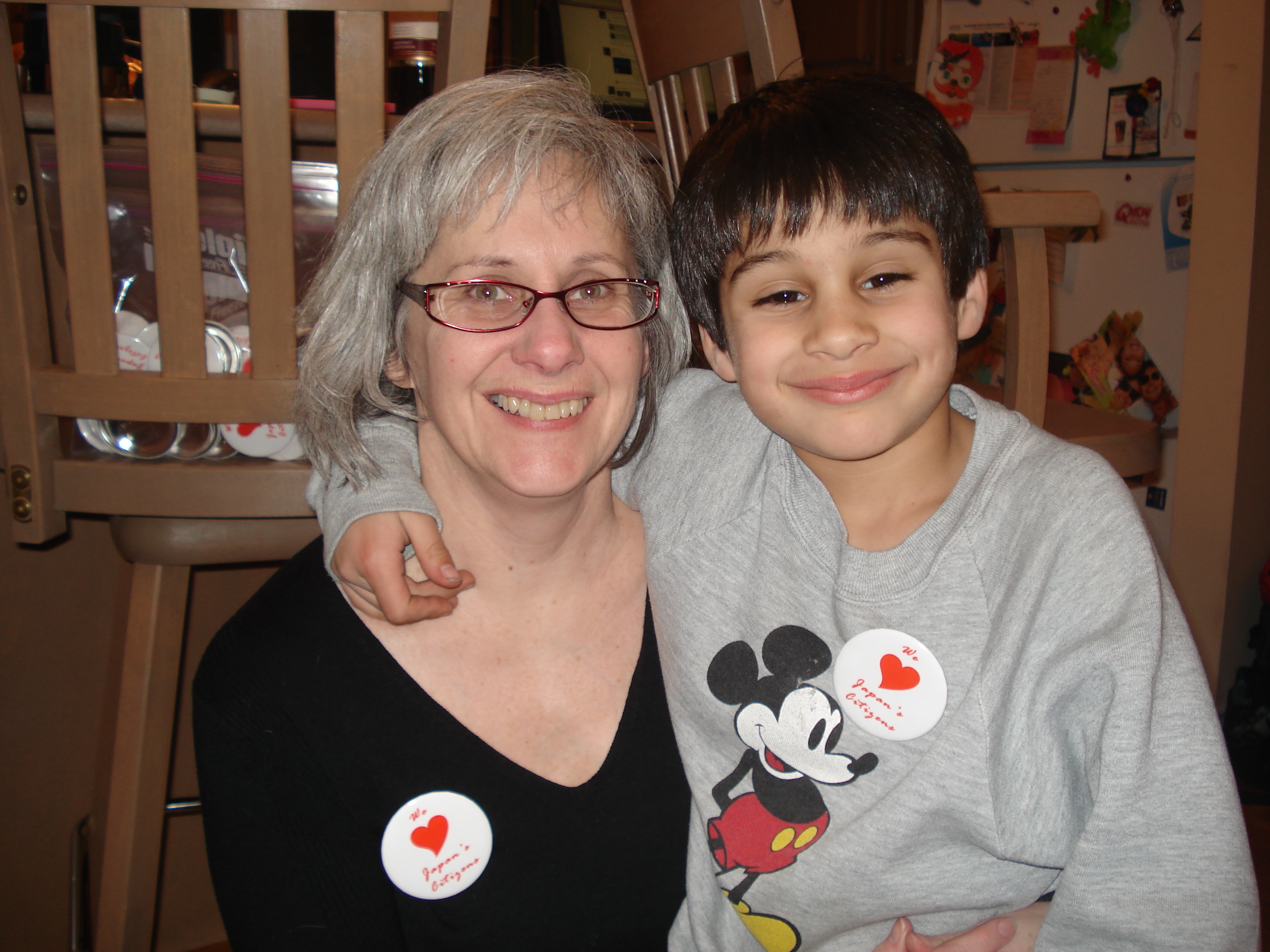
The moment my eight year old son, Shasta Tangri, heard about the earthquake and Tsunami in Japan, unprompted, he said, “We’ll have to make more buttons!”

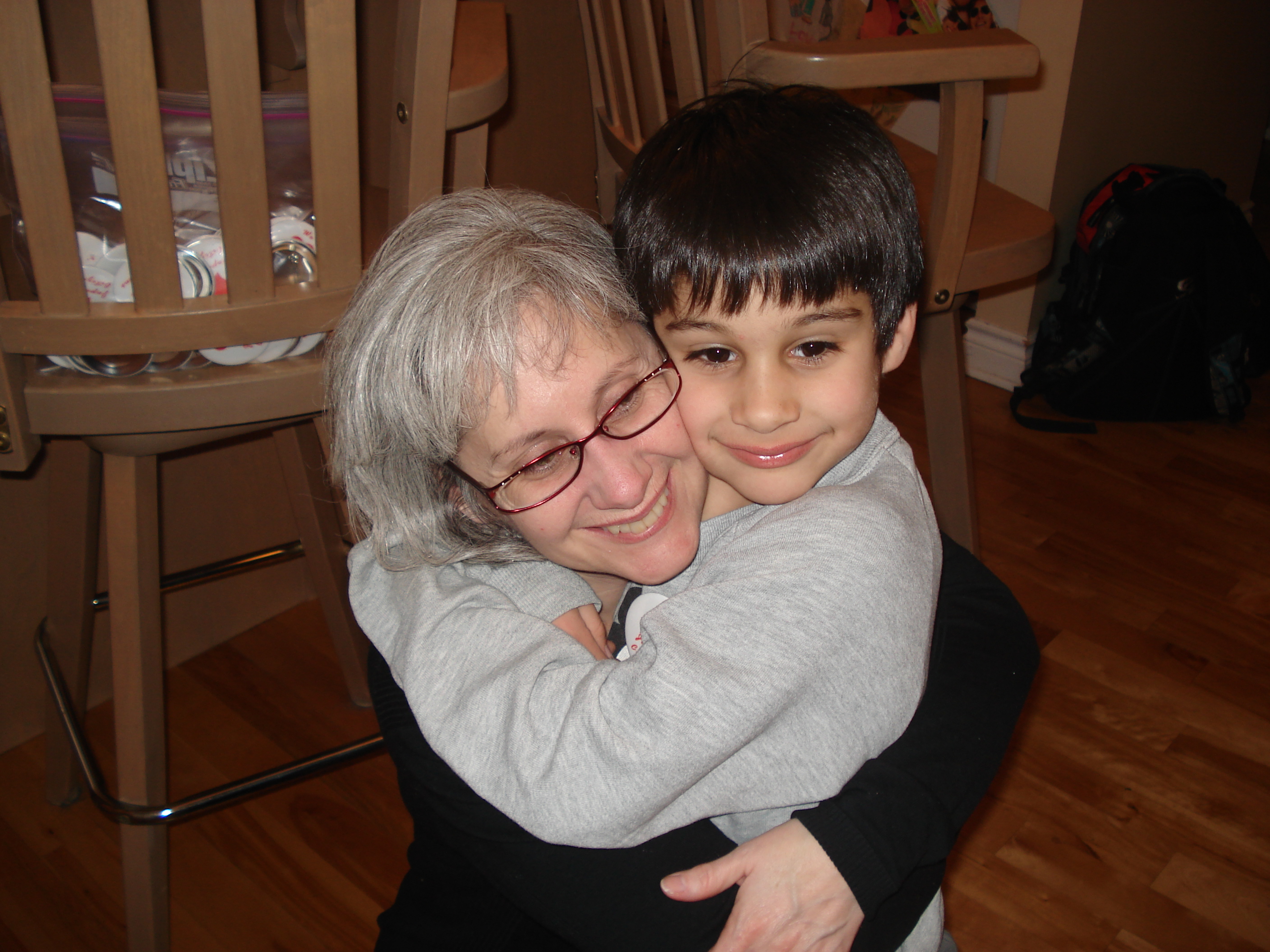
Kathy and Shasta

Shasta and me displaying the pins he created in support of Japan

In 2010 when the earthquake devastated Haiti, he decided to follow in the footsteps of his older brothers, Spencer and Jacob Dwyer.  Following 9-11 they decided to sell buttons to raise money to help the people of New York following the devastation created by the planes flown into the twin towers.  Their campaign was picked up by by friends, family, work colleagues and random strangers they met as they promoted their cause.   They raised about $1,500.00, were written about in the paper and were on television news.  Shasta knew about it because he had seen the newsclip often.  It inspired him and, of his own accord, he wanted to do the same thing for Haiti.  He sent the money he raised through to the Red Cross, his contribution was doubled by the government and he raised over $2200.

Now, he has a goal of $1,000 for Japan (he will also contribute through the Red Cross) and while it is early days I suspect he will surpass his goal pretty quickly.  He’s almost half way there after only a few days.  He is enthusiastic, unabashedly advocating for his project.  This well spoken youngster has no problem specifying his request of a minimum contribution of $2.00 and, of course, many give more including at least three people who have each given him $100.00  (I was one).

It is wondrous to see how many people respond warmly to the request made so beautifully and simply from a young man working from his heart having been touched by a tragedy affecting people half way around the world who he has never met.  It warms my heart.  Of course, I will do anything to support him in the unfolding of this path, as long it as it is one he chooses willingly and of his own accord.

A good friend of his has offered to help.  The Dartmouth Players Theatre, where he is in a theatre class through Upstage Studios,  has offered to let him have a table at their event this Monday so he can sell buttons.  His school is allowing him to sell buttons to children and teachers.  Tomorrow we will be knocking on neighbours’ doors.

As this has been unfolding in my home, I have had the opportunity this week to meet Stefanie Shute and Blair Ryan, founders of the Empathy Factory, a cool new initiative providing the opportunity for children to act on their innate generosity, developing ideas they feel passionate about so they can act on their desire to make the world a better place.

This work and these actions in my home and my community and further afield in the world continue to inspire my own deep sense of hope and optimism that we can consciously shift the shape of the world in beautiful and profound ways.  Shasta is already doing that for himself and for so many others at the same time.  What will you do to shift the shape of your world?

Shasta and me

Art of Hosting: Example of a Collaborative Network

The Art of Hosting is an example of a collaborative network.  It’s not the only one but it is the one I am most familiar with and it is the one I find myself speaking about most often when the topic of new models of organization or business comes up.

The Art of Hosting network emerged organically, even before it was called Art of Hosting (AoH) as practitioners of dialogic processes gathered to inquire into what it was they did that was different and what were the conditions that contributed to their successful consulting or process work.  They created the conditions for relevant and meaningful conversations to occur in such a way that the conversations individuals, organizations and communities had were different and more impactful than the ones they traditionally had had and where wiser, more informed action often emerged.

As trainings were offered – always co-hosted by a team, they were a place of co-learning and open source sharing and such a meeting of mind, heart and spirit that people naturally wanted to stay in touch to continue sharing and learning.   Teams of hosts were invited into the same work together and variations of these host teams emerged as people newly introduced to AoH who wanted to deepen their understanding and practice began to call AoH trainings and join host teams.

Somewhere along the way, the AoH listserve was born and, as is typical of listserves, there are sporadic bursts of activity around themes that catch fire among some list serve members and there is also silence for some periods of time.

There were always people who carried a deep curiousity about this work and what, for many of the AoH practitioners I know, is a sense of deep calling.  They – we – work together often, deepening learning and often find each other at other gatherings like, for instance, ALIA.

From early on the notion of stewarding began to emerge and there have been many conversations along the way about what is stewarding, what is a steward, who is a steward, what is the AoH, how do we protect the integrity of this work, is there a brand, what do we do when someone calls an AoH training and no one in the network seems to know who they are.  These kinds of questions are integral to gatherings of stewards – practitioners who do not just use the AoH in their work but tend to the larger field.  A steward seems to be someone who understands deep within themselves what we call the DNA of the AoH – the formative field from which the AoH emerged.

Over the last decade, the number of AoH offerings has grown exponentially through public offerings and through client work that many of us are engaged in. These offerings have now occurred literally around the world, although not in every country yet.  We have experimented with forms of AoH like the Art of Participatory Leadership, the Art of Collaborative Leadership, the Art of Social Innovation, the Art of Harvesting, the Art of Protection, the Art of Humans Being and I’m sure there are more.

The AoH network is not without its faults or its own shadow.  It resists defined structure, hard and fast rules and continues to be organic despite calls from time to time for definitive answers.  It resists responding in traditional ways and roles.    Not everyone is happy with the way it works. And it works exceptionally well.

There is no central office and there are no staff.  While not a perfect system, AoH host teams are invited to share a percentage of the revenue earned in trainings to help support the technology that is key to connecting this global community and to offer something to those in this network who host this on our behalf.  And any of us can also contribute personally.

The AoH community is held together by a strong sense of purpose and principles in the work, a commonality of language and practice and core methodologies, processes, and world views. We understand that before we can host others, we must host ourselves and that we grow the body of knowledge and our own knowledge and practice through communities of practice.

It is easy to find people to work with on small and large projects and on systemic change work because there is such a strong alignment of principles and values.  I’m a sole practitioner but I’m not a sole practitioner because at any given time I either draw on the body of knowledge of the AoH or the mates I have in this network.  I have the privilege and benefit of often working on international hosting teams – here and elsewhere.

As the network grows, the sense of caring for the core of the AoH grows stronger amongst those of us who feel we are stewarding something here,  recognizing that it is completely impossible to control how it spreads, nor would we want to.  That is both the beauty and power of it – and the frustration.   It is a chaordic organization.

When we come together as teams to work together there are no hard and fast rules but there is certainly a sense of honour and integrity in relationships and of patterns of hosting and relationship.  We operate by agreement and we determine who and how host team members get paid by agreement achieved in conversation each time we gather.    People who are not part of this network sometimes have a hard time understanding that we don’t necessarily need a written contract to work with each other (like when one of my good friends was trying to get into Halifax to co-host with me and others and the customs officials asked several times to see the non-existent contract).

We care deeply about this work, about this body of knowledge, about this community and about the relationships we have entered into that are enduring for many of us.  We have a lot of conversation – purposeful conversation.  We don’t have a lot of structure.

A lot of information on AoH can be found on the website and on the community ning.  What I’m offering here is just one version of a very large story, the beginning of which I did not actually witness.  I don’t think this form of organization is the right form for every organization but with the clients I work with who are in a question of what next and how to structure their organization, I offer it out as an example to take some learnings from.  I also talk about World Cafe and Berkana, among others, as organizations experimenting with different organizational models.  Built on trust.  Built on relationship.  Purpose.  Principles.

And, it will be one of the collaborative networks used as an example during the Art of Collaborative Leadership next month in Halifax as we explore the conditions that foster good collaborative networks and what their role is in shifting the shape of the world.

Creating Conditions for Collaborative Conversations

Collaboration is a process where two or more work together with deeply held collective intention and determination to reach a shared objective.  As  the planning for the Art of Collaborative Leadership (March 16-18 in Halifax) begins, we are becoming even more curious about what it really means to be collaborative, the leadership or relational skills that foster collaboration and the subtle changes that can shift the shape of a relationship from defensive, tentative, co-existing or cooperative to collaborative.

The opportunity for collaborative relationships begins to show up when we recognize there could be more power or strength in creating a collaborative space or action.  It also begins to show up when we become curious about what more could happen if we could generate a space of shared understanding – although that usually starts from a place of  “I wish they understood us and our point of view better.”

If we want to change the nature of our conversations with others, we first need to change the nature of the conversations we have with ourselves – personally and/or organizationally.  What would need to shift in how you think about potential collaborators in order to open the space for a collaborative relationship to form and then deepen so it has the potential to create sustainable and fundamental shifts in the area/work/system you care about?

What are the different dimensions and depth of collaboration?  What does it take to stay in a collaborative relationship, especially during the episodes of difficulty that often challenge our understanding of the relationships we are in?

These are some of the questions we will be inviting into the Art of Collaborative Leadership.  What about you?  What questions are you holding?  Will you share them?  Will you come?

If you want to come, you can register at this Berkana site.  If you can’t come but want to contribute you can follow the conversation on Twitter using #a0cl or at the Art of Hosting Community Site.

Art of Collaborative Leadership March 16-18/11 Halifax

Can a focus on collaboration, collaborative networks and collaborative leadership as strategies for shift and change create leverage for more sustainable results and the means for  us to move beyond episodes of enthusiasm to fundamental shifts in our work, organizations and communities?

This is one of the questions we will be exploring at the Art of Collaborative Leadership, March 16-18, 2011 in Halifax.  Related themes that will guide and focus our time together:

  • Growing our knowledge  and ways of working with collaborative networks
  • Connecting people, ideas, initiatives in this city (and beyond) who are doing cool things and bumping up against similar challenges to co-learn and co-strategize how to move past those barriers
  • Furthering specific work that participants bring into the training ground so that they leave with clarity about what’s next in their work, project or big idea

An exciting and diverse host team has emerged for this AoCL – diverse in age, perspectives, background and experiences, linked together by our passion for hosting inspired spaces, co-creation and collaboration and for how much we care about what’s happening in the world right now, believing that Collaborative Leadership is one of the routes to shifting the shape of our world(s).

We will be using an on-line forum to begin before the training even starts and to continue to follow the questions and the group learning post the training.  (Anyone can follow us and contribute on Twitter #aocl).  We will be offering the opportunity for participants to join together in a group call or in a one-on-one conversation with someone from the host team (our hosts from New York and Minnesota are wanting to touch in with our community before they arrive for the training).  And we will offer a follow up about 45 days later along with the ongoing online conversation.  We are imagining we may spark a community of practice out of this training, linking to Envision grads and AoH people in this city.

What more will sprout out of this fertile ground?  We have no way of knowing but we are preparing to be surprised!  What about you?  Will you join us?  Will you contribute to the conversation?

The Wisdom of Failure

This past weekend I was deeply inspired by youth leadership at Dalhousie University‘s student led Brains for Change event.  Thirty or so community resource people (me being one of them) were invited to participate in conversations with well over 100 students about big ideas that could become projects over the next few months.  Some amazing ideas to shift the shape of our city emerged – like get Halifax certified as a Fair Trade City.

I got to be in some cool conversations and one of them was about failure.  One of the risks we seem afraid of is anything that might remotely become failure.  And yet, failure is what we need in order to foster innovation, new ideas and new ways of doing things.  We put up so many barriers – risk management, liability, public response –  that we stifle creativity.

We also often respond to failure in very personal ways. We need to remember failure is an action, not an identity. It is not who we are or what we are; rather it is an event or situation, or it is related to a choice we have made – individually or collectively. Yet, most of us, at some point in our lives, have worn failure as an identity or have played the blame game around it.

In these situations, we have difficulty separating ourselves from the event or situation. It brings up all kinds of emotions: anger, guilt, regret, remorse, sadness, a sense of having let others – or ourselves – down. It can be overwhelming at times if we lose our sense of self in the failure.  We might even be  haunted by it, generating fear about participating in anything that might lead to another failure.

Personally or organizationally, in order to let it go, we need to be able to separate our sense of who we are, individually and collectively,  from the actions or choices that led to the failure.  We need to redefine success which then allows us to redefine failure. What if success was actually the learning process – what we learn from what happened – whether we see it as a success, partial success, not quite successful or dismal failure?

Let’s step back from the failure so we can get a different perspective of it.  What happened? What led to what happened? What decisions were made? Based on what information? Did we pay attention to all the information – the analytical, intellectual and the intuitive or gut reactions?  What could we do differently?  What’s the next iteration or prototype of what we were trying to do?

Failures provide valuable information – personally and organizationally. They help us know when we’re off course or when we’re not paying attention to something in our environment. Sometimes they lead us in a direction we hadn’t previously anticipated. In both business and personal circumstances “failure” has led to big breakthroughs. The classic business example is 3M’s post-it notes, now an institution in both home and office. Someone recognized the opportunity in a product “failure” (a glue that didn’t stick things together) and created a new revenue stream for 3M and a new way of drawing attention to things. What did we do before post-it notes?

Personal experiences of failure are often those points we look back on with gratitude because they shift the shape of our lives in ways we couldn’t have otherwise imagined.

Innovative businesses and communities cultivate an environment where making mistakes is not only acceptable but recognized as a valuable part of the innovation process. Mistakes only become failure when they are not learned from.

We wouldn’t be who we are today without our failure experiences. They help define us; sometimes they show us exactly what we’re made of. Bottom line is, we make the best decisions we can, with the knowledge, resources and awareness we have available to us at the time. It’s easy to see, with 20/20 hindsight, we should have done something different. The question now becomes what to do with the 20/20 hindsight to change patterns or increase your knowledge going forward so that “failure” becomes the wisdom from which you grow, innovation emerges and  success is created.

The best thing we could do for youth leaders is create environments where we grow our risk and failure muscles knowing that this is actually a route to success – sometimes beyond measure – one of the many topics we may end up exploring during the Art of Collaborative Leadership from March 16-18, 2011.