Victimhood, Survivorship – Two Sides of the Same Hook

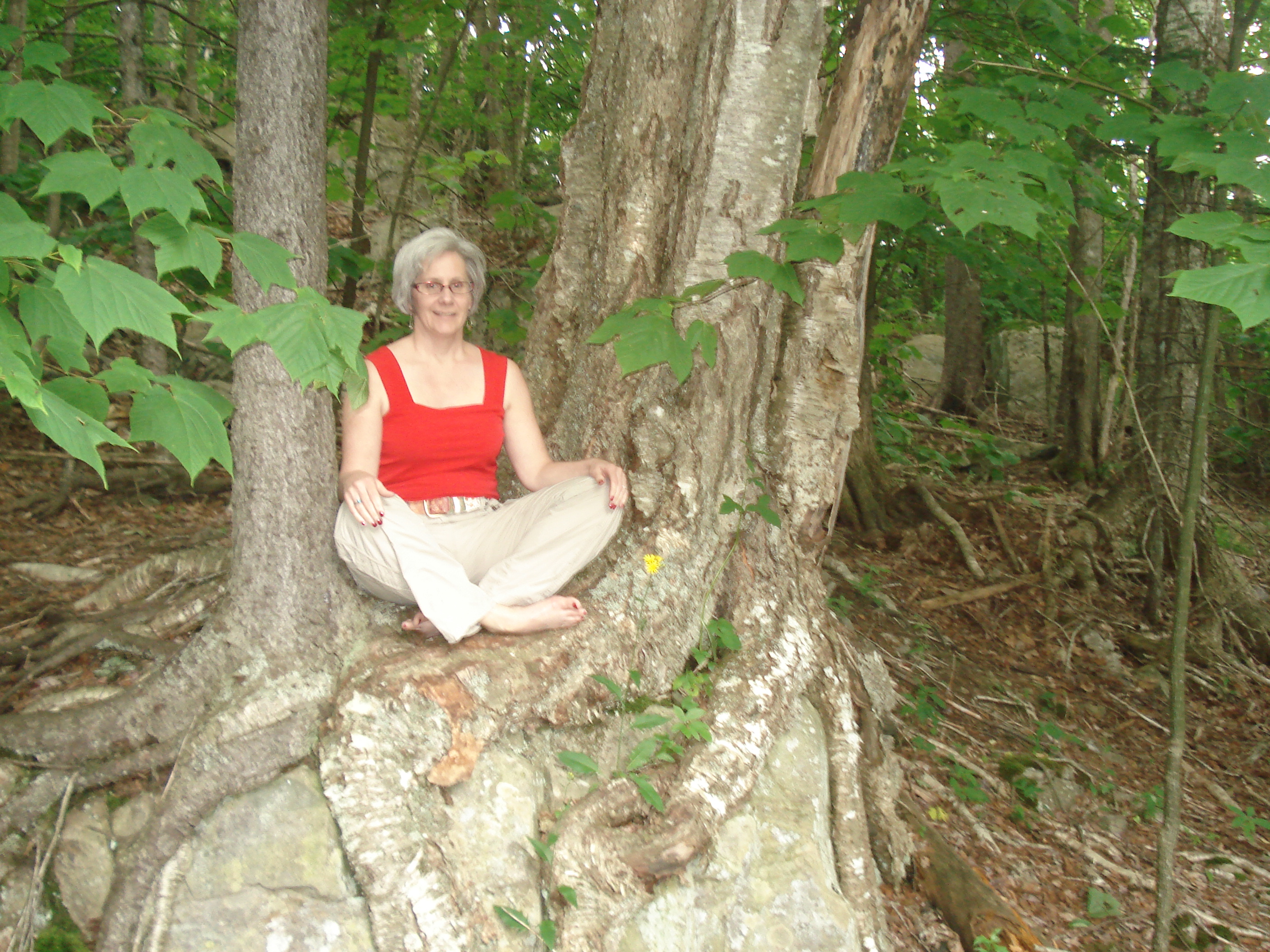
Me In My Meditation Tree

This morning, on my run, I had a revelation.  I wasn’t particularly looking for a revelation – it just showed up.  The power of it could have knocked me over – except it fully formed when I was sitting in my meditation tree in my back yard after my run – and it definitely brought tears flowing as I felt release from a long held story.  The revelation? The story of survivorship is inextricably tethered to the story of victimhood.

I haven’t thought much about being a survivor over the last year as I have mostly felt joy in this new phase of my life.  On my run, I was feeling joy and inspiration, alive and vibrant, connecting to nature in the unseen ways that nature is also alive and vibrant.  Feeling really good.  Reflecting on events of the last week and a half that had me off my ground and my centre and then the three conversations/events that brought me back to my centre and a feeling of being myself.

One of my friends offered me, very bluntly, an acknowledgement of the victim threads buried in the story I wrote to her.  It highlighted it so brilliantly at first I was startled and then I laughed to see the truth of it.  And seeing the truth of it released it.

As I reflected on this experience this morning I realized I have lived into a story of survivorship probably most of my life, even before I was old enough to be consciously aware that that’s what I did.  I survived the story of my birth (a story for another time), growing up in a small town (only half a joke), two divorces, an ectopic pregnancy, job loss under crazy and difficult circumstances, starting a company, merging businesses, separating businesses, difficult and challenging personal and work relationships.   After all, the other choice was to be a victim.  And God forbid that I would ever be a victim.  I will always rise up and overcome whatever challenge shows up on my path.  I am a survivor.  I am strong.  I am resilient.  And this is all good.

Except, of course, for my little revelation this morning.  In order for the survivor story to be alive and well in me, the victim story is also alive and well but buried deep.  Victim and survivor are contrasting sides the same story – two sides of the same hook.  If it is only a choice between these two things, then of course, I want to be a survivor.  But if the survivor story is alive and well in me, even if I have lost conscious awareness of it, then in order to be a survivor, I must attract circumstances and challenges to myself so I can continue to live into the story of being a survivor.

The core of the revelation: without those challenges I am neither victim or survivor.  There are not just two choices.  There are a myriad of choices.  I can live into my life, path and purpose with freedom, joy, love, eagerness and enthusiasm.  I can still attract growth and contrast to my life, but they don’t need to be challenges.  They can be offerings from which I can choose the path that path serves the joyful, delightful core that is calling me.  I can accept, allow, receive.  How much more powerful is that than choosing only between victim and survivor but to release that hook and choose a completely different story and unfolding of my life as this new phase is just getting started.

Deeply grateful to friends, to nudges along the path and the beautiful shifting shape of my life, relationships and work that has only just begun.  Hungry for more.  Ready for more.

Becoming an AoH Practitioner

One of the things that stands out from my Envision Halifax days when a team of us co-designed and co-delivered a nine month leadership program, meeting with the group once a month for either a retreat or a learning day, is how often people talked about getting their Envision “fix” – essentially being able to step out of the craziness of their workplaces into a deep breath of a different kind of space, where we often began with check-in circles and always entered into a conscious, intentional practice field of learning focused on self-leadership, team learning and community reflection and engagement.

The desire and need for this “fix” is directly related to how challenging people find it to bring their learning about new ways of interacting with people, creating the conditions for different conversations that lead to different results back into their work environments – and it is also what I hear from people who have just stepped out of their first Art of Hosting training ground.  “It is okay to do this here, but back at work, well, that’s another story.”

At the risk of stating the obvious, becoming a practitioner of anything takes…. well… practice.  And, I am aware of how risky it feels to try out new group processes or new ways of inviting conversation at work.  How many times we hear things like, “I could never use a talking piece at work.”  “I could never get our group to agree to use World Cafe.”  “People I work with would find this language strange and it may turn them off of even trying something new.”  Yes, all true AND there are always ways to begin practice.

People feel their credibility and reputation are most at risk trying something new with the people they work with all the time.   So one of the simplest possibilities is to look for other places to practice – with another team or department, in a volunteer capacity, with someone else who also wants to practice.

When we just begin to know the many and varied practices that are available through the Art of Hosting field and have little experience with them, we have less confidence in and knowledge of how the processes work and how people can be well and fully engaged in them.  Our own lack of confidence and fear can influence how the process unfolds.  For example, if the group has never participated in an Open Space before, it  may take a few minutes for them to warm up to inviting their own conversations when we open the space for their questions.  With experience, we know to be easy in that pause.  Without experience, it ignites our fears and then we want to jump in to make it happen, often over facilitating the space or the process, sometimes resulting in less than hoped for outcomes.  As grow our own experience and confidence in the impact of the process, we relax more which invites more flow and synchronicity into the space.

As for language, if it will be a barrier, don’t use it.  Rather than talking about circle practice, you could just say, “I would like to make sure we hear from every voice.  Maybe we could just go around the table and as each person speaks, the rest of us could just listen well to what they have to say.” Or, of course, whatever language suits you best.

Begin your practice in little ways.  Take little risks.  Change how you listen and see what difference shows up.  Use more questions, powerful questions, that invite people to respond differently.  Bring more curiousity to the conversations you have in the work you do.

Find places to practice the skills you want to develop more.  Find people to practice with.  Look for like minded people inside your organization with whom you can have conversations of discovery and potentially opportunities for practice.  Think of how you can intentionally shift the shape of your world.

Look for places outside of work to practice.  Take yourself back to another Art of Hosting training to deepen your understanding and skills and grow your courage.  Share success stories, small and large, so you and others can see the impact of making even small shifts.  Maybe you have an opportunity to be part of a calling team for an Art of Hosting in your organization or community.  You could look for an opportunity to apprentice in an Art of Hosting training with experienced practitioners and stewards so you learn to pay attention to and look for the nuances that can influence design, hosting and results.

Grow your confidence through practice and your practice will grow.  Don’t be discouraged easily.  Keep your eyes and ears open for opportunity, openings and invitations.  If you look for them, you will be delightfully surprised at how often they show up.

Join a community of practice.  If there isn’t one in your area, start one – even if it is just with a few people.  Join the on-line conversations and communities.  Observe and contribute when and as you are ready.

Whenever and however you can practice, do so.  Grow your courage through small victories and those victories will also grow.  You didn’t show up at an Art of Hosting training because you are risk averse.  You came because something called you.  My guess is, this work will continue to call you and you will continue to respond.  And there is a global field of practice that responds with you.  Be intentional, thoughtful and mindful and practice well.  Before you know it, you will recognize the Art of Hosting practitioner that is you.

One AoH Training Does Not a Practitioner Make

From the last few Art of Hosting trainings I have co-hosted there are two things that I am increasingly aware of: what it means to be a practitioner of the Art of Hosting and the value and contribution of stewarding to the field and the learning and growth of all.

People come to Art of Hosting trainings hungry for any number of things: to learn more about the methodologies and practices, to connect into a sense of community, to find refuge from the craziness of the worlds they live and work in, to deepen their own self leadership, to find new ways to be in the world, to discover mates they can work and play with in the world, because they have been part of a process somewhere that has drawn from Art of Hosting and they want to learn more and many more reasons I’m sure.  And they go away refreshed, curious, hungry for more and a bit hesitant around how they can bring this back to their life and work.

Two things I am aware of: to really be a practitioner of an Art requires practice and one Art of Hosting training does not a practitioner make.

The Art of Hosting field is incredibly rich and diverse and linked to so many other fields: World Cafe, Circle Practice, Open Space Technology, the Chaordic Field, Theory U, Appreciative Inquiry and more.  When we call a three for four day training, the breadth and scope of the days is shaped by the intended purpose and the people who show up – responsive to the collective need of the group, no matter whether it is a public or client offering.  There is no such thing as a set agenda.  It is a fluid process that the host team and the participants all contribute to.  It also means that the host team is having to pick and choose among the vast array of possible offerings that could flow into the training.  It is not possible to do them all.

All of these things – the hosting team, the purpose, the participants, the choices made within a training ground – contribute to the look, feel and shape of each training, while some underlying things always remain – paying attention to the field, holding space for co-creation and emergence, recognizing the interplay between the dynamics in the field and the learning needs of the group, between self hosting and collective hosting.  No two offerings are ever exactly the same, even if the same hosting team is in place – because the hosting team is also in its own learning individually and collectively and because of the responsiveness to each new training ground.

One Art of Hosting training offers a slice of the Art of Hosting field, even if it is a large slice.  Another Art of Hosting training will show different nuances, different strengths, different emphases and be just as relevant and meaningful as a reflection of the field.  If we leave an AoH training believing this is the way it is – and the only way – we will have missed something fundamentally important – that a key underlying principle is responsiveness to need, co-creation which influences the flow of any training or practice ground, paying attention to what’s in the space and what’s wanting to happen.

It really does take a number of trainings to have a more fulsome understanding and experience of AoH and what’s possible and really understand how AoH contributes to the shifting shape of the world.  We become practitioners when we practice and learn from what we practice.  The next post will explore some ways that practice shows up and how to ask for and offer support in the practice and a future post will look at the questions and observations that have been occurring to me about the role and importance of stewarding.

“Soft Skills” – A Real Misnomer!

Ask anyone.  The hardest thing we ever do is relate to other people, especially as leaders in our organizations or communities, but also in our personal relationships.  Ask anyone what the most difficult component of their job is: relationships, interpersonal dynamics, people.  Ask project managers why most projects fail: inadequate communication and team members moving in different directions or having differing priorities.  Ask teams their greatest challenge: getting work done – because of interpersonal dynamics that get in the way.  Because people challenges interfere in getting the job done, slowing us down.

Empathy, leadership, communication, sociability, ability to laugh, optimism, common sense, responsibility,  integrity and motivation are some of the skills identified as soft. Somehow soft has become interchangeable with expendable so when budgets become tight the first thing to go is soft skills.

Soft skills are not about being nicey nice.  They are about creating the conditions for relationships to grow, enabling individuals and teams to engage in difficult and necessary conversations, not so we can all live in some kind of utopia but in service of getting work done, achieving results, having impact, shifting systems, seeing possibility, opening to emergence.  We do our best work with people we like, people we care about and people we love.  We have our greatest resilience in systems that care. We reach our highest potential in supportive environments that encourage growth.  We take our greatest risks when we know someone will help us up and dust us off when we fall so we can all be ready for what’s next.

There is nothing soft about soft skills.  They require discipline, practice and self awareness.  They require risk and letting go of control, trusting others to step up and in when we create the space for them to do so and they require discernment about what is the right amount of leadership, coaching and support required to allow teams and individuals the highest possibility of growth and contribution.

One of the reasons I gravitate to the Art of Hosting Body of Knowledge is because of the emphasis on creating the field or conditions from which wise action, results and impact will flow, flowing out of a well tended relational field.

We will not shift the shape of the world only through projects.  We will shift it by paying attention to the quality of the relational field and our relationships.  The greater the quality of the relational field, the greater the power to engage in actions with such purposefulness that the shape of the world cannot help but shift.