Youth Philanthropy

The moment my eight year old son, Shasta Tangri, heard about the earthquake and Tsunami in Japan, unprompted, he said, “We’ll have to make more buttons!”
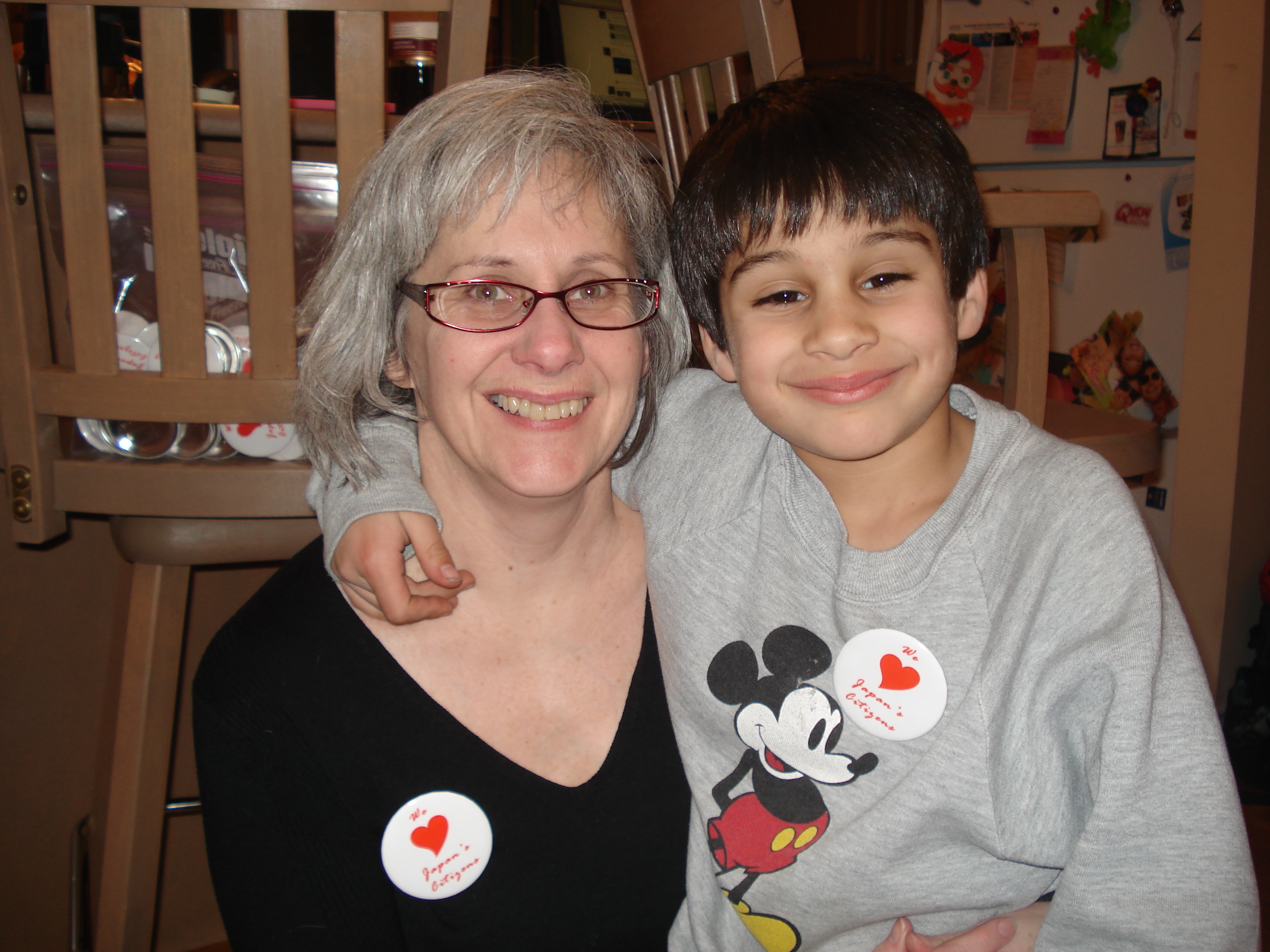
Kathy and Shasta

Shasta and me displaying the pins he created in support of Japan

In 2010 when the earthquake devastated Haiti, he decided to follow in the footsteps of his older brothers, Spencer and Jacob Dwyer.  Following 9-11 they decided to sell buttons to raise money to help the people of New York following the devastation created by the planes flown into the twin towers.  Their campaign was picked up by by friends, family, work colleagues and random strangers they met as they promoted their cause.   They raised about $1,500.00, were written about in the paper and were on television news.  Shasta knew about it because he had seen the newsclip often.  It inspired him and, of his own accord, he wanted to do the same thing for Haiti.  He sent the money he raised through to the Red Cross, his contribution was doubled by the government and he raised over $2200.

Now, he has a goal of $1,000 for Japan (he will also contribute through the Red Cross) and while it is early days I suspect he will surpass his goal pretty quickly.  He’s almost half way there after only a few days.  He is enthusiastic, unabashedly advocating for his project.  This well spoken youngster has no problem specifying his request of a minimum contribution of $2.00 and, of course, many give more including at least three people who have each given him $100.00  (I was one).

It is wondrous to see how many people respond warmly to the request made so beautifully and simply from a young man working from his heart having been touched by a tragedy affecting people half way around the world who he has never met.  It warms my heart.  Of course, I will do anything to support him in the unfolding of this path, as long it as it is one he chooses willingly and of his own accord.

A good friend of his has offered to help.  The Dartmouth Players Theatre, where he is in a theatre class through Upstage Studios,  has offered to let him have a table at their event this Monday so he can sell buttons.  His school is allowing him to sell buttons to children and teachers.  Tomorrow we will be knocking on neighbours’ doors.

As this has been unfolding in my home, I have had the opportunity this week to meet Stefanie Shute and Blair Ryan, founders of the Empathy Factory, a cool new initiative providing the opportunity for children to act on their innate generosity, developing ideas they feel passionate about so they can act on their desire to make the world a better place.

This work and these actions in my home and my community and further afield in the world continue to inspire my own deep sense of hope and optimism that we can consciously shift the shape of the world in beautiful and profound ways.  Shasta is already doing that for himself and for so many others at the same time.  What will you do to shift the shape of your world?
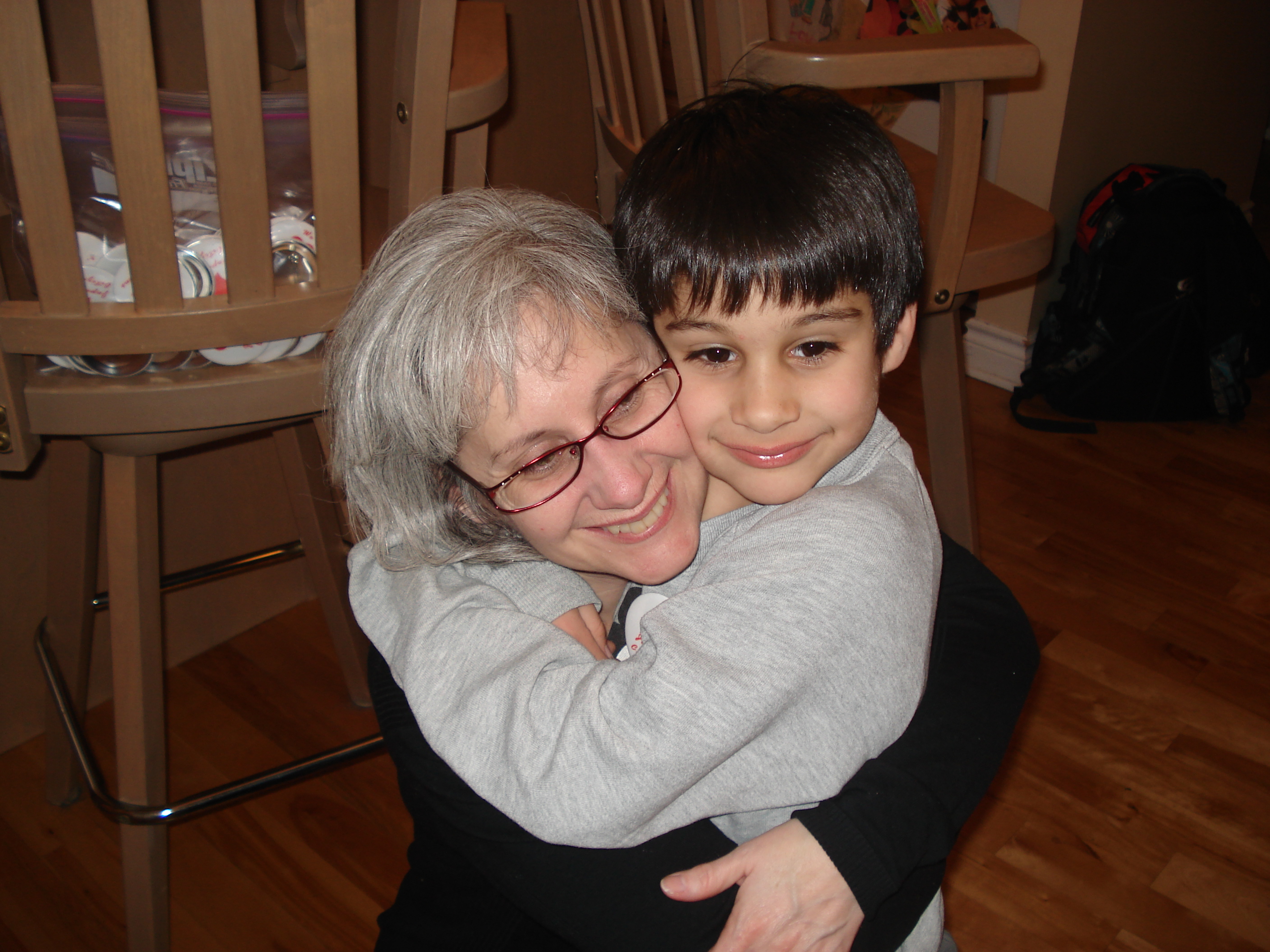
Shasta and me

Prototyping Collaborative Leadership at Capital Health – Citizen Engagement and Accountability

Citizen Engagement and Accountability Portfolio

In May 2009, the creation of a portfolio within Capital Health with the title of “Citizen Engagement & Accountability” presented a rare opportunity to create something that had no precedent.  The portfolio was launched in response to the strategic stream of Citizen Engagement that came out of the Strategic Quest work in 2007.

Lea Bryden was tasked with bringing together three functional areas under this new portfolio: Marketing and Communications, Community Health Boards and Patient Representatives.  In looking across the country, they found themselves virtually alone as there were no models to inform the portfolio development.

In January 2010, Kathy Jourdain and Tony Case, through Shape Shift Strategies Inc., were contracted to assist in shifting the shape of this portfolio.  The intent was to truly create a new portfolio with collective purpose, principles and streams of work and not just perpetuate the three existing functional areas under a new name.  Some of the functional work would be the same and new work would emerge through the process but all of it would be informed by the collective purpose.

This work was given context and framing by the following pre-existing pieces of work:

  • Our Promise
  • Declaration of Health
  • My Leadership: Being, Caring, Doing
  • Citizen Engagement Strategic Stream
  • 2013 Milestones

In addition to wanting to honour CEO Chris Power’s intention in asking the question: “What kind of future could we create if the vision of Our Promise and belief in our Declaration of Health showed up at each of our touch points in the course of our day?”, Lea also wanted to uncover the unique gifts and contribution of each member of the portfolio and understand how they came together as a collective.  And, it was  very much a mechanism to create a cultural shift to even greater transparency and accountability.

This process invited a design team to co-design the process.  There was initially a very specific invitation to a member of each of the three functional areas. As the process unfolded participation in the design process was completely open and transparent and those with the greatest interest and passion continued to participate in the process.  Some people showed up in the beginning because they thought they should and then kept showing up because they saw how their contribution directly influenced the design of each session.

This work took place over a period of four or five months to establish collective purpose, principles, priorities, and strategies.   It took into account other work that was underway in the organization, incorporating things like the budget planning process or the response to Capital Health’s community engagement recommendations right into the process so the portfolio could learn how and when to respond as a portfolio to other moving parts of the organization.

We knew we were making headway when we hit the groan zone.  The collective purpose and principles were articulated and we began to hear, “Oh good.  We have what we need.  Can we be done?  Can we get back to our regular work now?”  This was a signal to push back.  Lea did this by asking a simple question, “Where are we seeing evidence of our collective intention at work?”  The responses were amazing, informative and represented a turning point.

A philosophy of our work as consultants was to transfer collaborative leadership skills into the portfolio so it could flourish once our involvement came to an end.  The portfolio created a transition team to continue to guide the work and this team is also working collaboratively.

A key contributor to the success of this initiative was Lea’s willingness to foster collaborative leadership and her openness to growing her own awareness and skills in the process.

Like all significant culture shift initiatives, there are certainly bumps along the way.  But there is lasting change in the way this portfolio views itself, understands its work and engages with the public.

Prototyping Collaborative Leadership at Capital Health – Infusion

In March 2007 Capital District Health Authority (CDHA) in Halifax, Nova Scotia took on a planning process called Strategic Quest.  A significant component of Strategic Quest included public participation in an unprecedented way, shifting the shape of awareness and thinking at Capital Health.  The results were revealing and the impact continues to reverberate throughout the organization today, strongly influencing ongoing public participation in a number of areas and inviting collaborative leadership as a strategy to accomplish many of its goals.

One initiative I was involved with where Collaborative Leadership was an essential part of the process was Infusion: a gathering in November 2008 of 70 leaders from across North America, in our local community and within Capital Health, convened to inform what bold and unique leadership development within Capital Health could look like.

The planning process for Infusion, championed by Lea Bryden and led by Shape Shift Strategies, invited and modeled collaboration, shared leadership and shared responsibility.  A diverse group of people from across Capital Health were invited into the planning process.  Many identified the planning process itself as a leadership development opportunity as they experienced collaborative leadership in new ways, stretching beyond their original assumptions about how and what they could each contribute to this unusual event.

Achieving clarity of purpose was the first task.  It required a significant investment of time – several meetings.  It was a difficult task because there were multiple overlapping components all alive and unfolding as we were in this planning process.  We stayed in the conversation until sharp clarity was achieved and then rest of the planning process unfolded rapidly because it was guided by this clarity of purpose.  We also actively worked with Theory U in the planning process and for the event itself.

The planning process always had a forward momentum, even when people missed meetings.  As they came back in, they found their place in the process and continued to contribute constructively.  They could step into and out of the flow of the process without having to back track and rehash decisions made when they were not present.

The two day Infusion event drew on the talents of everyone on the planning team.  Invited guests: leaders from a vast array of backgrounds, many of whom were leadership consultants, were asked to bring their knowledge and expertise in a participatory way.  It was at times a challenging field to hold.  The team was able to hold its ground as we went through the fire of chaos, adjusting design in the moment and holding space for some anger and frustration that unexpectedly arose within the group because of the collaborative leadership we had been growing throughout the planning process.

Infusion did not end in a nice tidy wrapped up bundle and Lea Bryden, myself and the team were good to leave it that way while taking away the gems that guided the development of My Leadership – a truly unique leadership development initiative inside of Capital Health with a bold vision and goals that has since had 500 leaders complete and won a number of regional and national awards.


Shifting the Shape of the Game

On the weekend, my eight year old son and I played mini-golf.  As I took the score card, he told me he didn’t want to keep score.  I found myself a bit attached to keeping score – what’s the point if we don’t?  But I agreed, grumbling a little in my mind.

It felt a bit strange starting, knowing we weren’t keeping score, feeling like my shots didn’t “count”.

On about the third hole, his first shot didn’t go very far.  In fact, you could probably say it failed.  He looked at me and asked if he could take it over.

Could he take it over? I realized his question was kind of pointless if we weren’t keeping score.  It didn’t matter if he “took it over” or not – it wouldn’t be reflected anywhere.  Of course, he could take another shot.

He asked the same question a couple more times and I told him it didn’t matter – of course he could.  And that was about when I realized it did matter – but in a different way than through the traditional lenses through which we were both seeing the game – me through the lens of keeping score in order for the game to have meaning and him through the lens of continuing to ask permission to re-do a shot to keep his score low.

We had shifted the shape of our game, but we both still playing by the old rules.  How often does this happen in the larger world?  How often do we continue to play by the old rules even when we know we want something different, even when the field opens up for something different to emerge.  It is only through awareness, reflection and mindfulness that we are able to fully embrace the shifting shape of the game and shape shift ourselves to flow well with the emergence that then becomes available.

In that moment of realization, the potential of the new “rules” opened up.  Not only could my son re-do a shot, but he could now “safely” develop his skill at the game without feeling the need to “cheat” to try to keep his score low.  So instead of sliding his ball into the hole, now he could “risk” hitting it to see what happened and learn how he could improve.

It was just a game of mini-golf — and it was so much more than a game of mini-golf.  Grateful to this youngster who is such a teacher in my life.

Creating Conditions for Collaborative Conversations

Collaboration is a process where two or more work together with deeply held collective intention and determination to reach a shared objective.  As  the planning for the Art of Collaborative Leadership (March 16-18 in Halifax) begins, we are becoming even more curious about what it really means to be collaborative, the leadership or relational skills that foster collaboration and the subtle changes that can shift the shape of a relationship from defensive, tentative, co-existing or cooperative to collaborative.

The opportunity for collaborative relationships begins to show up when we recognize there could be more power or strength in creating a collaborative space or action.  It also begins to show up when we become curious about what more could happen if we could generate a space of shared understanding – although that usually starts from a place of  “I wish they understood us and our point of view better.”

If we want to change the nature of our conversations with others, we first need to change the nature of the conversations we have with ourselves – personally and/or organizationally.  What would need to shift in how you think about potential collaborators in order to open the space for a collaborative relationship to form and then deepen so it has the potential to create sustainable and fundamental shifts in the area/work/system you care about?

What are the different dimensions and depth of collaboration?  What does it take to stay in a collaborative relationship, especially during the episodes of difficulty that often challenge our understanding of the relationships we are in?

These are some of the questions we will be inviting into the Art of Collaborative Leadership.  What about you?  What questions are you holding?  Will you share them?  Will you come?

If you want to come, you can register at this Berkana site.  If you can’t come but want to contribute you can follow the conversation on Twitter using #a0cl or at the Art of Hosting Community Site.

Art of Collaborative Leadership March 16-18/11 Halifax

Can a focus on collaboration, collaborative networks and collaborative leadership as strategies for shift and change create leverage for more sustainable results and the means for  us to move beyond episodes of enthusiasm to fundamental shifts in our work, organizations and communities?

This is one of the questions we will be exploring at the Art of Collaborative Leadership, March 16-18, 2011 in Halifax.  Related themes that will guide and focus our time together:

  • Growing our knowledge  and ways of working with collaborative networks
  • Connecting people, ideas, initiatives in this city (and beyond) who are doing cool things and bumping up against similar challenges to co-learn and co-strategize how to move past those barriers
  • Furthering specific work that participants bring into the training ground so that they leave with clarity about what’s next in their work, project or big idea

An exciting and diverse host team has emerged for this AoCL – diverse in age, perspectives, background and experiences, linked together by our passion for hosting inspired spaces, co-creation and collaboration and for how much we care about what’s happening in the world right now, believing that Collaborative Leadership is one of the routes to shifting the shape of our world(s).

We will be using an on-line forum to begin before the training even starts and to continue to follow the questions and the group learning post the training.  (Anyone can follow us and contribute on Twitter #aocl).  We will be offering the opportunity for participants to join together in a group call or in a one-on-one conversation with someone from the host team (our hosts from New York and Minnesota are wanting to touch in with our community before they arrive for the training).  And we will offer a follow up about 45 days later along with the ongoing online conversation.  We are imagining we may spark a community of practice out of this training, linking to Envision grads and AoH people in this city.

What more will sprout out of this fertile ground?  We have no way of knowing but we are preparing to be surprised!  What about you?  Will you join us?  Will you contribute to the conversation?

The Wisdom of Failure

This past weekend I was deeply inspired by youth leadership at Dalhousie University‘s student led Brains for Change event.  Thirty or so community resource people (me being one of them) were invited to participate in conversations with well over 100 students about big ideas that could become projects over the next few months.  Some amazing ideas to shift the shape of our city emerged – like get Halifax certified as a Fair Trade City.

I got to be in some cool conversations and one of them was about failure.  One of the risks we seem afraid of is anything that might remotely become failure.  And yet, failure is what we need in order to foster innovation, new ideas and new ways of doing things.  We put up so many barriers – risk management, liability, public response –  that we stifle creativity.

We also often respond to failure in very personal ways. We need to remember failure is an action, not an identity. It is not who we are or what we are; rather it is an event or situation, or it is related to a choice we have made – individually or collectively. Yet, most of us, at some point in our lives, have worn failure as an identity or have played the blame game around it.

In these situations, we have difficulty separating ourselves from the event or situation. It brings up all kinds of emotions: anger, guilt, regret, remorse, sadness, a sense of having let others – or ourselves – down. It can be overwhelming at times if we lose our sense of self in the failure.  We might even be  haunted by it, generating fear about participating in anything that might lead to another failure.

Personally or organizationally, in order to let it go, we need to be able to separate our sense of who we are, individually and collectively,  from the actions or choices that led to the failure.  We need to redefine success which then allows us to redefine failure. What if success was actually the learning process – what we learn from what happened – whether we see it as a success, partial success, not quite successful or dismal failure?

Let’s step back from the failure so we can get a different perspective of it.  What happened? What led to what happened? What decisions were made? Based on what information? Did we pay attention to all the information – the analytical, intellectual and the intuitive or gut reactions?  What could we do differently?  What’s the next iteration or prototype of what we were trying to do?

Failures provide valuable information – personally and organizationally. They help us know when we’re off course or when we’re not paying attention to something in our environment. Sometimes they lead us in a direction we hadn’t previously anticipated. In both business and personal circumstances “failure” has led to big breakthroughs. The classic business example is 3M’s post-it notes, now an institution in both home and office. Someone recognized the opportunity in a product “failure” (a glue that didn’t stick things together) and created a new revenue stream for 3M and a new way of drawing attention to things. What did we do before post-it notes?

Personal experiences of failure are often those points we look back on with gratitude because they shift the shape of our lives in ways we couldn’t have otherwise imagined.

Innovative businesses and communities cultivate an environment where making mistakes is not only acceptable but recognized as a valuable part of the innovation process. Mistakes only become failure when they are not learned from.

We wouldn’t be who we are today without our failure experiences. They help define us; sometimes they show us exactly what we’re made of. Bottom line is, we make the best decisions we can, with the knowledge, resources and awareness we have available to us at the time. It’s easy to see, with 20/20 hindsight, we should have done something different. The question now becomes what to do with the 20/20 hindsight to change patterns or increase your knowledge going forward so that “failure” becomes the wisdom from which you grow, innovation emerges and  success is created.

The best thing we could do for youth leaders is create environments where we grow our risk and failure muscles knowing that this is actually a route to success – sometimes beyond measure – one of the many topics we may end up exploring during the Art of Collaborative Leadership from March 16-18, 2011.

The Art of Collaborative Leadership

What if we could grow our courage and resilience in working with the status quo that says it wants to change but doesn’t seem to know how?  What if all we need to do is connect with others doing amazing work in our town who are facing similar challenges so we can grow and learn together how to move beyond episodes of enthusiasm to sustainable, visible and fundamental shifts?

The Art of Collaborative Leadership is an emerging way to meet a world that is increasingly complex and concerned.  It is a training and, more importantly, a practice ground for people who want to discover how collaboration can shift the shape of the world as a new core leadership capacity.  This gathering will contribute to the collective understanding of the Art of Hosting field around the world on how to do this better, more strategically and more meaningfully.  It is to amplify the ways we are working now, partly thanks to social media, and illuminate the networks through which we currently achieve results so we can hone our skill at this and become even more strategic.

We build networks and collaboration through conversation that allows us to discover the cool things we are working on and the cool things there is to know about who we are, what we are passionate about and how we show up in the world.

Mark your calendar for March 16-18, 2011 and prepare to name, illuminate, connect and grow collaborative leadership and networks in this city and beyond.  Registration details available soon.  For an advance copy of the invitation send me a note.

The amazing hosting and calling team – myself, Martin Siesta, Nancy Eagan, Jerry Nagel, Sophia Horwitz, Ryan Deschamps, and Rachel Derrah –  looks forward to meeting you where we all are and leveraging that to see what emerges.

2010 Enduring Impression – Deep Gratitude

People who know me who are familiar with my  life’s journey know that I have very few short stories.  I have the most amazing, incredible and sometimes almost unbelievable stories of my life and 2010 was no exception.  This year continued to bring some very big stories of experience into my life.  2010 has been a year of completion where I became aware that a five year deep transition period came to a close, opening up into a much gentler and no less transformative era of unfolding  – one I hope endures into the rest of my life.

This year has brought the deepest sense of trust in this life journey that I have ever experienced, searing into my awareness how much I am supported in the world and in my journey.  I have been aware of this over the years but there was some associated doubt, worry and fear.  No longer.  I have landed with exquisite delight and amazing joy in this place of trust.  When I do notice doubt, fear or angst lurking around the edges I know now to inquire into it and to ask for support to navigate my way through it with far more grace than I could have imagined possible.

I have learned depth of relationship and the gift I have for creating the space for this by being open, vulnerable, curious, loving and open hearted.  I have been gifted with depth and beauty of friendship by learning to be present and available for the relationship that is available to me, rather than wishing for relationship that is not.

Highlights for 2010 include the Art of Social Innovation at Windhorse Farm in NS  in April,  moving into my new house in Bedford in May, attending ALIA in Halifax in June, visiting my sister and her husband on vacation with my youngest son in July, Warrior of the Heart training and the Art of Hosting Stewards gathering on Bowen Island in BC in August, Brazil, beautiful, amazing Brazil in October and then the Berkana Weaving the Web gathering in New York also in October, an invitation into a beautiful spiritual women’s circle in November.  Permeated throughout all of these events or gatherings is the people, the rich friendships, people I love dearly who I also often have the good fortune to work with, some of whom I just met in this last year and others I have known for a very long time, all of whom I feel deep connection with.

As this year draws to a close, my most enduring feeling is one of deep gratitude – for what has evolved and emerged in my life, for this new constant of joy and falling in love everyday, for my children who touch me deeply and from whom I learn lots, for my dad who loves me unconditionally, my mother who continues to show me the extent of soul journey on this earth, to my friends here and all over the world who have my back and I have theirs, to the shamanic journey that has characterized my path far more than I ever knew, for this deep sense of trust that is becoming ingrained in me, to sensing deeply into where I am supposed to go, what I am supposed to do and how I can best do that which is mine to do.

I love how the shape of my life has shifted in this last year and I surrender fully into how it will want to shift in the coming years.  For the beginning of 2011, I feel expansiveness and readiness – ready to accept more into my life in every conceivable way, ready to be of service to that which is mine to do, ready to nourish relationships I care deeply about and ready to receive all that is wanting to flow into my life.